Categories
ATAG

ATAG iC versus ATAG iC Economiser Plus

ATAG logo and vans.ATAG iC versus ATAG iC Economiser Plus…

What is it with boiler manufacturers that they must pick such similar names for their boilers? Usually involving a weird combination of numbers and letters – particularly the letter ‘i’?!

If you’re looking for a new boiler; but you’re getting your Green iQs mixed up with your iCs and iRs; we’re not surprised – but don’t worry, we’re here to help!

We often get asked about the differences between the similar sounding ATAG iC and the ATAG iC Economiser. So in today’s blog we’ll walk you through the key differences between the two.

Who is ATAG?

First off, let’s start with the manufacturer.

We’re proud to be ATAG Selected Partners. Because although they’re perhaps not as well known amongst consumers as Worcester Bosch; ATAG is a manufacturer that you can trust.

ATAG has been designing and manufacturing boilers for almost 70 years in many countries around the world.

They’ve combined the strict engineering standards of different countries; to develop their ‘i’ range of ATAG boilers – which we’re looking at today.

This range is touted as being the most energy efficient boilers in Europe; with the lowest NOx emissions meaning that they’re better for the planet (and your wallet!)

ATAG boilers are renowned for their outstanding engineering, reliability, and energy efficiency. They use the highest quality stainless steel and brass components – and boy, do they stand the test of time!

Their revolutionary iCon heat exchanger maintains 98% of its original efficiency levels throughout its lifetime. And comes with a lifetime guarantee.

ATAG have such faith in their boilers; that they come with the longest warranties on the market, of up to fourteen years.

All of this means that if you choose an ATAG boiler; you can be pretty sure that you’ll still have a reliable boiler in over a decade’s time.

You should check out our related blog: Why choose an ATAG boiler?

Is an ATAG combi boiler right for you?

Both the iC and the iC Economiser are combi boilers.

So, before we dive into the differences between the two, you should double check that it’s a combi you’re after.

And regardless of what type of boiler you have now, you should consider all of the options. Because chances are the boiler that came with your house; or the one you chose ten years or so ago; no longer suits!

The three types of boilers

Three houses with different heating systems.We won’t go into detail about the differences between the three types of boiler here; we’ve got other blogs for that.

But briefly… the three types of boiler are:

  1. Heat-only or ‘conventional’ boilers;
  2. System boilers; and
  3. Combination or ‘combi boilers.

As the name suggests; a ‘conventional’ or heat-only boiler is often thought of as the traditional way of heating a home.

Heat-only boilers provide both heating and hot-water with the use of an additional cold-water tank and hot-water cylinder.

They can supply hot water to multiple outlets at the same time. And are a good choice for homes with multiple bathrooms.

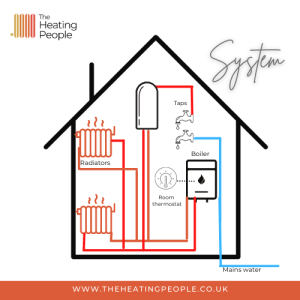
System boilers are also a good choice for larger families with a greater demand for hot water. Because similarly to the heat-only boiler, they store hot water in a cylinder. Unlike the heat-only though, they don’t have an additional cold-water tank.

You can read about the pros and cons of heat only boilers and system boilers here.

Combi boilers
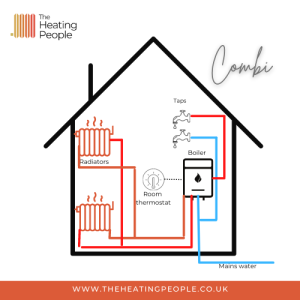
Diagram of a combi boilerCombi boilers are the most popular type of boiler currently sold in the UK.

They’re a much more compact option than the other two types of boiler. Everything they need to heat your home and hot water is ‘combined’ (hence the name) in one single unit.

They don’t need additional water tanks or cylinders.

Instead, combis heat water directly from the mains when you turn on a hot tap. The fact that they heat water instantaneously on demand means that you’ll never run out of hot water.

Read about their pros and cons here.

ATAG iC Combi boiler

So, what does the ATAG iC combi boiler have to offer then? Let’s look at the key features:

The ATAG iC is available in four sizes

The ATAG iC is available in four different power outputs: 24kW, 28kW, 36kW and 40kW.

This means that there will be an option to suit your home and lifestyle.

But don’t worry about knowing what size you need; we’ll work that out for you after conducting a whole house heat loss calculation during your free survey.

The ATAG iC is energy efficient

The ATAG iC is A-rated for energy efficiency.

Adding an ATAG ONE or TADO V3+ internet-connected Smart controller can further boost your heating system efficiency; to an impressive 98% (also known as A+).

According to The Energy Saving Trust; if you were to replace an old G rated boiler with an A rated one (like the iC); you could save up to £320 on your gas bills each year.

The ATAG iC has built-in weather compensation

A diagram of weather compensation.The iC has a built-in weather compensator.

Weather compensation is an energy efficiency device that monitors both the temperature inside your home; and the temperature outside; and adjusts your boiler’s operation accordingly.

Weather compensation is one of the four energy saving options for combi boilers under the Boiler Plus regulations.

This allows your boiler to reduce water temperatures, which increases efficiency without compromising your comfort.

The ATAG iC is compact

The iC combi is a compact, high performance, intelligent boiler. It measures: h700 x w440 x d366 (mm).

It is also available in a 275 mm (deep) model; in case you want to place it inside a kitchen cupboard. So, it could be a good option if you’re short on space.

The ATAG iC is quiet

A woman with a finger on her lips.When in operation, the iC is one of the quietest boilers you can buy thanks to its bottom-up modulation.

The ATAG iC is user friendly

With simple to use controls, including a separate hot water thermostat for added safety, the iC is extremely user friendly. It features an LCD display which shows detailed fault codes; so should anything go wrong, you’ll be able to see what the issue is quickly. 

The ATAG iC is compatible with smart controls

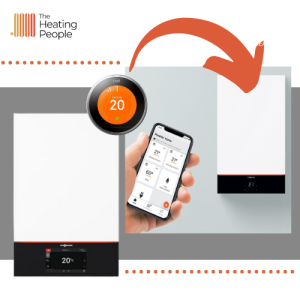
An ATAG boiler with a speech bubble.The ATAG iC range is fully compatible with third party controls such as Nest and Honeywell. In addition to the ATAG ONE Zone or Tado V3+ Smart controller.

Smart controls can often connect to the internet and can be controlled remotely through your tablet or smartphone.

This means that you’ll have much greater control over your heating, from wherever you are, at any time of day.

There are a huge variety of options available with smart controls, such as zoning, geo-fencing and intelligent learning systems.

This gives you smarter control of your heating; remote access; and the promise from manufacturers of energy savings of between 20-30%.

Another brilliant thing about opting for an ATAG boiler, is that unlike most other brands, ATAG boilers have opentherm technology.

This means that ATAG boilers can communicate more efficiently with third party controls. And can further increase the efficiency of your heating system.

The ATAG iC comes with a guarantee of up to 14 years

ATAG iC boiler.Since The Heating People are ATAG Selected Partners; we can offer a guarantee of up to 14 years on this boiler, including all parts and labour.

And as we mentioned earlier, the iCon heat exchanger comes with a lifetime guarantee.

Remember that you’ll need to have your boiler serviced annually by a Gas Safe engineer to maintain its guarantee.


How is the iC different to the iC Economiser Plus?
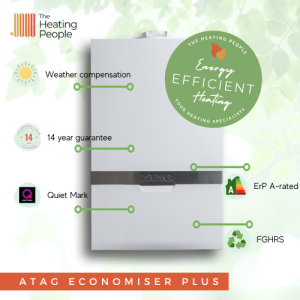
An ATAG Economiser Plus.The iC Economiser Plus is described as ‘the future of combi boilers’ by ATAG and it’s their most popular boiler.

This is perhaps unsurprising because it has all the great features of the iC and then some!

The Economiser is one of our favourite combi boilers because it has an in-built flue gas heat recovery system (FGHRS).

This makes the boiler more efficient. Because it captures and recycles the heat that you usually lose through the flue to preheat your incoming mains water.

And the amount saved is not to be sniffed at either.

Independent tests presented to the Government concluded that if half a million FGHRS were installed in homes; 56,209,150m3 of gas would be saved and 114,734,118kg of carbon dioxide emissions saved!

So having built-in FGHRS will cost you less to run, as well as helping the planet. But not only that, it makes the Economiser automatically compliant with the Boiler Plus legislation.

You won’t need to add an additional energy saving device, because it comes with one!

And just like the iC, the Economiser also comes with built-in weather compensation. ATAG really is at the forefront when it comes to energy efficiency.

The Economiser is available in three sizes (rather than the four available in the iC range):  The iC Economiser 27 Plus; iC Economiser 35 Plus; and the iC Economiser 39 Plus.

It’s just as compact as the iC, and is also available in a 275 mm (deep) model, in case you want to put it in a kitchen cupboard. 

How much do these ATAG boilers cost?

The iC range of boilers start from approximately £1950. The iC Economiser is ATAG’s premium boiler due to its increased efficiency and built-in FGHRS. It costs approximately £2,200.

Final thoughts?

Both the iC and the iC Economiser Plus are great combi boilers that feature unrivalled engineering; excellent energy efficiency; and reliability.

Both boilers come with a hefty guarantee for your peace of mind.

The only real differences between the two are that the iC is available in a slightly smaller model than the Economiser. 24kW as opposed to 27kW and doesn’t have FGHRS.

For us, the Economiser is the better choice, but of course a premium boiler comes with a premium price-tag. So it may well be price that’s the deciding factor between these two.

For tailored advice on your options, call us today to book your free survey.

Useful Links:

ATAG Heating combi boilers

Trust Pilot reviews of ATAG heating

Categories
Advice

6 things to know before buying a new boiler

A shopping trolley with a boiler in it.6 things to know before buying a new boiler…

With everything going on in the news about climate change and rising gas prices, a lot of people are thinking about the health of their heating systems and are considering boiler replacements.

If you’re worried about whether you can still buy a gas boiler – don’t be! Whilst there was a lot of talk about ‘phasing out’ and ‘phasing down’ fossil fuels at COP26, the government’s ambition is to phase out gas boilers after 2035.

Any existing boilers or boilers installed before that date won’t be affected.

At the moment, switching to a heat-pump or a hydrogen boiler isn’t an option for most people – and we don’t even know if hydrogen boilers will be a thing yet!

So, most of us will be getting gas boilers for the foreseeable future. But by choosing your boiler (and installer!) wisely, you can still help to lower your carbon footprint and cut your energy bills.

Getting a new boiler is a big investment that you’ll be wanting to keep you and your family warm and comfortable for the next 10-15 years – so it’s important to get it right.

You’ll want to choose the right boiler for your home; from a brand you can rely on; installed by an expert who can help you get the best out of it.

Since buying a boiler is a big decision, we’ve created a list of 6 important things that you should consider before handing over your hard-earned money…

1.   The importance of the installer

A heat pump installation by The Heating PeopleUnfortunately, people often take for granted the importance of choosing an expert engineer to install their new boiler.

And the issue here isn’t just about safety (although that’s very important!) – the installer themselves is the number one contributor to heating system efficiency, far more than the boiler you choose.

Let’s take a look at the two reasons why choosing an expert engineer is so important:

Safety

So first and foremost, safety. Only Gas Safe registered engineers can legally fit, fix, and service gas appliances.

Gas Safe engineers hold gas qualifications which mean that they are qualified to work on gas.

Despite the law being very clear on Gas Safety, British Gas estimates that around 1.1 million gas jobs are carried out by illegal fitters who aren’t properly qualified, every year.

This is a frightening statistic, because unsafe gas appliances pose risk of gas leaks; fires and explosions; and carbon monoxide poisoning.

Rest assured, that our engineers at The Heating People hold valid and current Gas Safe qualifications for working on gas.

Optimising the efficiency of your heating system

Liam next to an ATAG boiler installation.The second reason that choosing an expert installer is so important, is that your engineer is the number one contributor to your heating system’s efficiency.

Your choice of installer is more important than your choice of boiler. A bold claim, right?!

But when you think about it, it makes perfect sense. You wouldn’t ask an ordinary mechanic who’s spent the last thirty years doing MOTs for old ladies to fine tune a Formula 1 race car, and expect it to perform to its optimum capability, would you?

Well, the same is true of boiler installation.

There’s little point in spending a fortune on an all-singing-all-dancing boiler that promises A-rated efficiencies, and then handing it to a Charlatan that doesn’t even have a gas qualification.

Choose a Heat Geek!

The Heat Geek Elite logo.To get the best out of your new boiler, you need an expert engineer who understands emitter sizing, pipe sizing, hydraulic layout and principles.

An ‘engineer’ who wants to throw a boiler on the wall after simply counting your radiators either doesn’t understand these things or is just plain lazy.

Either way, you won’t get the efficiencies promised on your boiler’s box. These are only potential efficiencies. You need an expert who can commission your system in such a way that your boiler meets its potential.

Thankfully, you won’t find any of our engineers counting radiators. We install boilers the right way, following the industry standard (Part L of the Energy Efficiency Regulations).

 Our tailored service uses scientific calculations to match you with the perfect boiler for your home and lifestyle.

The Heating People are also proud to be part of the Heat Geek Elite. If you’ve not heard of Heat Geeks before, we’ve linked to their website at the end of this article.

Heat Geek’s mission is to help the UK successfully transition to renewables whilst also improving existing heating installation efficiencies by training as many heating engineers as possible — helping reduce the UK’s carbon footprint.

This is something we’re passionate about too. We’re tired of the one-size-fits-all approach to boiler installation.

We’ve undergone Heat Geek’s in-depth heating system design courses so that you can be sure that we can obtain the highest efficiencies from your heating system.

Which leads us on to our next point…

2.   The importance of an efficient boiler

Here at The Heating People, we’re passionate about efficient heating – and we’re not alone!

People are becoming a lot more aware of the importance of having an efficient boiler, not just to reduce their carbon footprint, but to save money too.

But if you’re not sure why everyone’s banging on about efficiency, here it is in a nutshell…

At its simplest, your boiler powers your heating by burning fuel (usually gas). This accounts for about 60% of your energy bill. The less fuel your boiler burns, the lower your energy bills.

Modern efficient boilers need to burn less fuel to keep you comfortable. Older inefficient boilers burn loads more fuel to do exactly the same job, which makes them more expensive to run, and worse for the planet.

So, depending on the age of your current boiler, replacing it with a newer model can save you money and reduce your carbon emissions.

The way you can tell what you stand to save, is by comparing the ‘Energy Related Products’ rating, or ErP rating of your current boiler, with the one you’re thinking of getting.

The ErP rating allows you to compare the efficiency of appliances in your home. The highest (and most efficient) rating for a boiler is ‘A’ and the lowest is ‘G’. 

According to The Energy Saving Trust (EST), you can save over £300 a year on your energy bills by replacing an old G-rated boiler with an A-rated one.

All modern boilers are A-rated with over 90% efficiency. So, to increase your overall efficiency when you’re not switching from a very old boiler to a new one, you need to look beyond the boiler itself.

Heating controls to improve efficiency

A woman holding a TRV.All boilers should as a minimum include a programmer (time control); at least one room thermostat; and thermostatic radiator valves (TRVs) on radiators. Systems with a hot water cylinder should also include a cylinder thermostat.

According to the EST, just having these basic controls could save you £75 a year and reduce your carbon dioxide emissions by 320kg.

But you don’t need to stop with the basics.

There are many other heating controls and smart controls that you can add to improve your heating system’s efficiency. The bonus is that smart controls are convenient and allow you to take control of your heating remotely.

How much money can be saved with smart controls?

A statistic about Tado smart heating.Manufacturers of smart controls make bold claims about how much money you could potentially save after installing their products.

Tado says that its smart thermostat ‘will pay for itself within a year’ by reducing your heating bills by up to 31%.

Netatmo claims that its smart thermostat will reduce the energy you use by 37%.

According to Ofgem, a smart thermostat can bring savings of around £150 per year. Ofgem (2014) estimates that a multi zoned heating system could save up to £400 on the annual dual fuel bill of £1385.

But all these estimates assume that you previously left your heating on all the time, to maintain a constant temperature. So, if you already turn off the heating when you leave your home, you’re unlikely to save as much as the manufacturers claim.

When recommending your perfect new boiler, The Heating People will also be able to advise you on what your best control options are.

You might like our related blog: Does smart heating save money?

3.   The importance of a reliable boiler

As well as being efficient, you’ll want your boiler to be reliable. The more reliable your new boiler, the less money you’ll have to shell out on expensive repairs.

The good news is that there are many fantastic boiler manufacturers who produce boilers of outstanding quality and reliability.

And this leads us on to a tricky question that we get asked a lot – which brand is best?!

With so many different boiler manufacturers available, each offering their own large range of models, choosing a boiler can be a daunting task.

But just as there’s no ‘one-size-fits-all’ boiler for everybody, there’s no ‘right’ boiler brand either.

Each brand (and individual model within the brand) has their own pros and cons, which need to be weighed up for your needs.

 But it’s definitely a good idea to do a bit of research into what options are available, so that you can make an informed choice on what will be the hardest working appliance in your home for at least the next decade.

Here at The Heating People, we’re not tied to any one manufacturer, we can work with all of them. But we do have our favourites! We’re proud to be Worcester Bosch Accredited Installers; Vaillant Advance Installers; Viessmann Trained Installers; and ATAG Selected Partners.

4.   The importance of boiler type

A man looking at different doors.One of the first things you need to know when you’re looking for a new boiler is what type of boiler you need.

There are three main types of boilers: combination or ‘combi’ boilers; system boilers; and heat-only or conventional boilers. We’ve written separate blogs about each of these types of boilers, but in a nutshell…

Combi boilers

Combi boilers are currently the most popular type of boiler sold in the UK. They deliver your hot water and heating from one single unit, without the need for external tanks or cylinders. Combis take cold-water directly from the mains and then heat the water on demand.

System boilers

System boilers also take their cold water directly from the mains, but unlike a combi, it heats the water and stores it in a hot water cylinder. Storing hot water in a cylinder means that system boilers can provide large quantities of hot water to multiple outlets at the same time.

Heat-only or conventional boilers

These boilers are often seen as the traditional way of heating a home, hence the name ‘conventional’. These boilers take their cold water from a cold-water tank that is kept in the attic.

The water gets heated before being sent to a separate hot water cylinder to be stored until it’s needed. Similarly to a system boiler, they can supply multiple outlets at the same time because they store hot water.

Which type of boiler do I need?

Which type of boiler you need will depend upon several factors, which The Heating People will discuss with you as part of your free survey.

And just because you currently have one type of boiler, doesn’t mean you have to have the same again.

You need to consider whether you want to replace like for like, or whether you want to take the opportunity to change to a completely different type of boiler system.

If you’re generally happy with what your old boiler offered when it was working well, then a replacement boiler similar to the old one could be a good option.

But if your circumstances have changed (maybe your family has grown) since you last had a boiler installed, you might be better switching to a different type of system.

5.   The importance of size

When it comes to heating, size matters!

Investing in the right size boiler will keep you and your family comfortable, without wasting energy and money.

This is such an important (but often overlooked) point when it comes to boiler installation, that we’ve dedicated a whole blog to it – which you can read here.

Choosing the correct size boiler is crucial.

If it’s too big it will run inefficiently and will be wasting energy and money.

But if it’s too small, it might not be powerful enough to heat your home, or give you enough hot water.

In the past, the physical size of your property and the number of radiators you had, was the only thing used to determine boiler size. And unfortunately, you’ll probably still find a lot of heating engineers using this crude method!

But this is inaccurate. It wasn’t the right way to do it in the past. And it isn’t the right way to do it now.

But it’s easy to see why ‘engineers’ (see important point 1) who aren’t following industry standard will oversize boilers

It’s easier to massively oversize a boiler ‘just in case’ rather than completing the heat loss calculations required to size it correctly. What do they care if your energy bill is sky high in a few months time?!

Size your boiler with heat loss calculations

Rest assured that The Heating People follow industry standard and carry out heat-loss calculations to determine the correct size of boiler for your home. 

Heat loss is the gold standard in determining the correct size of boiler for your home under Part L of the Energy Efficiency Regulations. These regulations provide guidance on the conservation of fuel and power under The Building Regulations Act 2010.

Heat loss calculations determine your property’s heat transfer coefficient by looking at the thermal transmittance or ‘U-values’ of all the external fabric of your building, along with its volume and average ventilation rate.

The altitude and exposure of your home will also affect this.

The calculation provides the total space heating energy flow rate in watts divided by the temperature difference between the inside and outside air.

Or, in other words, a heat loss calculation works out how quickly heat can escape out of the fabric of your home, whether from conduction, convection, or radiation, on the coldest day of the year.

This allows you to choose the optimum size of boiler for your needs and avoid wasting energy and money whilst being comfortably warm.

6.   The lowest price is not always the best

This links to our first point – finding the right installer. The right boiler installed by an expert installer will pay for itself.

But you need to think beyond the initial purchase price and consider the long-term costs.

Often people think that just because the boiler being installed is the same that the work involved is also the same.

But as we’ve explained earlier, there’s a big difference between an unqualified ‘engineer’ who deliberately oversizes a boiler to save him doing any work, and an expert who does the job properly!

You won’t need to look very far to find a fitter with no qualifications who throws boilers on the wall illegally and cheaply.

But you’ll end up paying more down the line through excessive energy bills and on boiler repairs for your boiler that is constantly ‘cycling’.

Rather than buying simply on price, you should remember that this is probably the most expensive and important appliance in your home. You want to still be happy with it 10-15 years down the line.

As with many things in life, you get what you pay for!

Final thoughts…

An engineer advising customers.We hope you’ve found this article helpful.

You might like our related blogs: The best combi boilers 2022 and Your options with a boiler replacement.

For tailored advice on your boiler installation, contact us today to book your free survey. We can offer guarantees of up to 14 years, for your peace of mind.

Useful Links:

Find a Heat Geek

Energy Saving Trust: Heating Controls

Tado smart controls – savings

Which? reviews of smart thermostats

Drayton Wiser controls

Categories
Uncategorized

8 Interesting Heating Facts

A woman carrying a pile of books.8 Interesting heating facts… Yep, we did say interesting.

Ok, ok – we know that unless you’re in the industry, heating might not seem all that interesting. But we’re here to tell you otherwise!

At The Heating People, we’re total heat geeks and love everything heating related.

Whilst you might not immediately think of heating as an exciting topic of conversation; we’ve certainly come to rely on it to keep our families warm and safe.

And home heating has come a long way from the campfires of early man.

So, we’re sharing 8 interesting heating facts that might help you to save some money; or maybe even win some in a quiz one day!

Interesting Heating Fact 1: The Romans invented the first central heating system

To borrow a line from Monty Python, “Apart from sanitation; medicine; education; wine; public order; irrigation; roads; a fresh water system; and public health, what have the Romans ever done for us?”

We could add – invented the first central heating system to the list!

Up until this point, we only knew how to heat a single room at a time using a fire.

The Roman Empire invented the first central heating system called a “hypocaust”. The hypocaust was a system that circulated hot air under the floor and surrounding walls – in the absence of radiators!

Roman buildings with a hypocaust were built on pillars and the floors and walls had spaces in them. Fires were lit below the buildings; allowing the heat to flow through the space in the floors and walls; and out through flues in the roof.

The use of flues to ensure that hot air and smoke didn’t leak into the home was quite a feat of engineering; considering the materials used at the time.

As you might imagine; running a hypocaust wasn’t cheap. So only the very well-off could afford to have them in their homes.

But most Romans could still experience the heating system by visiting the hot Roman baths; where walls and floors were heated.

Interesting Heating Fact 2 –  The first radiator was known as ‘the hot-box’

Mr Franz San Galli, a Polish-born, Russian inventor; has been credited with inventing the first heating radiator – famously calling it a ‘hot-box’.

The hot box was made up of large columns of steel with waterways inside. These allowed for hot water to pass through and heat air which in turn heated up the room. This was a revolution in central heating, and was launched in St Petersburg.

But there is some debate about whether the hot box was the very first radiator. Because there were other similar ‘heat distributors’ being developed around the same time.

One of which was the so-called ‘mattress radiator’ from an American inventor called Stephen Gold in 1854.

But these very early radiators paved the way for the ‘Bundy Loop’ designed by Nelson H. Bundy in 1872. The Bundy Loop was a cast iron radiator that had loops which were screwed into a cast iron base; and it also came in a circular version.

Other manufacturers quickly replicated the design, adding their own features. But the Bundy Loop can still be seen in the various different radiators styles seen today.

Interesting Heating Fact 3 – Vaillant invented the first combi boiler

So, the Romans came up with the first central heating system. And the Russians and Americans invented the first radiators. Us Brits must have come up with the first combi boiler, right?

Nope. We’ve got German manufacturer, Vaillant to thank for that!

In 1967 Vaillant invented the first combined heating and hot water boiler – the Combi-Geyser VCW 20.

This was the first time that heating and hot water could be produced from a single, compact unit. Prior to importing the first combi boilers from Europe; us Brits were using open vented central heating systems with stored hot water in a separate cylinder.

The combi boiler is now the most popular type of boiler sold in the UK domestic market. You can read about their pros and cons here.

Interesting Heating Fact 4 – Radiators heat our homes by convection

Despite their misleading name, radiators heat our homes via convection, rather than radiation.

If you remember your school science lessons, you’ll know that heat can be transferred in three ways: by conduction, by convection, and by radiation.

Conduction is the transfer of energy from one molecule to another by direct contact. And incidentally, it’s this process that means that your home suffers heat loss.

This is because the second rule of thermodynamics means that when an object is at a different temperature from another body or its surroundings, heat flows to reach a thermal equilibrium.

So, in other words, the warm air in your home will always move towards the cold air outside. And this is why we do heat loss calculations to find your new boiler!

Convection is the movement of heat by a fluid such as water or air. The fluid (liquid or gas) moves from one location to another, transferring heat along with it.

Radiation is the transfer of heat by electromagnetic waves. Unlike conduction or convection, heat transfer by radiation doesn’t need any matter to help with the transfer.

If you think about your radiators then, it’s clear that they transfer heat to your rooms by convection.

Your boiler pumps heated water through the pipes in your central heating system, to your radiators. Radiators then transfer the heat from the water to the air in your rooms through convection.

When water in the radiator is heated, the surrounding air is also heated up via convection and this hot air is then moved around the room as the air circulates.

Interesting Heating Fact 5 – Turning up your thermostat won’t heat your home any faster

If you’ve read our blog: 7 Central Heating Myths Debunked, you’ll know that a whopping 52% of people mistakenly believe that turning up their thermostat when they’re cold will make their rooms heat up faster. But as we said, this is a myth!

Thermostats don’t control the speed at which your house heats up, all they do is set the maximum temperature that you want your room to be.

So, if you come home to a really cold house, and then turn your thermostat up to 27 degrees, your rooms will still heat up at precisely the same speed they would have if you’d set the thermostat to 21 degrees.

You’ll just end up overshooting the temperature you actually wanted, and will have wasted energy (and therefore money) overheating your home.

And a bonus thermostat fact… if you turn your thermostat down by just 1 degree, you can save up to 10% on your heating bills.

Interesting Heating Fact 6 – Insulation is vital!

Diagram showing high U-valuesThe key to keeping your home as warm as possible, and your energy bills as low as possible, is insulation!

But unfortunately, according to the Climate Change Committee, our housing stock is one of the oldest and worst insulated in Europe, with 38% of our homes pre-dating 1946.

Poorly insulated homes lose their heat quicker (due to the second rule of thermodynamics that we mentioned earlier!) and it therefore takes more energy and more money to keep them warm.

According to the Energy Saving Trust, the following estimates indicate the proportionate heat loss from a badly insulated house: 25% through the roof; 35% through outside walls; 25% through doors and windows; and 15% can be lost through ground floors.

These figures illustrate how insulation is one of the best investments in your home you can make. Your reduced fuel bills will cover the initial outlay time and time again.

Interesting Heating Fact 7 – Heating and hot water accounts for about 55% of your energy bills

According to the Energy Saving Trust (2020), heating and hot water accounts for approximately 55% of your household’s energy bills.

With the average home’s energy bill being about £1,287 per year (which is set to rise thanks to the gas fuel crisis) it’s easy to see the importance of having an energy efficient boiler.

According to The Energy Saving Trust, you could save as much as £340 a year on your gas bill if you’re trading in an old-style non-condensing boiler for a new condensing one.

And you’ll also reduce your carbon emissions too, which is vital if we’re to meet our national ambition of achieving net zero by 2050. 

If you’re worried about the future of gas boilers, you should check out our related blogs: The Truth about the ‘Boiler Ban’ – spoiler: Yours won’t be evicted! And What are heat pumps?

Interesting Heating Fact 8 – 1 in 5 boiler breakdowns are due to inadequate maintenance

According to Which? 1 in 5 boiler breakdowns is due to inadequate boiler maintenance, or in other words, not booking in for that annual service.

In their 2021 boiler reliability survey, Which? found that only around three in ten boilers that are serviced annually have needed a repair in their first six years. This doubles to around six in ten boilers if the boiler is only serviced every two to five years.

But getting your boiler serviced regularly isn’t just about avoiding breakdowns, it’s about safety too.

Boilers have built in safety features to ensure correct operation, but over time, these can wear down, and leave your boiler in an unsafe condition.

Unsafe gas appliances pose risk of gas leaks; fires and explosions, and carbon monoxide poisoning.

Despite this, a survey by the Gas Safe Register found that 24% of homeowners have either never had their boiler serviced or haven’t had it serviced once a year as recommended.

Don’t take the risk! Get your boiler serviced annually by a Gas Safe engineer.

Final thoughts…

We hope you’ve found out something you didn’t know about heating!

If you want tailored advice on improving your home heating, contact us today to book your free survey.

Useful links:

Britannica: The Hypocaust

Vita-Romae: The hypocaust system

The Climate Change Committee report on UK housing stock

Energy Saving Trust: Heating your home

Which? Boiler servicing

Categories
Advice

Heating checks for buying a new house

A man moving boxes.Heating checks for buying a new house…

Moving house can be stressful. And the last thing you want when you’ve moved in; is to find that you have a central heating system that’s on its last legs.

Nobody wants to move into their new dream home, to have the boiler break down just days later; or get a nasty shock when they get their first energy bill.

Buying a property with a dodgy heating system will cost you down the line. So it’s well worth giving the central heating system some thought before taking the plunge.

In this handy guide; we’ll give you some things to think about when looking at the heating in your prospective new house.

What information will I be given about the heating in my new house?

Lets start with what information you can expect to be given about the heating system in your new home…

Heating checks for buying a new house: The TA6 Form

When buying a new house, you’ll be given an important document called a ‘TA6 form’.

This form is basically a long questionnaire about the property, which is filled in by the seller.

The idea is that it gives you detailed information about the house you’re buying; so you can make an informed decision about whether to proceed or not.

In terms of heating, the TA6 form asks questions about the type of heating system; whether it is in working order; and the type of fuel that the system uses.

It also requires the seller to provide evidence that the system was installed properly; and the date it was last serviced.

Of course, this won’t tell you whether the heating is effective or efficient.

Heating checks for buying a new house: The Energy Performance Certificate

An Energy Performance Certificate or an ‘EPC is needed whenever a building is bought, sold or rented out.

It contains information about a property’s energy use and typical energy costs; and gives recommendations about how to reduce energy use and save money.

An EPC gives a property an energy efficiency rating from A (most efficient) to G (least efficient); and is valid for 10 years.

The EPC will therefore give you some idea of the efficiency and level of insulation at the property.

Heating checks for buying a new house: What type of fuel does the boiler use?

Most boilers in the UK are fuelled by natural gas, followed by heating oil, and occasionally liquid petroleum gas (LPG).

Although rare, some boilers burn coal or biomass. It’s also possible to have an electric central heating boiler, as well as eco-friendly heat pumps.

It’s worth considering what type of fuel your new heating system runs on; because the cost of different fuels varies and fluctuates.

You should ask the seller about their annual heating bills.

Heating checks for buying a new house: What type of boiler system is installed in the property?

Three houses with different heating systems.The next thing to consider is the type of boiler system that’s installed in the property. And whether this will suit your lifestyle and needs, or whether you’ll have to factor in a replacement.

Although there are many different makes and models of boiler, they all fall into three basic types. In a nutshell:

Heat-only or ‘conventional’ boilers

Heat-only boilers are often thought of as the traditional way of heating a home.

They’re designed to provide both heating and hot-water with the use of an additional cold-water tank and hot-water cylinder.

Heat-only boilers work well in large households with multiple bathrooms. Because they can supply large amounts of hot water to multiple outlets at the same time.

Combination or ‘combi’ boilers

A man looking at different doors.‘Combi’ is short for ‘combination’ boiler because it provides both your heating and hot water from one all-in-one (combined) unit. They don’t need any external tanks or cylinders.

Combis never run out of hot water because they produce it instantaneously, on demand.

However, they struggle to supply multiple outlets at the same time, so they are generally unsuitable for larger homes.

You can see our favourite combi boilers here.

System boilers

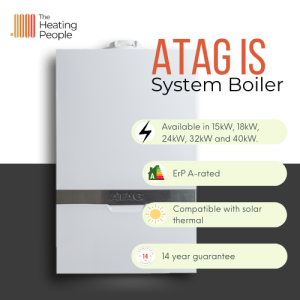
An ATAG iS boiler.System boilers feature aspects of both a heat-only boiler and a combi.

Like a heat-only boiler; a system boiler needs a hot water storage cylinder to heat and store hot water for your taps.

But it doesn’t need a tank in the attic. Because, like a combi, it takes its water supply directly from the mains.

System boilers work well in large households with multiple bathrooms; because they can supply large amounts of hot water to multiple outlets at the same time.

Don’t worry if you don’t know what type of boiler would best suit your needs. The Heating People are experts at finding the perfect boiler for you and your family.

You might also like our related blog: 6 Top tips for buying a new boiler.

Heating checks for buying a new house: How old is the boiler?

In addition to looking at the type of boiler in the house; you should also look at how old the boiler is.

A new boiler is unlikely to need to be replaced; but an old boiler is much more likely to break-down and cost you over the odds on your energy bills.

So, what’s considered an ‘old’ boiler? Unfortunately, there’s no simple answer to this question.

There’s a common misconception that when a boiler reaches a certain age, it needs to be replaced. But this isn’t true.

With regular servicing, some reliable old boilers will keep ticking over, without ever giving much of a grumble. However, others will start to deteriorate, and may start breaking down, and needing more frequent repairs.

Older, less efficient boilers also cost more to run because they use more energy to heat your home. An A rated boiler has an energy efficiency of 90% or more.

The Boiler Plus regulations mean that new combi boilers are at least 92% efficient.

To put this in perspective; an older G rated boiler has an efficiency of 70% or less. Which means for every £1 you spend on your heating bill you are wasting 30p on lost energy.

As well as older boilers tending to be less efficient to start with; their efficiency can also deteriorate further with age.

If you buy a house with a boiler in its golden years; ask us what you stand to gain from a replacement.

Check out our related blog: How to choose an energy efficient boiler.

Heating checks for buying a new house: Does the boiler come with a guarantee?

A woman relaxing on a sofa.Ask the vendor if the boiler is covered by any form of guarantee.

The length of a boiler guarantee varies greatly depending on the make and model of the boiler; as well as the installer.

The Heating People, we can offer guarantees of up to 14 years on our boilers.

This gives you peace of mind that should anything go wrong with the boiler, the cost of repairs is covered.

Remember that you’ll need to have your boiler serviced annually by a Gas Safe engineer to maintain your guarantee.

Heating checks for buying a new house: What are the radiators and pipes like?

As well as checking the boiler, you should look at the radiators.

The best boiler in the world won’t be able to heat your home effectively; if the radiators and pipes are falling apart!

Check for any obvious signs of leaks or rust; and ask the vendor to switch the heating on; so that you can check the radiators are emitting heat effectively.

Old radiators and pipes may benefit from a power flush to address any cold spots caused by corrosion and sludge.

A power flush is a cleansing process which cleans your entire central heating system; removing the sludge, which would otherwise cause damage and reduce efficiency. 

Heating checks for buying a new house: Do the radiators have TRVs on them?

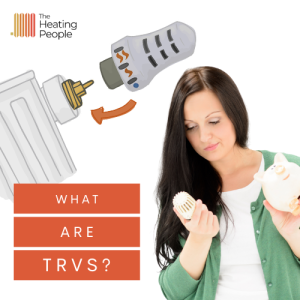
A woman holding a TRV and a piggy bank.Check whether the radiators have TRVs.

A TRV fits on the side of a radiator and allows you to control how much heat your radiator emits. And therefore the temperature of your room.

TRVs not only allow you to maximise the comfort of your home by setting different temperatures in different rooms; but they also save energy.

BEIS found that TRVs can produce energy savings of 3% in dwellings, which will benefit your wallet, and the environment.

Heating checks for buying a new house: What is the insulation at the property like?

Although often overlooked; the amount of insulation in a property has a huge effect on how efficient the central heating system is.

Insulation works by reducing the amount of heat lost from the fabric of your building; reducing the amount of energy you need to heat your home; and saving you money on your energy bills.

According to the Energy Savings Trust, a badly insulated house can lose: 25% of its heat through the roof; 35% through outside walls; 25% through doors and windows; and 15% through ground floors.

So, it’s well worth looking at what level of insulation your house has. The thicker the insulation is, the more effective it will be at stopping heat from leaving your house.

According to the EST, topping up your loft insulation from 120mm to 270mm could cost around £240. But will save around £12 a year on energy bills.

Adding cavity wall insulation could save you up to £150 a year off your energy bills (based on a typical 3-bedroom semi-detached house)

Heating checks for buying a new house: Are the windows double glazed?

The EST recommends making sure all windows are double or triple glazed, to improve the efficiency of your heating system.

If the house has drafty old windows, you’ll be letting cold air in, and your warm air out.

So, you should factor in the cost of replacements into your purchase price.


Heating checks for buying a new house: Gas Safety when buying a new house

Heating issues aren’t the only thing you should be mindful of when burying a new home.

If there are any gas appliances in the house, you should get them checked.

Don’t assume that everything’s ok because you’ve had a homebuyer or structural survey.

Only Gas Safe registered engineers can legally undertake gas work at a property. So your surveys might not confirm that gas appliances are working as they should.

Unsafe gas appliances can pose three main risks to life:

  1. Gas leaks

A gas leak can cause fires or explosions. If you think you can smell gas, then you’ll need to call your emergency service provider immediately. During a gas safety check; a Gas Safe registered engineer will do a visual inspection of pipework and a tightness test to confirm there aren’t any gas leaks.

  1. Fires and explosions

Safe appliances burn gas in a controlled way; but a faulty appliance or pipework may leak gas which can then be ignited; causing a fire or explosion.

  1. Carbon monoxide poisoning

If any of your gas appliances aren’t burning their fuel as they should; they can produce a highly poisonous gas called carbon monoxide (CO).

Exposure to this gas can lead to death; and it is especially dangerous because you can’t see; taste; or smell it.

Therefore, it’s so important to get your gas boiler serviced each year.

To avoid these risks; ask the current owners for a gas safety record or certificate for all appliances in the property.

If they can’t provide a record; or it’s been over 12 months since the last check; get in touch with a Gas Safe registered engineer to carry out a gas safety check before you move in.

So, what next?

An old and inefficient heating system doesn’t have to be a deal-breaker if you’ve fallen in love with the house.

But you should consider the cost of any necessary upgrades when making your offer.

Contact The Heating People to upgrade your heating system.

Useful Links:

The Law Society property transaction forms

Gas Safe Register: Buying a new home

Uswitch heating and fuel

Gov.uk: Energy performance certificates

Energy Saving Trust: Reducing Heat Loss

Categories
Advice

Condemned boiler? What to do next

A boiler with a warning sign on it.Condemned boiler?

You’ve just received the news that everyone dreads getting from their heating engineer – your boiler’s dangerous and has been condemned. Bummer.

So, what next?

Whilst having your boiler condemned sounds a bit scary; it’s good that safety issues have been identified before any harm has been done. You and your family are safe.

But regardless of the positives, it’s still not what you wanted to hear!

To help you get sorted, we’ve put together this guide to everything you need to know about your condemned boiler; what to do next; and how you can hopefully prevent this from happening again in the future.

What is a condemned boiler?

Let’s start by looking at what a condemned boiler actually is…

Unfortunately, being condemned can be the death knell for your boiler. It means that it’s been officially declared unsafe for use.

We all know that gas can be dangerous. And if your boiler isn’t burning gas as it should, it’s dangerous and shouldn’t be used – hence it being condemned.

But this doesn’t necessarily mean that it’s the end of the road for your boiler. It depends which category it falls into (more on this later) and whether it can be made safe again.

Think of it as being a bit like an MOT for your car. Your mechanic might fail your car initially because it doesn’t meet current safety standards.

Your mechanic calls you, explains what needs addressing, and how much it will cost. If economical repairs are possible, you might choose to go ahead. Your mechanic then does the repairs, and your car passes its MOT.

This might be the case for your boiler. It might be component part can be replaced to make your boiler safe again.

Why are boilers condemned?

Your Gas Safe engineer will be following the Gas Industry Unsafe Situations Procedure (GIUSP) when assessing your boiler.

This procedure helps to protect you from unsafe gas appliances. It complies with the law under the Gas Safety (Installation and Use) Regulations 1998.

When looking at your boiler, your engineer will do his or her best to ensure that you’re safe.

There are many reasons why your boiler might be unsafe. There are many components which might have deteriorated or been improperly fitted or maintained. 

The reason could be as simple as there being inadequate ventilation. But it could be as dangerous as your boiler leaking carbon monoxide gas.

What are the risks of having an unsafe boiler at home?

You might be wondering what the risks are with having an unsafe boiler in your home. And why condemning it was necessary…

There are three main risks of unsafe gas appliances:

1.    Gas leaks

A gas leak can cause fires or explosions. If you think you can smell gas, then you’ll need to call your emergency service provider immediately. During a gas safety check, a Gas Safe engineer will do a visual inspection of pipework; and a tightness test to confirm there aren’t any gas leaks.

2.    Fires and explosions

Safe appliances burn gas in a controlled way. But faulty boilers or pipework can leak gas which can ignite, causing fires and explosions.

3.    Carbon monoxide poisoning

Carbon monoxide (CO) is a highly poisonous gas. It can be especially deadly because you can’t see, taste or smell it.

According to the NHS, there are approximately 60 carbon monoxide related deaths in the UK every year.

These are all pretty scary, we know! But you can avoid the risks by servicing your boiler each year.

The two categories of condemned boiler

What happens when your boiler is condemned, depends on what category it falls into.

Under GIUSP, there are two categories used to classify your unsafe boiler; depending on how serious the problems are:

Condemned boiler: Immediately Dangerous (ID)

As you might expect, ‘immediately dangerous’ is the most serious one!

An ‘immediately dangerous’ boiler is one which if operated; or left connected to the gas supply; is an immediate danger to life or property.

In this situation, your engineer will disconnect your boiler. And you must not use it until the fault has been fixed.

If for some (crazy) reason you refuse to let the engineer disconnect the boiler; they must report the matter to the Gas Emergency Service Provider (ESP).

The ESP has the legal power to forcibly enter your property and make the situation safe; or disconnect the gas supply.

Condemned boiler: At Risk (AR)

An ‘At Risk’ boiler has at least one fault; which could endanger life or the property.

Again, an engineer will disconnect the boiler. And it must not be used again until the faults are fixed.

However, in a limited number of cases turning off the gas supply will not remove or reduce the risk.

In such circumstances you will be issued with a warning notice and advised whom to contact for further information.

What is an ESP Visit?

Where a gas leak is suspected, the Gas Emergency Service Provider (ESP) may visit your home. The ESP will put a ‘Danger do not use’ label on your boiler if they suspect it’s unsafe.

In which case, you need to find a Gas Safe registered engineer to check it over. You should not use the boiler until a Gas Safe registered engineer has declared it safe to use.

Condemned boiler – What happens?

If your engineer cannot find the cause of the problem and fix it; they will need to make the situation safe either by turning the boiler off; or disconnecting the gas supply.

Your engineer will apply a ‘Danger Do Not Use’ warning label to your boiler; in line with the Gas Industry Unsafe Situations Procedure (GIUSP).

The warning sticker means that your engineer has conducted a safety check and your boiler doesn’t meet current safety standards.

The sticker will categorise the boiler as Immediately Dangerous (ID) or At Risk (AR). It provides information about what needs to be done.

Condemned boiler – What to do next

We understand that it can be stressful to have your boiler condemned, so here’s what you need to do next:

Try not to panic!

Whilst it can be worrying to hear that your boiler is unsafe; you should be pleased that the fault has been found early.

Your engineer will have taken all the necessary steps to make the boiler safe. So there’s no need to worry that you are in danger now.

Get good advice

Hopefully you have an expert engineer whom you can trust to give you sound advice. If not, find one!

You need to follow your engineer’s advice on whether it’s economical to repair your boiler; or whether a replacement is the best option.

Find the right boiler

If you’ve decided that a boiler replacement is the best (or only!) option; you need to find the right boiler for your needs.

Although you may be without heating and hot water, it’s important that you don’t make a rushed decision.

A boiler is a big investment that you’ll want to keep you and your family warm for the next 10-15 years so you’ll want to get it right.

Again, finding an expert engineer whom you can trust is the answer here!

The Heating People are boiler installation specialists. We have over twenty years experience in helping families with their heating. Rest assured that we will calculate, recommend and install the right boiler for you and your family in your time of need!

You might like our related blogs: How to choose an energy efficient boiler and The best combi boilers 2022.

Can you sell a house with a condemned boiler?

You can sell a house with a condemned boiler, if you make the buyer aware of the situation. But, it’s advisable to replace a condemned boiler before selling. Would you want to pay to inherit this problem?!

Investing in a new efficient boiler could increase the value of your property, as well as making your property more attractive to potential buyers.

How to avoid a condemned boiler in the future

Now that you’ve been through this inconvenience once, you’ll want to avoid it happening again in the future.

There are several things that you can do to avoid facing this headache again:

Keep up to date with your boiler service

Prevention is better than cure, and an annual boiler service is vital in optimising the lifespan of your boiler and preventing problems from occurring.

Research by Which? Found that around two thirds of boilers that are serviced every year never need a repair. This number drops dramatically as you increase the time between services, so spending a bit on a boiler service could potentially save you a much bigger repair bill.

During your boiler service, your engineer will spot any possible issues before they cause a big problem.

Also remember that you need to have your boiler serviced annually to maintain its guarantee.

Invest in a new boiler

If you’ve been putting off replacing an old and temperamental boiler, it might be time to consider a replacement before it becomes dangerous.

To find out the warning signs, check out our related blog: Does my boiler need replacing?

You can save money on your heating bills by replacing an old G-rated boiler with a modern, A-rated condensing one. The Energy Saving Trust estimate that such a switch can save you around £350 on your bills each year.

Get a professional to fit (and service) your boiler

Only Gas Safe registered engineers are legally qualified to install, repair and service your gas boiler.

But despite this, there are still an alarming number of Charlatans out there who are installing and working on gas boilers illegally, without the required qualifications.

It goes without saying really, but a boiler is far more likely to end up condemned if it’s been installed incorrectly by someone who doesn’t know what they’re doing. So make sure you check!

Rest assured that all engineers with The Heating People are Gas Safe registered and are experts in commissioning your boiler to fully optimise its energy efficiency.

Final thoughts…

So, the takeaway from this, is that you don’t need to panic if your boiler is condemned.

Take the time to find an expert engineer who will give you advice that you can trust; and will find you the boiler that is right for you and your family.

And once you’ve found your trusted engineer, keep them! Your engineer is key to keeping the unsung hero of your home ticking over for the next decade or more.

Useful Links

Gas Safe Register: Gas Industry Unsafe Situations Procedure Explained

Which? article on preparing your boiler for the winter

Categories
Viessmann

Why choose a Viessmann boiler?

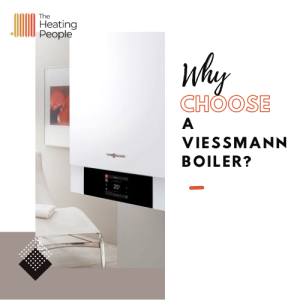
A Viessmann boiler.Why choose a Viessmann boiler?

If your old boiler is on its last legs, or has conked out completely, you’ll be on the hunt for a shiny new model. But with so much choice out there, it can be daunting to know where to start. 

Although they may look pretty similar, not all boilers are the same. And since a new boiler is a big investment for your home, it’s wise to be informed about your options.

And the Heating People are here to help! We’re experts at finding you the perfect boiler for your home.

We often get asked ‘which boiler brand is best?’ But unfortunately there isn’t a one-size-fits-all answer to this question.

There are several reputable manufacturers of boilers that all offer outstanding engineering and boilers that are built to last. But we do have our favourites!

We’re proud to be: ATAG Selected Partners; Worcester Bosch Accredited Installers; Vaillant Advance Installers; and Viessmann Trained Installers.

In today’s blog, we’ll walk you through some of the key reasons why Viessmann is a popular choice amongst homeowners.

You should check out our other blogs on other boiler brands, or better yet – contact one of our team to book your free survey and get tailored advice on your heating system!

Who is Viessmann?

Let’s start by looking at the manufacturer.

Viessmann Group is a German company specialising in heating, cooling, and refrigeration systems for over 100 years.

The company was founded by Johann Viessmann in 1917 and is still run by the Viessmann family today.

Whilst its manufacturing base remains at its headquarters in Allendorf, Germany, Viessmann has grown significantly. The company is active in 74 countries around the world, and employs over 12750 people worldwide. 

Viessmann has been operating in the UK since 1989 from the UK headquarters in Telford.

But they don’t just produce boilers. Their product range also includes air and ground source heat pumps, biomass and steam boilers and combined heat and power generation units.

Viessmann invests heavily in technological innovation. Their boilers boast German engineering, stainless steel heat exchangers, and high-quality parts.

Viessmann are always at the forefront of design innovation. They say that their prime motive is to create innovative products and solutions to protect the environment. And their heating systems reflect this, with efficiency rates of up to 98 percent.

Why should you consider a Viessmann boiler?

Let’s look at some of the key benefits of choosing a Viessmann boiler…

1.    Viessmann has a large product range to cater for every home and lifestyle

Whatever type and size of boiler you’re looking for, Viessmann has an option for you.

Viesmmann manufactures heat-only boilers; combi boilers; storage combi boilers; and system boilers in a range of different fuel types (Oil, LPG, or gas) and sizes (power outputs). So whatever the size of your home, there’s a solution for you.

And if you’re short on space, Viessmann has thought of this too, with their compact models.

With a height of only 700 mm, the Vitodens 050-W is one of the smallest wall mounted boilers in its class, and will fit into a kitchen cupboard.

Viessmann has also catered for households that want all of the advantages of a combi boiler, but also have a high demand for hot water, with the Vitodens 111-W.

The 111-W is a high performance storage combi boiler that has the capacity to fill a standard bath in just 8 minutes, whilst also supplying a sink or washbasin simultaneously.

If you’ve read our previous blogs on combi boilers, you’ll know that this isn’t possible with a standard combi.

So, you’re certainly spoilt for choice with a Viessmann boiler!

2.    Viessmann is a reliable boiler brand that is highly rated by customers

Viessmann say that they’re the most reliable boiler brand on the UK market. And this seems to be backed up in satisfaction surveys.

Trusted Traders has rated Viessmann 5 out of 5 stars for reliability and customer score, and 4 out of 5 stars for their overall engineer recommendation score.

Viessmann has a trust pilot score of 4.6 out of 5 stars, and Viessmann’s Vitodens combi boiler range has been awarded Which? Best Buy 2021.

The Which? ‘Best Buy’ boilers from Viessmann are the Vitodens:

3.    Viessmann boilers are up to 98% energy efficient

Thanks to condensing technology, and legislation on energy efficiency, all modern boilers should have an energy efficiency rating of around 92%.

But nonetheless, Viessmann still manufactures some of the most efficient boilers on the market.

The Vitodens 200-W and the Vitodens 222-F both have energy efficiency ratings of 98%. This means that for every pound you spend on gas, only 2p gets wasted in the heating process.

If you compare this to an old G-rated boiler that’s only 70% efficient  (and therefore wastes 30p in every pound), it’s easy to see how you can potentially make big savings on your energy bills!

Check out our related blog: How to choose an energy efficient boiler.

4.    Viessmann boilers come with weather compensation

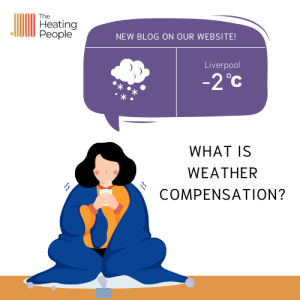
A cold woman thinking about the weather.Another reason why Viessmann boilers are so efficient is that all of the boilers in the Vitodens range come with weather compensation technology.

Weather compensation devices use an outdoor sensor to monitor the outdoor temperature and adjust your boiler’s operation accordingly.

By matching your home’s heat loss (which is caused by the weather) Viessmann says that you can save up to 15% on your energy bills, as well as reducing your carbon footprint. So it’s win-win!

Weather compensation can also improve your home comfort by avoiding spikes of over and under-heating, giving you a consistent indoor temperature, whatever the weather.

5.    Viessmann boilers have good modulation ratios

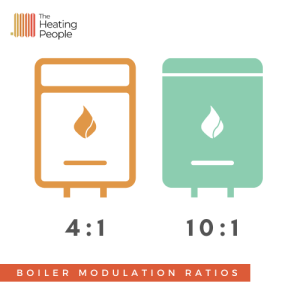
Diagram showing boiler modulation ratios.And yet another reason why Viessmann boilers are so efficient, is that they have good modulation ratios.

Boiler modulation refers to the ability of the boiler to automatically reduce its output to suit the demand for heat, thereby lowering the amount of gas it’s using.

Let’s say you only need 10 kw of heat for your home for the next couple of hours. But you have a 20kw boiler. Instead of your boiler outputting 20kw and then cycling on and off, your boiler would reduce its output by turning down its flame by 50%.

The modulation ‘ratio’ is how manufacturers express a boiler’s ability to modulate.

The numbers refer to the boiler’s minimum output in relation to its maximum output. The wider the modulation range, the better the ratio.

Let’s look at three examples to explain this:

Boiler A – Fictional example

Boiler A has a maximum output of 30kW and has a 5:1 ratio. This means that the maximum power it can output to heat your home is 30kW, and it can modulate this down to 6kW..

Boiler B – Vitodens 111

Boiler B has a maximum power output of 30kW and a 10:1 ratio. This means that the maximum power it can output to your home is 30kW, and it can modulate this down to 3 kW.

Boiler C – Vitodens 200-W

Boiler C has a maximum output of 30kW and an extremely impressive 17:1 ratio. This means that the maximum power it can output to your home is 30kW, and it can modulate this down to 1.7 kW.

So which of the examples is the best?

Boiler C or the Vitodens 200-W is the most efficient boiler. It can modulate its output from 30kW to just 1.7kW with a total of 17 different heat outputs.

Lower power output means less fuel burned, and more money saved on your bills.

To illustrate this further… Say you only need a very small increase in heat, Boiler A would fire at 6Kw, but Boiler C (the Vitodens 200-W) would fire at a lower (and more efficient) 1.7Kw.

A non-modulating boiler would fire at its maximum output of 30Kw regardless of the heat demand, consuming unnecessary energy and overheating the home.

Another advantage is that there will be less boiler cycling, and so there will be a lower level of stress placed upon the boiler, potentially extending its lifespan.

6.    Viessmann boilers are designed to be ‘future-proof’

Viessmann describes their boilers as being ‘future-proof’ in that they’ve been designed to be compatible with a range of fuel sources.

All Viessmann gas boilers are Hydrogen Ready (H2 20% Blend).

Viesmann’s gas boilers can also be used in conjunction with a solar thermal heating system to provide you with a domestic hot water backup.

By using solar power as a renewable energy source, you’ll be helping to protect the environment, as well as lowering your fuel bills. 

The combustion controller found in Viessmann’s Vitodens 200 range is designed to automatically adjust to various gas types, including biogas mixtures, meaning these heating systems are equipped to be used with sustainable fuels.

The Vitodens 200 is sold as a fossil fuel boiler, but it will also run on E-gas, H-gas, shale, LNG, hydrogen generated from wind energy and PV energy, synthetic methane and upgraded biogas, all without any adjustment. It’s fair to say that it’s future-proof and ready for any developments in renewable technology!

7.    Viessmann boilers have a stainless-steel heat exchanger

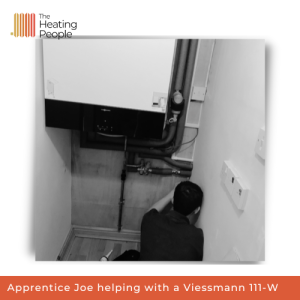
An engineer installing a Viessmann boilerThe most important part of any boiler is the heat exchanger. Because its job is to transfer heat from your boiler’s fuel, to the water in your heating system.

If  your heat exchanger breaks, you’ll have no heating and hot water, and it’s usually very expensive to replace.

So, the fact that all Viessmann boilers have a high-quality, stainless steel heat exchanger, is a real plus!

Many other boiler manufacturers including Worcester Bosch use an aluminium heat exchanger, which doesn’t offer the same efficiency and longevity levels as stainless steel.

Viessmann’s stainless steel inox radial heat exchanger delivers an extremely high 98% efficiency rate, and is guaranteed for 10 years against leaks resulting from corrosion.

If you’re after a stainless steel heat exchanger, you should also consider ATAG. ATAG has a lifetime guarantee on its iCon heat exchanger, which maintains 98% of its original efficiency levels throughout its lifetime.

8.    Viessmann offers Lambda Pro combustion control

Viessmann has developed a unique feature for its gas boilers that allows the boiler to adjust operation automatically depending on which gas is being supplied.

This means that you can switch between different types of natural gas, or between natural gas and LPG without the need to adjust anything.

The Lambda Pro Combustion control handles the change for you and ensures constant efficiency and reduced wear and tear on components.

If in the future, the UK gas grid supplies a blend of 80% natural gas and 20% hydrogen, the Lambda Pro will handle this smoothly.

9.    Viessmann boilers have a user-friendly LED touch screen

Viessmann boilers are very user friendly, featuring an LED touch screen on a black panel design. The LED screen displays information in a way that is straightforward to navigate.

10.  Viessmann offers a control unit and ‘energy cockpit’

The new Vitotronic 200 control unit in the Viessmann Vitodens 200 series allows you to see how your heating system is using your electricity and gas by providing you with continuous energy updates.

This can help you to make small changes to how how you’re heating your home, and don’t have an unpleasant surprise when your bill arrives!

The 5-inch touchscreen clearly displays all important data in colourful pictograms and text. The energy cockpit also shows your solar yields, if you have connected a solar thermal system.

11.  Viessmann offers smart heating controls

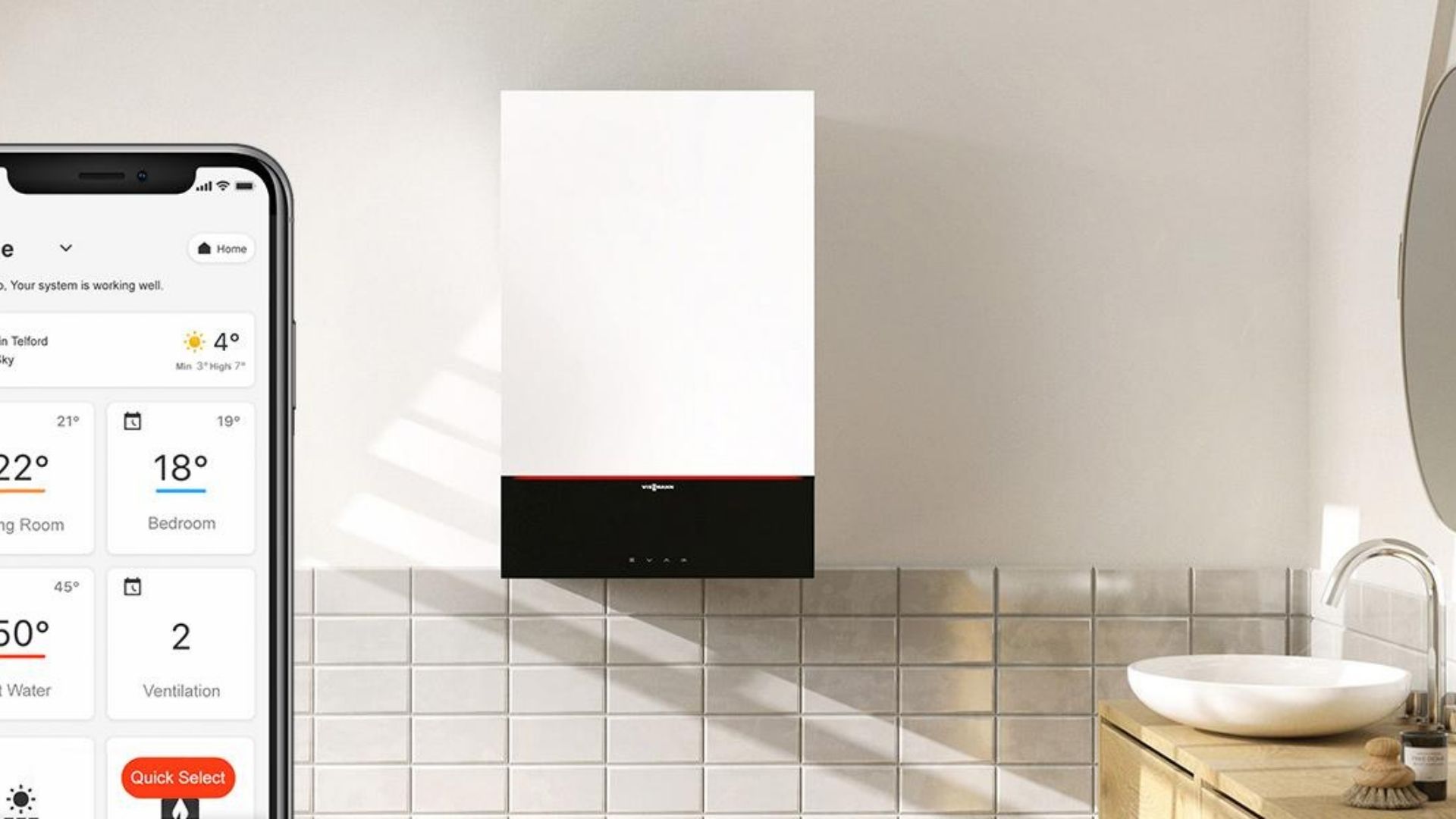
You can make your heating smart with Viessmann’s ViCare thermostat. This allows you to easily control your heating and hot water system via the ViCare app on your smartphone.

The ViCare app provides a convenient way to control your Viessmann boiler and heating system from your phone, from wherever you happen to be.

The app is easy and intuitive to use, and you can adjust your room temperature with just one click. It allows you to store your daily heating routine, and reduce your energy bill.

The app also allows you to see at a glance whether there are any problems. Should your heating system encounter a problem or a fault, you’ll receive a notification.

Another good thing about this app is that it lets you enter your engineer’s details into the app directly. This provides your engineer with all the information they need about your heating  system, which is very convenient. 

You might like our related blog: Does smart heating save money?

12.  Viessmann offers extended warranties on their boilers

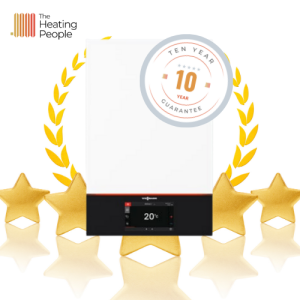
A viessmann boiler with a 10 year guarantee badge.Most boiler models from Viessmann come with a parts and labour warranty that ranges between 2 and 5 years. However, The Heating People can offer extended warranties of 10 and 12 years as Viessmann trained installers.

Which is Viessmann’s best-selling boiler?

Updated for 2021, the Vitodens 100-W is Viessmann’s best selling gas boiler. Efficient, compact, quiet and affordable, the Vitodens 100-W hydrogen ready (H2 20% blend) gas condensing boiler is the most popular solution for smaller and well insulated homes.

This boiler features:

  • Compact design and low weight
  • Quiet operation thanks to low fan speed
  • Available in outputs from 3.2 to 32 kW
  • High quality stainless steel Inox-Radial heat exchanger
  • Up to 94% of the fuel used is converted into heat
  • 5 year guarantee with option to extend by a further 7 years
  • Hydrogen Ready Boiler (H2 20% blend)
  • Class A rated for energy efficiency
  • Low CO2 emissions for reduced environmental impact
  • User friendly LED Touch screen for easy operation
  • Optional ViCare Thermostat means no third-party controls are required
  • Lambda Pro Combustion Control

How do I choose the right Viessmann boiler for my home?

Remember that your boiler will only be as good as the engineer who installs it! To find the correct boiler, and have it commissioned to optimise its energy efficiency, you need a knowledgeable Gas Safe engineer you can trust.

The Heating People have over twenty years of experience in matching families with the perfect boiler for their homes. And we’re proud to be Heat Geek Elite engineers, so that you can be sure that we can get the best out of your system.

Contact us today to book your free survey and get tailored advice on what boiler is best for your home and lifestyle.

Final thoughts

If you’re shopping for a new boiler, Viessmann should certainly be on your research list.  Viessmann boilers offer outstanding German engineering, high quality parts, and some of the highest energy efficiencies on the market.

To find out which Viessmann boiler is right for your home, contact The Heating People today for advice.

Useful Links

Viessmann website

Categories
Advice

Does smart heating save money?

With gas prices soaring, it’s no surprise that households are looking at ways to save money on their energy bills. So, does smart heating save money?

Manufacturers of smart heating controls certainly think so!

If you do an internet search, you’ll find plenty of bold claims like Tado – who say you could save as much as 31% on your heating bills!

But is this too good to be true?!

In this article, we look at what smart controls are; how they work; and whether you stand to save as much as the manufacturers claim.

What is smart heating?

You’ve probably heard the terms: ‘smart heating’ and ‘smart controls’ being thrown around, but what do they mean?!

The terms that are often used interchangeably to cover a wide range of devices that have been designed to improve how your central heating system works.

In the past, heating controls were pretty basic. But we’ve come a long way from a single mechanical thermostat that you turn up and down to control your boiler!

Smart heating is designed to be much more flexible. It enables you to have different temperatures across different rooms, at different times, so that you’re not wasting money heating rooms you’re not using.

Smart heating enables you to control your heating remotely from an app on your smartphone. This means you can change the temperature of your home while you’re out and about, and always come home to a warm home.

Some smart controls use motion detection and geo-fencing to switch the heating on or off depending on your location. Again, you won’t be wasting money heating an empty house.

And some smart heating controls are so clever, they actually learn the temperatures you like, when you typically come and go, and how long your home takes to warm up.

They can use this information to programme themselves to maximise your comfort, whilst reducing your energy consumption. And less energy consumed is better for your wallet, and the planet!

Smart heating system components

When it comes to choosing a smart heating system, you’ll be spoilt for choice!

There are multiple manufacturers to choose from, all offering different options, depending on your needs and budget.

Smart heating systems are flexible enough to provide a simple option for a small home, to a much more complicated zoned system for a sprawling mansion!

But regardless of the size of the project, most smart heating systems have at least 3 key components:

  1. a smart thermostat;
  2. thermostatic radiator valves (TRVs); and
  3. an app to control the system.

1.    Smart thermostat

A smart thermostat is at the heart of all smart heating systems. As its name suggests, it shares some similarities with a traditional thermostat, but it’s smarter!

At its simplest, a thermostat controls the temperature in your heating system. You set your preferred home temperature, and the thermostat works to keep your rooms at this set point.

With programmable thermostats, you can set a schedule to run your heating at certain times of the day, to suit your lifestyle. So, how is a smart thermostat different?

The most obvious difference with a smart thermostat is that they are Wi-Fi enabled and can be controlled from your smartphone, tablet or computer. This gives you greater control of your heating, from wherever you happen to be.

How a smart thermostats different to standard thermostats?

Smart thermostats also go above and beyond what you can do with a standard programmable thermostat. You’ll be able to fine-tune your heating. You can set much more complicated schedules, and different ones for the weekends.

Altering your schedules is a doddle too, with just the tap of a button.

And you won’t need to lift a finger with a learning thermostat, because they learn your routines, and do the scheduling for you!

Smart thermostats learn how long it takes your home to warm up. So, if you set your preferred temperature in advance, your smart thermostat will calculate precisely when it needs to turn the boiler on, to meet your needs.

Some smart thermostats even take account of the weather when adjusting your heating. If you’ve read our blog on heat loss, you’ll know that the colder it is outside, the longer it will take your home to warm up. Your smart thermostat knows this, and acts accordingly.

Geo-fencing is another nifty feature offered by some smart thermostats.

Geo-fencing technology tracks the location of the smartphones in your household. By detecting where you are, your smart thermostat can switch your heating off if you’ve left it on by mistake.

And it will know to switch the heating on automatically when you’re nearing home, so you always come home to comfort!

2.    TRVs

A woman holding a TRV.Thermostatic radiator valves (TRVs) are heating controls that fit on the side of your radiators. They monitor the temperature of your room, and adjust how much heat the radiator emits, so that it stays at a comfortable temperature.

TRVs allow you to turn the temperature on your radiators up and down, by changing the flow of hot water to the radiator. This means that you can enjoy different heats across different rooms and can switch individual radiators off.

Without TRVs, individual rooms in your home may overheat and waste energy.

The result is a more comfortable home; improved energy efficiency; and lower fuel bills.

Research by BEAMA concluded that the average energy saving potential for TRVs in homes is 18% of the heating costs.

You can also get smart TRVs, which can be adjusted remotely via your smartphone or thermostat (rather than manually turning the dial from low to high).

If your smart thermostat is compatible with smart TRVs, you can control each TRV in your home from your app from wherever you are.

3.    Smartphone app

Your smart heating system will include a smartphone or a desktop app that allows you to control your heating remotely.

Controlling your heating from your phone gives you full control of how you use energy in your home.

You can make instant changes to your heating schedule at any time, regardless of where you are.

This is handy because if you get struck in work late, or go away and forget to switch off your heating, you’re not wasting energy heating an empty house.

Another benefit of this software is that you’ll be able to see reports on how much energy you’ve been using compared to previous weeks.

This allows you to make little changes to your habits, and potentially save more money on your energy bills.

Benefits of smart heating

We’ve touched on a few of the benefits of smart heating already, but we’ll summarise the advantages here:

1.    Smart heating is convenient

Let’s face it, we all use our phones a lot. So, being able to control your heating from your phone is convenient.

You can change your heating schedule from wherever you are, with the touch of a button.

Learning smart thermostats allow a completely hands-off approach to home heating, because they learn what you like, and schedule everything for you!

Features such as geo-fencing, and holiday mode also means that you can forget about your heating altogether, knowing your smart thermostat has got you covered.

2.    Smart heating improves your home comfort

Smart thermostats learn how quickly your home loses heat, and some also use weather data when communicating with your boiler.

These features prevent spikes of over or under heating, providing a more comfortable and consistent temperature.

Being able to zone your heating, and have different temperatures in different rooms means that you can cater to different preferences of members of your household.

Lots of people prefer their bedrooms to be cooler than their living rooms, and smart heating allows you to do this.

3.    Smart thermostats help your boiler to be more efficient

Many smart controls use the open therm protocol which means they have an intelligent conversation with your compatible boiler allowing your boiler to work more efficiently more often.

4.    Smart heating allows you to stay on top of your bills

Your smart heating app will give you lots of data about your energy usage, so you can easily see how much you’re spending.

This avoids any nasty surprises when your bill arrives and gives you the chance to make changes to your habits, if you need to.

The Nest learning thermostat uses a green leaf symbol to help you see when you make a more energy efficient choice with your heating.

Smart meters can also submit your energy use directly to your provider, which is convenient, and prevents your energy supplier making estimates.

5.    Smart heating helps to save you money on your energy bills

There’s nothing magical about smart heating. It’s just smart.

With a traditional central heating system, you’ll inevitably waste money having it on when it’s not needed, or when nobody’s home. That won’t happen with a smart system.

Smart heating uses its intelligent technology to use the least amount of energy possible, whilst still keeping you perfectly comfortable.

Smart technologies such as geo-fencing, weather compensation, and load compensation allow the heat to be turned up or down at precisely the right moment. And being able to zone your home prevents wasting energy heating rooms that aren’t in use.

This is a lot more accurate than someone at home turning a dial when they feel chilly, and every room being heated to the same temperature! It’ll also avoid the associated spikes of over and under heating that happen with a traditional system.

So, the burning question: how much money can you save with smart heating?

What can I save with smart heating?

As we mentioned earlier, some manufacturers make very bold claims about how much you stand to save by installing their smart heating controls.

But you need to exercise caution here. A lot of these ‘potential savings’ will have been calculated using an example where a household left its heating on constantly and didn’t use any energy-saving measures before getting smart controls.

There are lots of factors that will affect how much you’ll save, such as:

  • How you used your heating before installing smart controls;
  • the type of smart control you choose;
  • how you use your smart control;
  • what type of boiler you have;
  • how many people are in your household; and
  • how well insulated your home is.

With this in mind, let’s look at what the manufacturers have to say…

What the manufacturers say

Tado says that it will save users ‘up to 31%’ a year on their heating bills using its smart heating.

Netatmo reckons its smart technology can reduce energy usage by 37%.

Wolseley found that homeowners had a 20% decrease in their heating costs when using smart controls compared to the previous year with a standard thermostat.

Ecobee says that its customers in North America saved up to 26% on their heating costs, based on an internal analysis conducted in April, 2021. Their claim is based on a household that leaves their current thermostat set to a constant temperature of 22°C.

Ofgem says that a smart thermostat can bring savings of around £150 per year. 

Google Nest says that UK customers saved on average between 8.4% to 16.5% on their energy bills with a Nest smart thermostat.

Since all heating systems, homes and lifestyles vary, it’s hard to get a one-size-fits-all estimate of how much you’ll save with smart heating.

But looking at these estimates, it seems that most people can expect to save around 10-30% on their bills with smart heating.

You’ll also have to factor in the cost of buying your smart controls and having them installed.

Who will save the most with smart heating?

The households that will save the most money with smart heating controls are the ones that previously left their heating on at a single temperature constantly; or didn’t fully utilise their programmable thermostat.

If you’re already quite energy conscious, you’ll see lower savings and a longer payback period.

Final thoughts

With gas prices going through the roof, we all want to make savings, and smart heating will certainly help.

Although it’s hard to put a precise figure on it, you could save around 10-30% on your annual heating bill with smart controls. And they make life easier and your home more comfortable too!

If you want to take control of your heating, and your energy usage, it’s time to get smart!

Useful links:

The Greenage: Can smart heating save money?

Which? Can you save as much as the companies claim with smart heating

BEAMA research on TRVs

Tado: Savings with smart heating

Ecobee: Savings

Google Nest: Energy savings

Categories
ATAG

Why choose an ATAG boiler?

With so many different boiler manufacturers available; each offering their own large range of models, choosing a boiler can be a daunting task.

And it’s not like you can just pop into a shop and pick one up off the shelf. You have to rely on the recommendations of heating engineers; who may have been incentivised to recommend certain manufacturers.

Rest assured, that here at The Heating People, we don’t receive any financial incentives to recommend brands.

And although we’re accredited installers of lots of different manufacturers, we’re not tied to any one of them.

So, you’ll always get our honest, expert advice on what’s right for you and your family.

Today we want to look at ATAG. Because they’re a bit of a dark horse in the UK domestic market, but in our view, they shouldn’t be!

We’re proud to be ATAG Selected Partners, for the reasons we’ll walk you through below. And hopefully, if you’ve not yet considered an ATAG boiler yet – this will give you some food for thought.

You might like our related blog: 6 Top tips for buying a new boiler.

How important is the brand of boiler?

ATAG iC boiler.We often get asked: ‘which brand is best?’ by people looking for a new boiler.

This is totally understandable; because a boiler is a big investment, and not the sort of purchase you make every day.

People will often seek out the big brands when it comes to buying mobile phones and other gadgets. And want to know whether this is a tactic they should use when getting a new boiler.

But just as there’s no ‘one-size-fits-all’ boiler for everybody, there’s no ‘right’ boiler brand either.

Each brand (and individual model within the brand) has their own pros and cons; which need to be weighed up for your needs.

But it’s definitely a good idea to do a bit of research; so that you can make an informed choice.

After all, your boiler will be the hardest working appliance in your home for at least the next decade!

Who are ATAG?

An ATAG boiler with a 14 year guarantee badge.First off, let’s start with the manufacturer.

What you’ll notice when you research ATAG boilers; is that they’re much lower-key compared to some of the other well-known brands, such as Worcester Bosch; but don’t let that put you off!

ATAG is a manufacturer that you can trust.

We’re proud to be ATAG Selected Partners because their boilers are renowned for their outstanding engineering, reliability, and energy efficiency.

They use the highest quality stainless steel and brass components – and boy, do they stand the test of time!

ATAG isn’t a new brand either. They’ve been designing and manufacturing boilers for almost 70 years.

They’ve combined the strict engineering standards from the many countries that they operate in. And design boilers that they call: ‘the most efficient in Europe’ or their i range of boilers.

If you’re looking for engineering excellence and energy efficiency that’s built to last, you should be considering ATAG.

Why should you consider an ATAG boiler?

Let’s look at some of the other reasons why an ATAG boiler is a great choice:

1.    Safety first

One of the (many) reasons that we love ATAG; is the fact that they’re helping to raise the standard of boiler installations in the UK.

ATAG insists that their boilers are installed and commissioned to the highest standard. So you’ll derive the maximum benefits from your new boiler.

They do this by only supplying their boilers to a hand-picked network of legally qualified Gas Safe registered installers; known as ATAG Selected Partners.

This means that when you opt for an ATAG boiler; it can only be installed by an engineer who is legally qualified to work on gas. And it will be commissioned in such a way that you get the best out of it.

2.    Built to last

We’ve mentioned it already, but ATAG boilers stand the test of time. ATAG boilers are precision engineered in Holland and they don’t skimp on the materials.

ATAG uses the highest quality stainless steel and brass components, whereas lots of other manufacturers have boilers full of plastic.

It would be remiss of us to fail to mention ATAG’s revolutionary iCon heat exchanger here.

The heat exchanger is a vital component in all boiler. And ATAG’s patented design is manufactured from high grade stainless steel by ATAG themselves.

It has unrivalled performance and, uniquely, maintains 98% of its original efficiency levels throughout its lifetime. They’re so confident in it, it’s got a lifetime guarantee!

It’s so good, the Energy Saving Trust has given ATAG its ‘Endorsed Product’ status.

3.    14-year guarantees

The fact that ATAG boilers are built to last; means that they come with hefty guarantees of up to 14 years. This covers all aspects of the boiler, so should anything go wrong, it will be repaired free of charge.

But remember that you’ll need to have your boiler serviced every year; to maintain its guarantee; whichever manufacturer you go with.

4.    Highly rated by customers

Customers who choose ATAG rate them extremely highly. If you look at Trustpilot, you won’t find better reviews!

5.    Large product range

ATAG has a large range of boilers, to suit different homes and lifestyles.

And if you’re short on space, ATAG offers compact sized combis which can fit inside a kitchen cupboard.

Their i series of boilers are available in:

  • iC Economiser combi boilers;
  • iC combi boilers;
  • iS system boilers;
  • iR regular boilers.

ATAG’s premium boiler (and one of our personal favourites) is the iC Economiser Plus.

It has an in-built flue gas heat recovery system (FGHRS). This makes the boiler more efficient; because it captures and recycles the heat that you usually lose through the flue to preheat your incoming mains water.

But with a premium boiler, comes a premium price tag. If this one isn’t quite within your budget; the iC is still a fantastic choice (despite not having FGHRS), and also comes in smaller sizes.

But don’t worry if you’re not sure what type of boiler you’re after. The Heating People are specialists in finding the perfect boiler for your needs.

6.    Energy efficient

ATAG really has gone the extra mile when it comes to energy efficiency. They have the most efficient boilers in Europe, which have the lowest NOx emissions.

Efficient boilers are a must because they cost you less on your energy bills, and are kinder to the environment.

All ATAG boilers are A-rated for energy efficiency. And adding an ATAG ONE or TADO V3+ internet-connected smart controller; can further boost your heating system efficiency; to an impressive 98% (also known as A+).

ATAG boilers also have OpenTherm technology (more on this later). This means that they offer increased energy efficiency when paired with third party controls.

ATAG really is beating the competition when it comes to energy efficiency; because they also offer weather compensation as standard. And built-in FGHR (flue gas heat recovery) on some models…

7.    Weather compensation as standard

So, we’ve mentioned that ATAG offers weather compensation as standard, but what is it?

Weather compensation is an energy efficiency device approved under the Boiler Plus Regulations. It monitors both the temperature inside your home, and the temperature outside, and adjusts your boiler’s operation accordingly.

Thee outside temperature matters; because the speed at which heat is lost from your home changes depending on the temperature outside.

Weather compensation tells the boiler to alter the temperature of the radiators; to match the extra heat loss caused by a cold day. Leading to a more comfortable and consistent environment.

This saves energy because it wont generate more energy than you need.

8.    Built-in FGHRS

Cycling arrows.We absolutely love the ATAG iC Economiser Plus. It’s described by ATAG as: ‘the combi boiler of the future’; because it has an in-built flue gas heat recovery system (FGHRS).

This makes the boiler more efficient. Because it captures and recycles the heat that you usually lose through the flue to preheat your incoming mains water.

It’s great that it’s built-in because it would otherwise be a very expensive and bulky add-on to your boiler.

It also means that the Economiser is automatically compliant with Boiler Plus Regulations.

Having this feature could save you a significant amount of money on your energy bills. Prior to the Boiler Plus legislation being passed; independent tests presented to the Government concluded that if half a million FGHRS were installed in homes; 56,209,150m3 of gas would be saved; and 114,734,118kg of carbon dioxide emissions saved!

So having built-in FGHRS will cost you less to run, as well as helping the planet.

9.    OpenTherm technology

An ATAG boiler with a speech bubble.Another special thing about ATAG boilers is that they have OpenTherm technology. This isn’t offered by most of the competition.

This means that they can communicate more effectively and efficiently with third party heating controls.

Whilst boilers from other manufacturers will still connect to third party controls; they use a basic ON/OFF control. This is a simple one-way communication that isn’t very efficient because there’s no temperature feedback to the boiler.

But when an OpenTherm compatible boiler, such as an ATAG; is paired with an OpenTherm compatible control such as Honeywell; there’s two-way communication taking place. And the boiler’s water temperature will be continuously adjusted.

This increases the efficiency of the heating system. It also reduces boiler cycling, and all the problems associated with it.  

To find out how smart heating saves money, read our related blog here.

How much do ATAG boilers cost?

The iC range of boilers start from approximately £1950.

The iC Economiser is ATAG’s premium boiler due to its increased efficiency, and built-in FGHRS. And there’s a price attached to that. It costs approximately £2,200.

We hope that you’ve found this guide useful.

To find out whether an ATAG is right for you, call us today to book your free survey.

Final thoughts…

We hope you’ve found this article helpful. You might also like to check out our related blog: The best combi boiler 2022.


Useful Links:

Atag heating blog

Energy Saving Trust article on the ATAG iC combi boiler

Government factsheet on Boiler Plus

Government report – Boiler Plus

Trust Pilot reviews of ATAG

Categories
Energy efficiency

How to choose an energy efficient boiler

With Ofgem recently announcing a 54% rise in energy bills from April for 22 million households; it’s never been more important to have an energy efficient boiler. 

So, if your current boiler is knocking on a bit; it might be time to consider investing in a new, more efficient model. You’ll benefit from increased comfort, cheaper energy bills and a smaller carbon footprint – so it’s win-win. 

But how do you choose an energy efficient boiler?

With all the innovations in the heating market, it can be daunting to know where to start!

But spending a little bit of time researching your new heating system can pay off enormously. If you choose your new boiler correctly; you’ll end up with a reliable system that’s cheaper to run and easier to use.

In this guide we help you to understand how you can make energy savings with an efficient new boiler. And explain how to select a boiler with the most efficiency potential.

You might like our related blogs: Your options with a boiler replacement and 6 Top tips for buying a new boiler.

Why do I want an energy efficient boiler?

efficient boiler

It seems like everyone’s talking about improving energy efficiency at the moment – but do you know why?

Let’s look at why choosing an energy efficient boiler is so important:

Energy efficient boilers save you money

In simple terms, efficiency is the amount of fuel your boiler needs; to burn to do its job of heating up your home and your hot water.

Inefficient boilers are gas guzzlers. They need to burn much more fuel than an efficient boiler does, to do the same job.

And with the wholesale price of gas skyrocketing by up to 400%; we simply can’t afford to be burning more gas than we need to! 

The 54% increase in energy bills from April; will result in an annual increase of £693 to £1,791 for the average user. While homes on prepayment meters will see costs go up by £708 to £2,017.

By getting an energy efficient boiler; you’ll be able to create more heat from less fuel and minimise what you’re paying out.

Energy efficient boilers are better for the environment

In addition to saving you money, an efficient boiler will reduce your carbon footprint. If you followed COP26 last year, you’ll understand how important it is!

What do the energy efficiency percentages mean?

So, you understand why it’s important to have an efficient boiler, but what do the energy efficiency percentages mean?

We should start by saying that whilst it would be lovely if boilers were 100% efficient, they’re not. No boiler is 100% efficient. Some heat will always be ‘lost’ or used by the boiler during the heating process.

Let’s say your boiler is ’92% efficient’. The percentage refers to the total energy (fuel) used by the boiler to provide useful heating and hot water.

A boiler with 92% efficiency will use 92% of the energy to heat your home and hot water. And 8% is ‘lost’ in the process.

You might also have heard the energy efficiency of boilers being described with a letter from A-G. This is the Energy Related Products or ErP scale.

Boilers, like other appliances in your home; have to be rated on this scale to help us to identify more energy efficient products:

A – 90% and above

B – 86-90%

C – 82-86%

D – 78-82%

E – 74-78%

F – 70-74%

G – below 70%

Why are modern boilers more energy efficient?

A zombieModern boilers are much more efficient than they used to be. Because they have condensing technology as standard, and have to follow the Boiler Plus Regulations on energy efficiency.

All new boilers must be A-rated for efficiency with a minimum ErP rating of 92%.

All gas and oil boilers must now have appropriate time and temperature controls fitted. And combi boilers must also have one of four additional energy saving devices fitted.

But if you have an older; non-condensing boiler; which pre-dates the rules on energy efficiency; it will be much less efficient.

For example, if you have an old G-rated boiler with 60% efficiency; only 60% of the fuel burned by your boiler will actually go into heating your home. The other 40% will be wasted by the boiler!

In this situation, investing in a new boiler is a no-brainer. It will save you a significant sum on your energy bills.

According to The Energy Saving Trust, you could save as much as £340 a year on your gas bill; if you’re trading in an old-style non-condensing boiler for a new condensing one.

But this figure is likely to be significantly higher now, given the sky-rocketing price of gas!

How do I choose the most energy efficient boiler?

A woman with question marks above her head.If you’ve decided you want to replace your boiler for a more energy efficient one; your next question is likely to be: which boiler is the best?

This is a tricky question to answer because what’s right for you, won’t be right for everyone. It will depend on your home, lifestyle, and budget.

But you might like to read our list of our top combi boilers for 2022 here.

But whilst we can’t give you a one-size-fits-all boiler for everyone to install and immediately save energy; we can advise you on the things you need to consider to find the most energy efficient option for you: 

Choose the right installer

The first and most important step in getting your perfect heating system is finding an expert installer.

We’ve said it before, and we’ll say it again… your boiler is only going to be as good as the engineer who installs it!

Just because your boiler says 94% efficient on the box, doesn’t mean it’ll run this way for you. If it’s been set up by someone who doesn’t know what they’re doing; you won’t get the best out of it.

The Heating Hub explains that there’s a worrying skills gap amongst gas engineers.

According to them, a staggering 99% of installers haven’t received the training to know how to set up condensing boilers to run at their full potential efficiency.

There’s no point in buying an all-singing-all-dancing efficient boiler and then having it installed by a charlatan. You need to choose your installer carefully.

The Heating People are proud to be part of the Heat Geek Elite; because we understand that as engineers; we’re the number one contributor to heating system efficiency, far more than the products selected.

Rest assured that engineers at The Heating People understand emitter sizing; pipe sizing; hydraulic layout and principles; so that we can obtain the highest efficiencies possible.

Choose the right type of boiler for your needs

Once you have an expert installer; the next step towards choosing your energy efficient boiler; is deciding what type of boiler is best for your home and lifestyle.

There are three choices here: a heat-only boiler; a system boiler; or a combi boiler.

And don’t assume that because you currently have a particular type of boiler; it will still be the right one for you.

There’s a good chance that your lifestyle may have changed since your last boiler was installed. And you might have even inherited it with your house!

Choosing the wrong type of boiler can lead to unnecessarily high bills.

We go into detail about each of the different types of boiler in other blogs. But to in a nutshell, your choices here are:

Combi boilers

Diagram of a combi boilerA combi (or combination) boiler takes up very little space in your home. Because it heats water on demand, eliminating the need for any external tanks or cylinders.

Since combi boilers don’t store hot water, they can be efficient because you only ever pay for what you use.

However, combi boilers might struggle if you have a high demand for hot water. Because they are only designed to support one outlet at a time.

Heat-only boilers

Diagram of a heat-only boiler system.A heat-only boiler is sometimes called a ‘conventional’ or a ‘regular’ boiler. These boilers provide your heating and hot water with the use of an additional hot water cylinder; and two cold water tanks in your loft.

Heat-only boilers are ideal for larger homes with high demands for hot water; because they store large quantities of hot water in a cylinder.

Unfortunately, heat-only boilers are generally the least efficient type of boiler; because they have the fewest control options; and they can be wasteful if you don’t use a lot of hot water.

System boilers

Diagram of a system boilerA system boiler supplies your heating and hot water with the use of an additional hot water cylinder. But unlike a heat-only boiler; they don’t need any additional cold water tanks in the loft. They take their cold water supply directly from the mains supply (like a combi).

Similarly to heat-only boilers, system boilers are ideal for larger homes with high demands for hot water; because they too store hot water in an external cylinder.

In terms of efficiency, system boilers are compatible with renewable technologies, such as solar. And they can be installed to low temperature, high efficiency heating – which we get into later on.

Choose the right size of boiler

A boiler next to a boy dressed as a superhero.In addition to choosing the correct type of boiler for your needs; you need to choose the correct size to optimise your energy efficiency.

Boiler size doesn’t mean the physical size of the appliance. But rather how much energy is output by the boiler in terms of heat, measured in kilowatts (kW).

For example, a 35kW boiler uses 35,000 watts (35 kW) of power per hour; to heat the water for your central heating.

People often underestimate the importance that boiler size plays in creating an efficient heating system.

And the key here is that your boiler needs to be ‘just right’. Too big, and you’ll be wasting energy; but too small, and your boiler will struggle to meet your needs. 

Although it was never good practice, it used to be quite common for boilers to be oversized; rather than finding the precise size needed. But this is bad news for energy efficiency.

If you choose a boiler that’s too big; the excess power will cause your boiler to cycle on and off, which wastes energy and money.

Think of it as being a bit like stop-starting in your car. Stop-starting in traffic will use more fuel and will put more stress on your car’s components; than driving at a nice steady speed on a dual carriageway would.

It’s the same for your boiler. Not only that, but the constant stop-starting also prevents your boiler from getting into condensing mode; when it’s at its most efficient.

To find the perfect size of boiler for your home; you need to get a Gas Safe engineer to conduct a heat loss calculation.

For more on what heat loss is, and why it’s important, you might like to read our related blog here.

Choose a boiler with a low minimum output

A diagram showing boiler modulation.Related to choosing the correct size of boiler, you should choose a boiler with a low minimum output.

For example, if you have a 30 kW boiler, the maximum energy output is 30kW; but your boiler will operate within a range up to this, such as 3-30 kW.

The lower the minimum end of the range, the more efficiently the boiler can operate all year round.

Improving the energy efficiency of your heating system

All modern boilers are A-rated for efficiency (although they all offer different features). But there are other things you can do to improve the efficiency of your heating system:

Use heating controls

If you don’t use heating controls alongside your boiler, you’ll be wasting energy.

Research by BEAMA found that having the right heating controls; could save you up to 40% per cent on your energy bills.

According to The Energy Saving Trust (May 2020), based on a typical three-bed semi-detached house; there is a potential saving of £75 a year by installing a thermostat, programmer and thermostatic radiator valves.

And if you’ve read our guide on saving money on your energy bills; you’ll know that simply turning your heating down by 1°C could save you around £80 a year.

But again, what to choose?!

As with boilers, heating controls have advanced significantly in recent years, and there’s a vast array of choices out there.

In the past we largely relied on simple mechanical thermostats in the hallway. But now we can operate our heating from our smartphones. And our thermostats can actually learn our habits, and do everything for us!

We can use intelligent zoning controls, so that we don’t have to waste money heating rooms that we don’t use.

We have weather compensation, load compensation, and flue gas heat recovery. The list goes on…

But what all of these different technologies have in common; is that they are designed to improve our home comfort, whilst saving energy. This not only helps our wallets, but the environment too.

The Heating People will provide you with advice on what heating options would work well with your new boiler; as part of your free survey.

You might also like our blog: Does smart heating save money?

Balance your system

When having your boiler installed, your heating engineer can balance your system to make it more efficient.

Balancing your heating system means optimising the flow of water in the system. So that all of your radiators heat up evenly and give off the right amount of heat.

The idea is to get the water returning to your boiler to be 50 degrees or lower. This allows your boiler to operate in its efficient condensing mode. 

If your system isn’t balanced, some radiators (probably the ones closest to your boiler); will take the bulk of the hot water flow, leaving other radiators with less.

This can reduce your boiler’s efficiency and leave you with some rooms that feel warmer than others.

So, by balancing your system, you’ll improve your home comfort as well as improving your energy efficiency.

Ask your engineer about low temperature heating

We mentioned earlier that system boilers can be installed to low temperature heating systems… Now don’t panic here – we’re not suggesting that you should ask your engineer to make your house cold!

Low temperature heating means that the water flowing around your heating system runs at a lower temperature than usual; whilst still keeping your home at a comfortable temperature.

Generally, the water flowing around your radiators is between 70 °C and 85 °C. But with a low temperature heating system, the water could be as low as 25 °C to 50 °C whilst still keeping your rooms warm

Low temperature heating is much more efficient; because the cooler water allows your boiler to condense properly – as we saw this above with balancing your heating system.

If this is something you’re interested in, you should contact The Heating People today!

Conclusion

With home energy bills set to rise to eye-watering levels, improving the efficiency of your heating system is a must. Choosing an energy efficient boiler and following the tips in this guide can lead to serious money saved.

For tailored advice on finding the best system for your needs, contact The Heating People today.

Useful links

The Heating Hub: Energy saving tips

BEAMA research on heating controls

Categories
Viessmann

Viessmann Vitodens 200-W

If you’re looking for a powerful Viessmann boiler with excellent energy efficiency; lower emissions; and simple operation; then you should consider the Vitodens 200-W.

Described by Viessmann as: ‘the new generation of heating systems’; the B2KB (combi Viessmann boiler) and B2HB (system Viessmann boiler); are the latest evolution of the Viessmann Vitodens 200 Boiler range.

Future-proof; durable and digital; the Vitodens 200-W is a hydrogen ready boiler (H2 20% blend) that sets the standard for the future.

As well as being awarded the Which? Best Buy Status for several years in a row; the Vitodens 200-W has been praised by Heat Geek; for its incredible 1:19 modulation ratio. This currently far outperforms any other domestic gas boiler available.

If you want to learn more about this boiler, then read on!

Who is Viessmann?

Viessmann boilers in a home.Let’s start with the manufacturer…

If you’ve done any research into boiler brands, you’re bound to have come across Viessmann.

Renowned for their cutting-edge technology; Viessmann is a family-owned company that has an established international reputation for producing highly reliable and energy efficient boilers.

Viessmann has taken an industry-leading approach to technology and innovation; engineering boilers to integrate seamlessly with renewable and alternative energy sources. So, whatever the future of heating, a Viessmann boiler will be ready!

Viessmann is popular with customers too.

The Viessmann’s Vitodens combi boiler range has been awarded Which? Best Buy status in the 2021 satisfaction survey of UK boiler owners and installers.

Viessmann was one of just two brands to have products awarded Which? Best Buy in 2021 and only narrowly missed out on the top spot, which went to Worcester Bosch.

Viessmann was praised for excellent reliability and customer satisfaction; as well as great build quality, and ease of repair and servicing.

So, if you’re looking for a reliable and efficient boiler, a Viessmann might be right for you.

Now let’s look at one of the popular boilers in the Viessmann range, the 200-W…

What are the key features of the Viessmann Vitodens 200-W?

If you just want an ‘at a glance’ look at what the 200-W has to offer; then we’ve got you covered. Here are the key features of the 200-W:

  • Available in a range of sizes as a combi and system boiler;
  • Modern and compact design with a 7-inch colour touchscreen;
  • Quiet operation;
  • Highly energy efficient with up to 98% of the fuel used being converted into heat;
  • Built-in weather compensation;
  • Easy to control – can be integrated with smart thermostats such as Nest and Tado and controlled via a smartphone;
  • Environmentally responsible MatriX cylinder burner with Lambda Pro Plus combustion;
  • Inox-Radial stainless steel heat exchanger;
  • Easy to maintain.

But if you want to get into the nitty gritty about what makes this boiler so special, stay with us…

What are the benefits of choosing the Viessmann Vitodens 200-W?

The Viessmann Vitodens 200-W is a boiler with a lot to offer. Here are some of the advantages of choosing this model:

1. Viessmann Vitodens 200-W is available in a range of sizes as a combi and system boiler

The 200-W is a wall-mounted gas condensing boiler available as either a combi (B2KB) or a system boiler (B2HB).

If you’re not sure what type of boiler you need; you should check out our related blogs on combi, heat-only and system boilers.

The 200-W is also available in a range of different sizes with a rated heating output of 1.6 to 35 kW; to cater for the needs of different homes and lifestyles.

2. Viessmann Vitodens 200-W features a modern and compact design

The Vitodens 200-W isn’t bad to look at either!

With its modern; functional design and touch-screen; you may not want to hide it away in a kitchen cupboard; although this is possible, thanks to its compact design (360 mm (D) x 450 (W) x 700 (L)).

3. Viessmann Vitodens 200-W is very quiet

If you’d rather your boiler was seen and not heard; you’ll be happy to know that the 200-W has a very low operating noise of 39 dB(A) maximum (26 kW). So you’ll barely notice it’s on.

4. Viessmann Vitodens 200-W is highly energy efficient

But we think the real selling point of this boiler is its energy efficiency.

All modern boilers must be A-rated for energy efficiency, with most achieving around 92% efficiency. But the Viessmann Vitodens 200-W exceeds this considerably!

Operating at up to 98% efficiency, the 200-W is one of the most efficient boilers currently on the market.

To put this in perspective; the A-rated 200-W only loses 2p in every £1 you spend on heating during the heating process. 98% of what you spend is converted into heat.

But if you compare that to an old G-rated boiler with 70% efficiency; a whopping 30p in every £1 is wasted.

So, an energy efficient boiler can help you to save money on your energy bill; as well as reducing your carbon footprint.

And with the current price of gas, you’ll want to be as energy efficient as possible!

Viessmann Vitoden’s 200-W modulation range

A diagram showing boiler modulation.One of the reasons why the 200-W is so efficient, is its incredible modulation range of up to 1: 19. The 200-W can automatically reduce its power output (thereby burning less gas) to precisely match the heat demand. 

The 200-W can modulate its output from 35kW to 1.6kW with a total of 19 different heat outputs.

This means that instead of blasting out its maximum power output of 35kW consuming unnecessary energy and overheating the home; the 200-W automatically reduces its output by turning down its flame. 

Having such a good modulation range means that the 200-W can run much longer and cooler than other boilers on the market.

You’ll use less gas and will have a more consistent home environment that doesn’t suffer from spikes of over and under heating.

Another advantage is that there will be less boiler cycling, and so there will be a lower level of stress placed upon the boiler, potentially extending its lifespan.

5. Viessmann Vitodens 200-W has weather compensation

Two rain clouds.Another reason why the Vitodens 200-W is so efficient, is its use of weather compensation technology.

Weather compensation is a heating control that can save you up to 15% on your energy bills (according to Viessmann).

Weather compensators ensure that your boiler only burns as much fuel as is needed to match the heat lost from your home.

And this is where the outdoor temperature matters – the weather is the main influence on how much heat your home needs.

You’ll have noticed that you need your heating on more during a cold winter than in the summer – and that’s because heat is lost quicker on a cold day. 

Because the weather constantly changes (particularly in Britain!), the amount of heat output needed from your boiler to warm up your home also changes. And as the name suggests, a weather compensator compensates for this.

By placing a sensor on the outside wall of your home, the weather compensation control monitors the indoor and outdoor temperature.

When the outside temperature changes, the control tells the boiler to increase or decrease its output to compensate.

Weather compensation controls are pro-active mechanisms that consistently keep your home at the correct temperature, rather than just allowing your boiler to operate on a simple ‘on/off’ cycle.

This intelligent heating control can help save you money, whilst also keeping your home warm, whatever the weather!

6. Viessmann Vitodens 200-W is easy to control

A Viessmann boiler and smart controlsAs well as having a 7-inch colour touch display, the Viessmann Vitodens 200-W has an integrated WiFi interface.

This allows you to connect your boiler to the internet and to smart thermostats such as Nest and Tado.

Viessmann’s ViCare app allows you to operate your boiler remotely via a smartphone or tablet.

So, wherever you are in the world, you can make changes to your heating schedule with the tap of a button.

And a nifty feature of the ViCare app, is that it can automatically notify an engineer should a fault be detected in your system.

Not only that, but ‘ViGuide’ shows your engineer the status of your heating system at a glance and lets them see fault messages; call up spare parts; and make remote parameter adjustments. This helps your engineer to commission your boiler perfectly every time. 

And then there’s the energy cockpit…

7. Viessmann Vitodens 200-W has an energy cockpit

The Viessmann ViCare app contains the Viessmann Energy Management system. This consists of a system overview on the dashboard, an energy cockpit with live view as well as a detailed analysis of your gas and electricity meters.

The energy cockpit allows you to monitor your heating systems’ electricity and gas usage, for both hot water and heating independently.

This data can be helpful in enabling you to make small changes to your habits to minimise your energy usage.

The energy cockpit offers an advantage over typical smart meters that  also include energy consumption from your other home appliances.

The energy cockpit also measures solar thermal yields, if you’ve integrated solar panels with your boiler. Having this data allows you and your engineer to make tweaks to improve the efficiency of your heating system. 

8. Viessmann Vitodens 200-W has a highly efficient MatriX cylinder burner with Lambda Pro Plus

The Vitodens 200-W features the Viessmann MatriX cylinder burner with Lambda Pro Plus, the industry’s first intelligent combustion management system.

These technologies minimise fuel consumption and NOx and CO2 emissions.

The Viessmann Lambda combustion control system measures the combustion quality and automatically adjusts the fuel to air mixture to maximise efficiency.

If the UK gas grid switches to a blend of 80% natural gas and 20% hydrogen in the future, Lambda Pro will keep the 200-W operating reliably and efficiently.

Viessmann’s new ‘LPro Control Plus’ allows the boiler to automatically adjust to work on LPG, E-gas, H-gas, shale, LNG, hydrogen generated from wind energy and PV energy, synthetic methane and upgraded biogas. So, it seems fair to say it’s ‘future-proof’!

9. Viessmann Vitodens 200-W is equipped with Viessmann’s patented Inox-Radial stainless steel heat exchanger

A viessmann boiler with a 10 year guarantee badge.As with all Viessmann boilers, the Vitodens 200-W comes equipped with Viessmann’s patented Inox-Radial stainless steel heat exchanger.

Many boiler manufacturers use aluminum for their heat exchangers, but stainless steel makes all the difference.

Stainless steel is exceptionally durable, and much more resistant to corrosion. Viessmann are so confident in it, they offer a 10-year guarantee on it.

The Inox-Radial heat exchanger also converts the energy used into heat with exceptional efficiency of 98 percent.

10. Viessmann Vitodens 200-W is easy to maintain

The Viessmann Vitodens 200-W is easy to maintain and service, with all components being accessible from the front. 

And as we mentioned earlier, when controlling the 200-W via the ViCare app, a Viessmann Trained Installer can automatically be notified in the event of a fault.

What guarantee is available on the Viessmann Vitodens 200-W?

Viessmann offers a standard 5-year warranty on the Viessmann Vitodens 200-W, which can be extended up to 12 years by a Viessmann trained Installer, such as The Heating People.

To maintain your boiler’s warranty, it’s vital to have it serviced annually by a Gas Safe engineer.

Final thoughts…

An engineer installing a Viessmann boilerThe Viessmann Vitodens 200-W is a powerful and efficient boiler which is perfect for larger detached and semi-detached homes.

If you want heating with an unprecedented level of efficiency, and all the bells and whistles, then this boiler could be for you.

For tailored advice on whether this (or any other boiler) is right for your home, contact one of our friendly team at The Heating People today.

Useful Links:

Viessmann: Vitodens 200-W

Heat Geek review of the Vitodens 200-W