Our Guide to Heat Pumps

Cheshire's most knowledgeable assistant
24 hour Heating Support? Meet Hannai, she knows her stuff..
Meet Hannai. She might be new here, but she is friendly, experienced, and loves helping the good folk of the North West find all the heating answers they need quickly.
She works late and on weekends and can help you book a service, boiler survey, or customer service call. You will find her in the chat box below, or if you don’t have time to talk to her you can fill in the form below and one of the team will get back to you soon.

CLICK ON THE BOX That looks like this to chat with Hannai 24/7 !
The Heating People Heat Pump Guide
The Heating People offer heat pump installation across the region to homeowners who want to reduce their energy cost and their carbon footprint.
At its simplest, a heat pump is a device (which looks a bit like an air conditioning unit) that transfers thermal energy from one point to another. Although they use electricity to run, they’re considered a much greener way of heating your home, because unlike your boiler, they don’t need to burn fuel (usually gas) to create heat. When we burn fuel, we’re releasing carbon dioxide into the atmosphere, which is what we’re trying to reduce in our battle against climate change.
When we design a heat pump system for you, we will advise on the projected efficiency of the system, which with a bit of information about your gas and electric pricing, and can show you a projected running cost against that of a gas boiler.
Understanding Heat Pumps & Low Temp Heating

£7500 government grant Now available!
Heat pumps - everything you need to know
What Are the Running Costs of a Heat Pump?
The cost of running a heat pump depends on a few things, like the type of system, the size of your home, and local electricity rates. In general, Air Source Heat Pumps (ASHPs) are cheaper to install but might cost a little more to run than Ground Source Heat Pumps (GSHPs), especially when it’s really cold, as ASHPs have to work harder.
On average, you can expect an ASHP to cost between £500 to £1,000 per year to run, while a GSHP may cost between £400 to £700 per year, thanks to their higher efficiency. That said, both options can lead to big savings on your energy bills compared to traditional gas or oil heating, particularly if your home is well insulated.
The running costs are also influenced by the coefficient of performance (COP), which measures how efficiently your heat pump converts electricity into heat. The better the insulation and the more efficient the system, the more you’ll save in the long run.
£7500 government grant Now available!
Heat pumps - everything you need to know
Heat Pump technology that uses the air outside
Air source heat pumps are becoming an increasingly popular choice for homeowners who are looking to reduce their carbon footprint and save money on their energy bills. They are one of the most economical, and eco-friendly heating solutions on the market, and can provide all of your heating and hot water needs whatever the weather outside.
One of the biggest advantages of air source heat pumps is that they’re incredibly energy efficient – which is referred to as the Coefficient of Performance (CoP).
The CoP is the amount of heat generated for every kilowatt of electricity used. An air source heat pump can convert each kilowatt (kW) of electricity into 3-4 kW of heat. This means that they’re between 300%-400% efficient! This is incredibly impressive when you compare it to a modern gas boiler with an energy efficiency of about 92%! Heat pumps manage this impressive energy efficiency because they transfer heat rather than generate it.
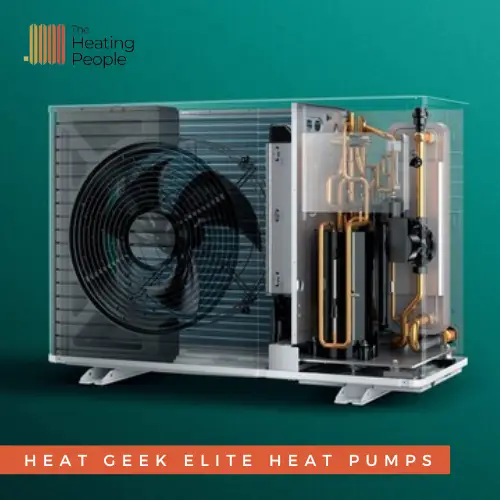
An air source heat pump works by using a fan to draw in air from the outside and absorbing the heat into a liquid refrigerant. Using electricity, the heat pump compresses the liquid to increase its temperature. It then condenses back into a liquid to release its stored heat. Heat is sent to your radiators or is stored in a cylinder to provide you with hot water when you need it.
For more information on the aroTHERM Heat Pump, check out the following page:
The aroTHERM air-to-water heat pump.
If you prefer to wait for the team to get back to the office just fill in the form below and we will get back to you on the next working day.
Get in touch
The Heating People
Phone : 0151 792 6245
The Heating People
60A Old Park Ln
Southport
United Kingdom
PR9 7BG