Categories
Advice

6 Top Tips for buying a new boiler

Buying a new boiler? If so, you might be daunted by the task ahead. After all, a boiler is a significant investment that you’ll want to last you for the next 10-15 years.

But unless you’re in the heating industry yourself, there’s an overwhelming amount of jargon to navigate.

From all of the anecdotes and heating myths from well-meaning friends; to all of the different makes and models of boilers; it can be hard to know where to start. 

But don’t worry, The Heating People are here to help! We’ve put together this handy guide to help you on your journey to your perfect new boiler.

For tailored advice, contact us today to book your free survey.

Tip 1: Find an expert installer you can trust

This is the most important tip for buying a new boiler.

In fact, we could scrap all of the other tips! Because the right installer will guide you through the whole process; and will help you to address everything else in this blog!

But doing a bit of research and thinking about some of the important considerations ahead of time; will help you to make an informed choice.

Gas Safe

First off, when looking for an engineer, it’s important to recognise the safety implications. Most heating systems in the UK are currently powered by gas.

So, it’s vital to check that your engineer is Gas Safe registered.

We’ve dedicated a whole blog to the reasons why choosing a Gas Safe engineer is so important. And you can read it here. But suffice it to say, choosing a cowboy can have fatal consequences. So don’t take the risk!

But your engineer needs to have the skills and expertise to get the best out of your boiler; as well as being qualified to install it.

Expertise

There’s little point investing thousands of pounds in an all-singing-and-dancing efficient new boiler; and asking a charlatan to install it for you. You’ll just be wasting your money.

Unfortunately, there is a vast skills and knowledge gap within the heating industry. The Heating Hub says that:

‘99% of installers do not understand how condensing gas boilers work and therefore cannot set them up to run as they were designed to.’

This is a frightening statistic, but unfortunately, we’re not surprised. We’re tired of the one-size-fits-all approach to boiler installation. 

Why expertise matters when it comes to your new boiler…

An engineer installing a heat pump.A lot of heating ‘engineers’ still use the crude method of counting radiators to determine boiler size. But this is inaccurate.

It wasn’t the right way to do it in the past. And it isn’t the right way to do it now.

It’s just another illustration of the lack of understanding; and the lazy approach to heating design that plagues us in the UK.

Rest assured that you won’t find any of our engineers counting radiators. We install boilers the right way, following the industry standard (Part L of the Energy Efficiency Regulations). 

We’re proud to be part of the Heat Geek Elite (link at the end of this article). Our tailored service uses scientific calculations to match you with the perfect boiler for your home and lifestyle. 

So when looking for a new boiler; remember that it will only be as good as the engineer who sets it up!

Tip 2: Decide on the right type of boiler for your needs

A man looking at different doors.When you’re thinking about a boiler replacement, the first question to ask yourself is what type of boiler you want.

There are three main types of boiler system: heat-only or conventional boilers; system boilers; and combination or ‘combi’ boilers.

Just because you currently have a particular type of boiler now, doesn’t mean you’re stuck with it forever.

You need to start by asking yourself whether you want to replace like for like. Or whether you want to take the opportunity to switch to a different type of boiler.

Stick or switch?
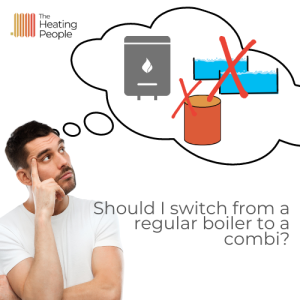
A man thinking a bout a combi boiler.Switching to a different type of boiler is generally more expensive than a like-for-like swap; due to the change in infrastructure. But a boiler is a significant investment, and you’ll want to get it right.

Switching to a different type of boiler might improve your home comfort. As well as reducing your energy bills, so you need to think long term.

Having said that; if you were happy enough with your old boiler when it was working well; then the same type of boiler could be a good option.

If lots of circumstances have changed since your last boiler was installed; or you inherited it from a previous occupier, you should consider your other options.

If for example, your family has grown, and your current combi boiler is struggling to keep up with your demands for hot water; you might be better off switching to a system boiler.

So what are the options? Although there are many different makes and models of boiler, they all fall into three basic types. For the sake of this blog, we’ll keep this brief:

Heat-only or ‘conventional’ boilers

Diagram of a heat-only boiler system.Heat-only or conventional boilers are often thought of as the traditional way of heating a home.

They’re designed to provide both heating and hot-water with the use of an additional cold-water tank and hot-water cylinder.

Heat-only boilers are typically found in larger properties; as they can supply large amounts of hot water to multiple taps and showers at the same time.

These boilers have a large feed tank which is usually stored in an attic or loft. This tank fills with cold water from the mains supply. The water is heated by the boiler; and is stored in the hot water cylinder to supply your taps and shower heads.

Where do heat-only boilers work best?

Heat-only boilers work well in large households with multiple bathrooms. Because they can supply large amounts of hot water to multiple outlets at the same time.

Another bonus is that they can be fitted with an additional electrical immersion heater. This can provide you with back-up hot water in the event of a boiler breakdown.

The drawbacks of these boilers are that they need more space than the other two types of boiler; because of the external tank and cylinder.

Because they store hot water, there is a lack of instant hot water. Once you’ve used up what’s in the cylinder, you’ll have to wait for it to refill.

You can read their pros and cons here.

Combination or ‘combi’ boilers
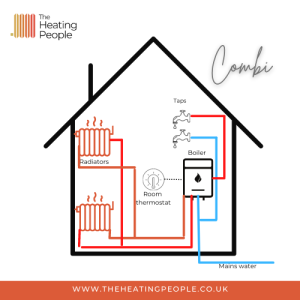
Diagram of a combi boilerCombi boilers are the most popular type of domestic boiler sold in the UK.

‘Combi’ is short for ‘combination’ boiler. Because it combines all the components of a traditional central heating system into one compact unit.

A combi boiler provides hot water on demand; rather than storing it in a tank or cylinder. It works by taking cold water directly from the mains and heating it as and when you need it.


Where do combi boilers work best?

Combi boilers are useful in properties that are short on space because the boiler itself is the only component part. They’re often compact enough to fit inside a kitchen cupboard.

Another advantage is that they never run out of hot water because they heat it on demand. But they do struggle to supply multiple outlets at the same time.

So, if you have multiple bathrooms; or family members who want to take showers at the same time; a combi isn’t your best option.

You can read their pros and cons here.

System boilers
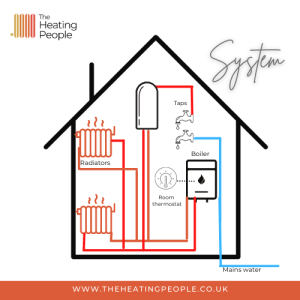
Diagram of a system boilerSystem boilers feature aspects of both a heat-only boiler and a combi.

Like a heat-only boiler; a system boiler needs a hot water storage cylinder to heat and store hot water for your taps. But it doesn’t need a tank in the attic because like a combi; it takes its water supply directly from the mains.

Once heated, the water is stored in a hot-water cylinder until it’s needed. Since there is a large store of hot water always available; a steady supply can be maintained even if multiple taps or showers are in use at the same time.

Where do system boilers work best?

Similarly to heat-only boilers, system boilers work well in large households with multiple bathrooms because they store hot water.

Their advantages over heat-only boilers are that they don’t require as much space; and they have a much wider range of control options available.

They’re also easy to integrate with renewable heating systems such as solar power. And they can be installed to low temperature, high efficiency heating systems.

Again, like a heat-only boiler there is a lack of instant hot water. Although this can be minimised with the correct controllers.

You can read their pros and cons here.

Tip 3: Choose the right size of boiler for your needs

The next thing to think about is what size of boiler you need.

We don’t mean the physical dimensions of the appliance itself. But rather how much energy is output by the boiler in terms of heat, which is measured in kilowatts (kW).

For example, a 25kW boiler uses 25,000 watts (25 kW) of power per hour; to heat the water for your central heating.

Generally, the more heat and hot water you require for your home, the higher the kW boiler you will need. But the type of boiler you have will affect this.

Choosing the correct size of boiler for your needs is crucial. If you choose a boiler that’s too big, you’ll be wasting energy and paying over the odds on your bills.

But if it’s too small, it might not be powerful enough to heat your home; or give you enough hot water.

How boilers are sized

As we mentioned earlier, there are lots of ‘engineers’ that will install much bigger boilers than you actually need. Because they either don’t understand how to design a heating system properly, or because, frankly, they’re lazy!

The only way to find the correct size of boiler is through a whole house heat loss calculation. These are the industry standard for sizing boilers under Part L of the Energy Efficiency Regulations.

These regulations provide guidance on the conservation of fuel and power under The Building Regulations Act 2010.

Energy Efficiency Best Practice requires a heat loss calculation to be conducted before installing a new boiler.

So you definitely need to avoid online ‘calculators’. Or anyone who just wants to count some radiators and have a guess!

To learn more about how boilers are sized, see our related blog: What size boiler do I need?

Tip 4: Choose the boiler manufacturer that best meets your needs

If you’ve done a Google search for a new boiler, you might be surprised by just how many boiler manufacturers there are. All offering their own extensive ranges of boilers, often with long and convoluted names!

Unsurprisingly then, we often get asked: ‘which manufacturer is best?’ by our customers. And unfortunately, there’s no easy answer – it really does depend!

Just as there’s no ‘one-size-fits-all’ boiler for everybody, there’s no ‘right’ boiler brand either.

Each brand (and individual model within the brand) has their own pros and cons. Which need to be weighed up for your particular needs.

How to choose a manufacturer

Don’t just pick the one that everyone else seems to be getting. Because what’s right for them, might not be right for you.

Although ATAG is a bit of a dark horse in the domestic boiler market; their engineering is outstanding. And they’re producing the most efficient boilers in Europe. So don’t write them off because they’re not a household name (yet!)

And hopefully it goes without saying, but you shouldn’t just pick a manufacturer because of how a boiler looks!

Lots of people like the new Lifestyle range from Worcester Bosch because they look stylish. But make sure that’s not the only thing you’re choosing them for!

Instead, it’s advisable to do a bit of research into what each manufacturer brings to the table for the type of boiler you’re looking for; and what you’re hoping to achieve with it.

After all, your boiler will be the hardest working appliance in your home for at least the next decade; so it needs some thought!

Tip 5: Check how efficient your new boiler is and what additional heating controls you might need or want

With gas prices soaring 250% since January, and COP26, boiler efficiency has become more important than ever.

At its simplest, an efficient boiler needs to burn the least amount of fuel to do its job.

An inefficient boiler does the opposite. It burns loads more fuel to do exactly the same job; which makes it more expensive to run, and worse for the planet.

To put this into context, an old non-condensing G-rated boiler that is 70% efficient wastes 30p in every £1 that you spend on heating.

Whereas a new A-rated boiler with 92% efficiency is only wasting 8p in every £1.

Unfortunately, the process involved in burning fuel for heat will always result in some heat loss and wasted energy. But, it’s clear to see that a more efficient boiler will save you money.

Changes to the law in 2005 and the Boiler Plus regulations; mean that all new boilers have condensing technology and are A-rated for efficiency. New combi boilers also have to have one of four additional energy saving devices fitted.

You should check out our related blog: How to choose an energy efficient boiler.

Heating controls

To optimise your energy efficiency, you need to pair your new boiler with appropriate heating controls.

According to the Energy Saving Trust; you can save £70 and 300kg of carbon dioxide a year by installing and correctly using a programmer; room thermostat; and thermostatic radiator valves.

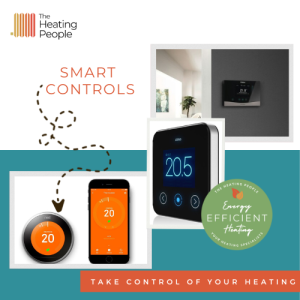
You should also consider investing in smart controls. Smart heating controls can often connect to the internet and can be controlled remotely through a tablet or smartphone.

There are a huge variety of options available with smart controls, such as zoning, geo-fencing and intelligent learning systems.

This gives you smarter control of your heating; remote access; and the promise from manufacturers of energy savings of between 20-30%.

The Heating People will be able to advise you on the best options for your central heating system.

Tip 6: Check the guarantee that comes with your new boiler

ATAG iC boiler.All new boilers come with a guarantee from the boiler manufacturer.

This means that if you experience a genuine fault with the boiler during the ‘guarantee period’; the manufacturer will repair the boiler free of charge.

Different manufacturers offer different lengths of guarantees. And often offer extended guarantees if the boiler is installed by an accredited installer.

New boilers with The Heating People come with a guarantee of up to 14 years, for your peace of mind.

Once we have installed your new boiler, we’ll register it with the manufacturers to activate its guarantee.

But you need to have your boiler serviced annually by a Gas Safe engineer to maintain its guarantee; whichever manufacturer you choose.

Conclusion…

We hope that you’ve found these tips helpful. For tailored advice on your new boiler, contact us today to book your free survey.

Useful links:

The Heating Hub article: Turning down your boiler flow rate

Heat Geek: Find a heat geek

The Energy Saving Trust: Heating Controls

Categories
Advice

Pros and cons of system boilers

A woman on a sofa researching on a laptop.If you’ve looked online for boiler replacements, you’ve probably noticed that homeowners are often encouraged to choose a combi boiler. But whilst combi boilers are great, they’re not right for everyone. Often a system boiler would be a much better alternative.

System boilers are a perfect solution for larger homes with greater demands for heating and hot water. And homes that are interested in adding renewable technology to their heating system.

In this blog, we look at what a system boiler is, and discuss their major pros and cons. Hopefully this will help you to decide whether a system boiler might be a good option for you.

You might also find our related blogs: ‘Your options with a boiler replacement’ and 6 top tips for buying a new boiler helpful.

What are system boilers?

Diagram of a system boilerWhen it comes to choosing a new boiler, you have three types of boiler to choose from: heat-only boilers; system boilers; and combi boilers.

A heat-only boiler is a system that produces your heating and hot water using two tanks; a hot water cylinder and the boiler itself.

Combi boilers produce both your heating and hot water from one compact unit; without the need for external tanks or cylinders.

A system boiler shares some similarities with both combi and heat-only boilers.

A system boiler is similar to a heat-only boiler in that it stores hot water in a cylinder. But it doesn’t need any additional water tanks; because like a combi, it takes its cold water supply directly from the mains.

Since a system boiler holds some similarities to the other two types of boiler; it’s useful to compare them so that you can see what makes system boilers different:

How are system boilers different from heat-only boilers?

System boilers are sometimes confused with heat-only boilers because they too have a separate hot water cylinder.

The storage of hot water means that both heat-only and system boilers can meet high demands for hot water. And are good choices for larger homes with multiple bathrooms.

But there are some very important differences between a system boiler and a heat-only boiler.

A system boiler contains an expansion vessel and pump allowing the boiler to be installed in a sealed system. They use a pressurised heating circuit, topped up by mains water.

Whereas a heat-only boiler can be used on either an open vented system; which has a tank in the loft, or in a sealed system with the addition of an external pump and expansion vessel.

System boilers take up less space in the home than a heat-only boiler. Because they take their cold water supply directly from the mains. They also have more control options than heat-only boilers.

Read the pros and cons of heat-only boilers here.

How are system boilers different from combi boilers?

A combi or ‘combination’ boiler provides heating and hot water from the boiler itself. And doesn’t need any external tanks or cylinders.

An obvious advantage of a combi boiler over a system boiler is that it requires less space. So combi boilers are a good choice for smaller homes or flats that can’t accommodate a separate hot water cylinder.

A system boiler needs a hot water cylinder. Because although it takes it’s cold water directly from the mains (like a combi); it heats the water and then stores it until it’s needed.

This is different from a combi, which heats the water instantly when a tap is turned on. And therefore doesn’t need to store it.

Since combi boilers heat water on demand; they aren’t well suited to homes that have a high demand for hot water. In other words, where multiple taps or showers are being used at the same time.

System boilers, on the other hand, can store large quantities of hot water for extended periods of time. And can supply it to multiple outlets simultaneously. This makes them the ideal choice for a home with multiple bathrooms.

Read the pros and cons of combi boilers here.

How do system boilers work?

System boilers take their cold water supply directly from the incoming mains supply. The cold water is passed over the boiler’s heat exchanger, which heats up the water.

Once the water is hot, the boiler’s pump sends some of it to the hot water cylinder. It’s kept her until it’s needed to supply hot water to taps, showers, and baths.

The rest of the hot water is pumped to the radiators to warm up the home.

Since there’s a large store of hot water in the cylinder; a system boiler can provide a steady supply; even where families are using multiple taps and showers at the same time.

Pros of system boilers

Here are the main advantages of choosing a system boiler:

Pro: System boilers can meet a high demand for hot water

The main advantage of system boilers is their ability to supply multiple bathrooms and taps with hot water at the same time.

Unlike combi boilers, system boilers store large quantities of hot water. This means that they can meet a high demand for hot water.

This is perfect for larger homes; or for households where family members all want to be using hot water at the same time.

Pro: System boilers require less space than a heat-only boiler

Although a system boiler needs a hot water cylinder, it doesn’t need a cold water tank in the loft. This means that it takes up less space in the home than a heat-only boiler.

So, a system boiler can be a good option where there is high demand for hot water; but there is little or no loft space available.

Pro: System boilers are compatible with renewable energies such as solar power

Another advantage of system boilers over combis; is that they are easier to integrate with renewable heating systems, such as solar power.

If you’ve read any of our previous blogs on the future of gas boilers; climate change; heat pumps; and COP26; you’ll know that increased use of renewable energies is key to the UK meeting its obligations under the Paris Agreement.

And the bonus is that by reducing your carbon footprint, you can save you money on your energy bills too.

Solar power is a renewable energy source which uses free (and environmentally friendly) heat from the sun to heat your water; rather than your boiler burning gas, which you have to pay for.

Solar panels can be used in conjunction with system boilers if the correct cylinder is connected to the system. This can be a cost-effective and environmentally friendly way to heat a home.

A solar water heating system won’t provide 100% of the hot water required throughout the year. But a boiler can make up the difference.

Pro: System boilers can be installed to low temperature, high efficiency heating

Another great thing about system boilers is that they can be installed to low temperature, high efficiency heating.

Low temperature heating (LTH) systems are a more cost effective and environmentally friendly way of running gas boilers. But it doesn’t mean your house is cold!

Low temperature heating is a heating system where the temperature of the water that’s flowing around your heating system is reduced; without compromising your comfort.

In a traditional heating system; the temperature of the water flowing around your radiators is between 70 °C and 85 °C.

With a low temperature heating system; the temperature of the water could be 25 °C to 50 °C; whilst still keeping you nice and warm.

Running your heating system like this is much more efficient. Your boiler has to burn less gas to do its job; which will save money on fuel bills, as well as being better for the environment.

Pro: System boilers can be fitted with an immersion heater

Another bonus of having a system boiler over a combi; is that it can have an electric immersion heater fitted to its hot water cylinder.

An immersion heater can act as a backup and heat your water instead of your boiler. This is handy because it means you won’t be left without hot water if your boiler ever suffers a breakdown.


Cons of system boilers

Let’s look at the main drawbacks of a system boiler:

Con: System boilers take up more space than a combi boiler

Whilst system boilers take up less space in your home than a heat-only boiler; you still need space for a hot water cylinder.

If you don’t have space such as an airing cupboard for a cylinder; but you have a high demand for hot water, you could consider a storage combi boiler.

Con: System boilers can temporarily run out of hot water if your heating controls are not set up properly

Combi boilers never run out of hot water because they heat water instantly on demand. But as we’ve seen, system boilers don’t work like that. They heat water and then store it in a cylinder until it’s needed.

So the amount of hot water that you can use is limited by the capacity of your hot water cylinder.

If lots of hot water is used and the cylinder is completely emptied; you’ll run out of hot water and have to wait for the cylinder to refill. This generally takes between 20 and 30 minutes depending on the model.

But if you choose an expert engineer to install your size and install your boiler, this shouldn’t be an issue.

Your heating engineer will be able to design your heating system and cylinder to satisfy your hot water needs and set appropriate controls. If this is done correctly you shouldn’t run out of hot water.

Con: System boilers will lose heat from their cylinders if not insulated properly

One of the reasons that combi boilers are highly efficient; is because they heat water instantly on demand, and so you only pay for what you use.

A potential pitfall with a system boiler; is that you can waste hot water by having an uninsulated cylinder which allows the heat to escape.

If you’ve read our blog: What is heat loss and why is it important? You’ll know that reducing heat loss is vital in optimising your energy efficiency and saving money.

Fitting a hot water cylinder jacket (which cost as little as £20) will insulate your cylinder and the reduced rate of heat loss will help maintain the temperature of the water for longer.

The Centre for Sustainable Energy say that heat loss from a cylinder can be reduced by over 75%; saving around £40 per year on your energy bills.

Final thoughts…

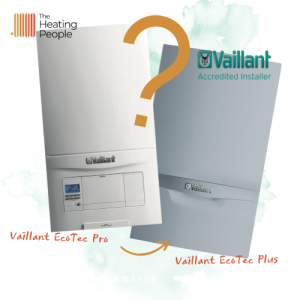
Vaillant System boilersSystem boilers are a great choice for larger homes with a high demand for hot water. They come with the added advantage of being compatible with low temperature heating and renewable energy sources.
We hope that you’ve found this quick guide useful.

For tailored advice on which is the best type of boiler for your home; call one of our friendly team today to book your free survey.

Useful links

Heat Geek: The benefits of low temperature heating systems

Categories
Vaillant

Vaillant ecoTEC Pro versus Vaillant ecoTEC Plus

Two Vaillant boilersAre you confused about the difference between the Vaillant ecoTEC Pro and the Vaillant ecoTEC Plus?

If so, we’re not surprised!

With so much choice out there, choosing a new boiler can be a daunting task.

There are lots of big brands all jostling for your attention, each with their own extensive ranges of boilers, that all claim to be up for the job.

Since it’s a big investment, you’ll want to be sure that your new boiler will keep you and your family warm and comfortable for years to come, without costing you a fortune on your central heating bills.

At The Heating People, we pride ourselves on matching you with the perfect boiler to meet your needs.

We are accredited installers of: Vaillant; Worcester Bosch; Viessmann; and ATAG boilers. But we aren’t tied to any one of them, and equally we can work with others. This means that you’ll always get impartial advice on what suits you best.

Customers often ask us about the differences between the Vaillant ecoTEC pro and the Vaillant ecoTEC plus combi boilers.

So we’ve put together this handy guide to walk you through the key differences to help you with your decision.

For tailored advice from the experts, call one of our friendly team today.

Who are Vaillant?

If you’ve looked at any boilers online, you’ll have undoubtedly come across Vaillant. Vaillant is one of the leading manufacturers of heating and cooling products in the world.

Operating for over 140 years, they sell products in 80 countries and pioneered the world’s very first combi boiler over 35 years ago.

Vaillant doesn’t just produce gas and oil boilers though. Their product range also includes hot water cylinders, and renewable technologies such as heat pumps and solar water heating systems, as well as heating controls and accessories.

Vaillant’s  vSMART™ heating control app allows you to take total control of your heating anytime, anywhere and even connects with Amazon Alexa.

Why choose a Vaillant boiler?

If you’re wondering why so many people opt for a boiler from Vaillant, here are some of the benefits of this brand:

Vaillant are a highly reputable company

Vaillant has built up a solid reputation for quality over the last 140 years.
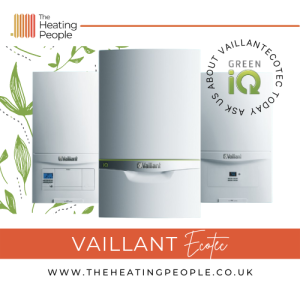
Their award-winning combi, system and heat-only boilers are renowned for their reliability, performance and efficiency.

Some of Vaillant’s boilers have been awarded Which? Best Buy gas boiler products for 2020.

Vaillant has a huge product range

Part of the reason we’ve written this blog is because there are so many different types of Vaillant boilers to choose from!

Their extensive product range means that they’ll have a boiler to suit your home and lifestyle – whether you’re looking for a heat-only system, a combi boiler or a system boiler.

Vaillant boilers are highly efficient

Vaillant ecoTEC boiler rangeVaillant pride themselves on their focus on sustainability, with ‘thinking ahead’ being their motto which is reflected in their products’ high energy efficiency ratings and low emissions.

All Vaillant boilers are ErP (Energy-related Products) A-rated, which can be further boosted to A+-rated when combined with their vSMART heating controls.

As well as helping to reduce your carbon footprint, this can also save you money on your energy bills.

A-rated boilers are over 90% efficient, which means that over 90p of every £1 you spend on fuel for your boiler is used for your heating and hot water.

With older G-rated gas boilers, only 70p (and sometimes less!) in your £1 is used where it should be, the rest is wasted.

This can make a huge difference to your bills when you consider that according to the Energy Saving Trust, your boiler is responsible for over 60% of your household’s annual energy costs.

Vaillant has also invested in green initiatives, such as improving the recyclability of boiler components.

As a company, Vaillant have vowed to reduce their own greenhouse gas emissions by 50% by 2030, from around 60,000 tonnes per year in 2018 to less than 30,000 tonnes by 2030.

They are very much focused on addressing the goal of the 2015 Paris Agreement to limit global warming to 1.5°C.

You might like our related blog: How to choose an energy efficient boiler.

Vaillant invests in technological innovation

aroTHERM heat pumpAlongside energy efficiency, Vaillant is well known for its technological innovation.
The Vaillant vSMART app-based heating control system integrates with Vaillant boilers to give you total control of your heating, wherever you happen to be.

The app features self-learning technology and will even connect to your Amazon Alexa device, so that you can control your heating with your voice!

Not only is this technology convenient, it can also help you to become more energy-efficient, which will help to reduce your energy bills. 

Vaillant are highly rated by customers

Feedback from customers is consistently positive for Vaillant, indicating a high level of customer satisfaction.

YouGov (who collect independent public opinions on brands) have ranked Vaillant as the second most popular energy and utility product.

Vaillant offer long guarantees for your peace of mind

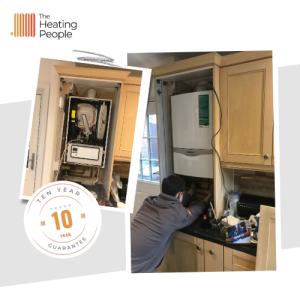
An installation of a Vaillant ecoFIT by The Heating PeopleDepending on the model, Vaillant boilers come with 2-5 years parts and labour warranty as standard, but many have up to a 10 year warranty available when installed by a Vaillant Advance Installer, such as The Heating People.

But remember that you’ll need to keep up with your annual servicing by a Gas Safe engineer to maintain your boiler’s guarantee.

Vaillant boilers are quiet

If noise from your boiler bothers you, then a Vaillant might just be for you. Even when running at their full capacity, Vaillant boilers are renowned for their quiet performance.

So much so, Vaillant has been awarded the Quiet Mark accreditation by the International Eco-Award Scheme to manufacturers of the quietest products.

Vaillant replacement parts are easy to find

Although Vaillant boilers feature German design and engineering, many Vaillant models including the ecoTEC range are manufactured in the UK at their RoSPA gold award-winning Derbyshire manufacturing plant. This means that replacement parts are easy to come by.

How much do Vaillant boilers cost?

The cost of Vaillant boilers varies depending on the type of system and particular model that you choose.

As a rough guide, the typical price of a Vaillant EcoTec Plus 825 costs approximately £1000 – £1050.

How do I buy a Vaillant boiler?

You can’t buy Vaillant boilers directly from Vaillant. Instead, you need to have one supplied through a Vaillant Advance Installer, such as The Heating People.

We specialise in Vaillant products and can offer extended guarantees.

Although it’s possible for any installer in the country to install a Vaillant boiler; even if they’re not accredited, you might not get as long a guarantee, and you need to be careful that they are Gas Safe registered.

Rest assured that all of our engineers at The Heating People are Gas Safe registered for working on gas.

Is a Vaillant combi boiler right for me?

A diagram of a combi system in a house.Both the Vaillant ecoTEC pro and the Vaillant ecoTEC plus are combi boilers.

So, before we go any further, you need to be sure that it is in fact a combi that you’re after.

Apart from the Vaillant Combi boiler range, Vaillant also has a range of system and heat-only or conventional boilers.

Combi boilers are compact all-rounders that provide both the heating and hot water for your home.

Combi boilers are different to conventional and system boilers because they provide all of your heating and hot water from one compact unit.

In contrast, heat-only or conventional boilers need an additional cold-water tank and hot-water cylinder; and system boilers need a hot water storage cylinder to heat and store hot water.

Combis don’t need a separate cold water storage tank or an external hot water cylinder in your attic – everything it needs is inside the unit.

This is because they take their cold-water supply directly from the mains, and they don’t store hot water, because they heat water instantaneously, on demand.

Vaillant offers six types of combi boilers that supply heat and instant hot water. The range starts with the basic EcoTec Pro, which is suitable for smaller homes. Vaillant also produces EcoTec Plus, EcoTec Exclusive, EcoFit Sustain and Ecofit Pure combi boilers.

What is the Vaillant ecoTEC range?

Vaillant’s ecoTEC line is popular with consumers because they offer efficient performance alongside sleek design.
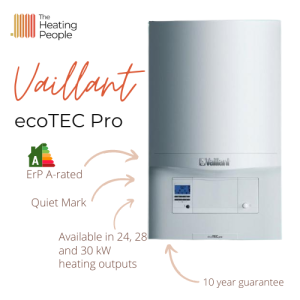
Vaillant ecoTEC boilers are also available as system and heat-only boilers and come in a range of sizes to suit different homes and lifestyles.

 But don’t worry, you won’t have to work out what size you need – here at The Heating People, we use heat-loss calculations to match you with the correct size of boiler for your needs.

If it’s a Vaillant combi that you’re after, there are three ranges within the EcoTec line: the Vaillant ecoTEC pro, Vaillant ecoTEC plus and the Vaillant ecoTEC exclusive. We’re looking at the pro and the plus today.

What are the differences between the ecoTEC pro and plus?

Let’s look at the differences between the Vaillant ecoTEC Pro and Plus…

The Vaillant ecoTEC pro gas combi boiler

Vaillant ecoTEC ProThe Vaillant ecoTEC pro is a popular high efficiency boiler that is suitable for use in small to medium sized homes (such as 1-bedroom properties, flats or apartments).

It offers precision heating to reduce fuel bills and is compatible with the vSMART app-based control that we mentioned earlier.

Here are some of the key features of the EcoTEC Pro combi:

  • Available in three combi models covering 24, 28 or 30kW heating outputs
  • A flow rate of up to 12.3 litres per min for fast instant hot water
  • ErP A rated for both hot water and heating efficiency
  • Precision heating to reduce fuel bills
  • Bright and easy-to-use display
  • Quiet mark approved
  • Compatible with vSMART controls
  • Guarantee of up to 10 years when fitted by a Vaillant Advance installer, such as The Heating People
  • Works with LPG where required
  • Dimensions in mm (825 model): H 720 x W 440 x D 338

The Vaillant EcoTEC plus:

The EcoTEC Plus is a higher spec version of the Ecotec Pro and is described by Vaillant as their ‘flagship’ boiler.

With its range of heating outputs, it’s flexible enough to meet the demands of a whole range of different homes and lifestyles.

It’s an efficient choice because its smart technology means that it knows when you don’t need as much heating power and can drop to using 16% of its maximum power, which is better for the environment, and your wallet!

The EcoTEC Plus is typically best suited to medium sized properties (from 2 bedrooms with 1 bathroom to 3 bedrooms with 1 bathrooms + ensuite).

Like with the Pro, it offers precision heating to reduce fuel bills and is compatible with the vSMART app based control that we mentioned earlier.

Here are some of the key features of the EcoTEC Plus combi:

  • Available in four combi models covering 25, 32, 35 or 38kW heating outputs
  • High performance, control and efficiency
  • A flow rate of up to 15.9 litres per min for fast hot water
  • Delivers hot water within 5 seconds (and no need for a storage tank or cylinder.)
  • ErP A rated for both hot water and heating efficiency
  • Precision heating to reduce your fuel bills
  • Simple to use backlit display
  • Quiet Mark approved
  • Compatible with vSMART controls
  • Guarantee of up to ten years when fitted by a Vaillant Advance Installer, such as The Heating People
  • Works with LPG where required
  • Dimensions in mm (825 model): H 720 x W 440 x D 338

So, what’s the ecoTEC exclusive with green iQ?

If you’ve been left wondering how the pro and the plus differ from the exclusive, then we’re here to help!

The ecoTEC exclusive is described by Vaillant as ‘the best in the business’, and as you would expect, there is a premium price attached to that.

It’s best suited to homes with a high demand for hot water and central heating. For example, a property with more than 3 bedrooms and 2 bathrooms/en suites.

The Exclusive range of boilers rely on a low energy water pump and high efficiency internal mechanisms to ensure that hot water can be provided efficiently to several hot water outlets within a property.

The exclusive carries Vaillant’s green iQ mark because it offers the ultimate in energy efficiency, the lowest fuel consumption, and the lowest running costs. The other nice ‘green’ credential of this boiler is that 85% of its parts are recyclable at the end of its life.

Here are some of the key features of the ecoTEC exclusive combi:

  • Available in two combination models covering 35 or 43kW output
  • The best in boiler performance, control and efficiency
  • ErP A rated for both hot water and heating efficiency
  • A flow rate of 17.8 litres per min for fast instant hot water
  • Fully compatible with the Vaillant vSMART™ heating control for optimum performance and smartphone app control
  • Eco-friendly and 85% recyclable
  • 5-year guarantee as standard, with 7 to 10 years available when you book a Vaillant Advance installer
  • Dimensions in mm (43kW): W 720 x H 440 x D 474
  • Works with LPG where required

Final thoughts…

We hope that you’ve found this article helpful. You might also like our related blog: The best combi boilers 2022.

For tailored advice on the best choice for your needs, contact one of our friendly team today to book your free survey.

Useful Links:

Vaillant: Who we are

Vaillant – social responsibility

Which? reviews of Vaillant

Which? guide to Vaillant

Quiet Mark – Vaillant

YouGov – Vaillant

Categories
Advice Worcester Bosch

Worcester Bosch Greenstar 4000 versus Greenstar i

Wondering how the Worcester Bosch Greenstar 4000 compares to the old Worcester Bosch Greenstar i? …

When you’re on the hunt for a new boiler, it can be a daunting task.

There are lots of different manufacturers out there; each with their own vast array of models to suit every home and lifestyle.

Not only that, but the different models of boiler often have baffling names involving seemingly meaningless numbers and letters.

But don’t worry, The Heating People are here to help!

We’re experts at helping you to choose the perfect boiler for your needs. Which will keep you and your family comfortable, whilst helping you save money on your energy bills.

And although we’re Worcester Bosch Accredited Installers, we’re not tied to Worcester. We are accredited installers of many boiler brands. And we always provide completely impartial, expert advice.

If you’re wondering whether the Worcester Bosch Greenstar 4000 will make you as happy as your old Greenstar i; this blog’s for you!

Who is Worcester Bosch?

A Worcester Bosch Greenstar boilerEven if you’re not aware of their different models; we’re willing to bet that you’ve heard of the boiler manufacturer, Worcester Bosch.

Worcester was originally founded in 1962 and became part of the Worldwide Bosch Group in 1996.

They’ve been a market leader in domestic boilers for the last 50 years. Because they boast a large product range offering reliability and fantastic warranties.

Worcester Bosch doesn’t just produce gas and oil boilers though. Their product range also includes hot water cylinders; renewable technologies such as heat pumps and solar water heating systems; as well as controls and accessories.

You might like our related blog: Why choose a Worcester Bosch boiler?

Why choose a Worcester Bosch boiler?

If you’re wondering why so many people opt for a boiler from Worcester Bosch; here are some of the benefits of this brand:

1.    Worcester Bosch is a highly reputable company

The Worcester Bosch Group has built up a solid reputation for quality over the last 50 years.

Which? has shown their high regard for Worcester Bosch by giving them the highest brand score for nine years running.

In the Which Best Boiler Brands Report in 2020, Which? said:

‘Worcester Bosch performs so consistently well in our annual reliability surveys that its name is synonymous with dependability.’ Quite the accolade.

2.    Worcester Bosch has a huge product range

Part of the reason we’ve written this blog is because there are so many different types of Worcester Bosch boilers to choose from!

Their extensive product range means that they’ll have a boiler to suit your home and lifestyle. Whether you’re looking for a heat-only system, a combi boiler or a system boiler.

3.    Worcester Bosch is highly rated by customers

Feedback from customers is consistently positive for Worcester Bosch, indicating a high level of customer satisfaction.

YouGov have ranked Worcester Bosch as the UK’s best value boiler brand; the most recommended boiler brand; and the best quality boiler brand.

4.    Worcester Bosch boilers come with hefty guarantees

Worcester Bosch provide hefty 10-year warranties. So you can have the peace of mind that should anything go wrong, you’ll be covered.

Since The Heating People are Worcester Bosch Accredited Installers, we’re able to offer extended 12 year guarantees on some models.

But remember that you’ll need to keep up with annual servicing by a Gas Safe engineer to maintain your guarantee.


5.    Worcester Bosch boilers are energy efficient

Worcester Bosch hydrogen ready boilerAll Worcester Bosch boilers are ErP (Energy-related Products) A-rated.

And according to Worcester Bosch; adding a Bosch EasyControl internet-connected Smart controller to their Greenstar range; can further boost your heating system efficiency to an impressive 98% (also known as A+).

As well as being environmentally friendly, energy efficient boilers can save you money on your energy bills.

A-rated boilers are over 90% efficient. This means that over 90p of every £1 you spend on fuel is used for your heating and hot water.

With older G-rated gas boilers; only 70p (and sometimes less!) in your £1 is used where it should be, the rest is wasted.

This can make a huge difference to your bills. After all, your boiler is responsible for over 60% of your household’s annual energy costs. And that’s something to think about, given the current price of gas!

You might like our related blog: How to choose an energy efficient boiler.

6.    Worcester Bosch spare parts are easily available

Since Worcester are based in the UK and their boilers are very popular; securing parts should anything go wrong is usually straightforward.

How much do Worcester Bosch boilers cost?

Worcester Bosch gas boilers cost between £570 and £1,500, depending on their type and size.

How do I buy a Worcester Bosch boiler?

You can’t buy Worcester Bosch boilers directly from Worcester Bosch. Instead, you need to have one supplied through a Worcester Accredited Installer, such as The Heating People.

We specialise in Worcester products and can offer extended guarantees.

What boilers does Worcester Bosch offer in its Greenstar combi range?

Combi boilers produce both heating and hot water on demand, without the need for a cylinder.

All the Greenstar combis are designed to provide high levels of performance and operating efficiency. The combi boilers in this range include the Greenstar:

Some of the appealing features about the Greenstar range is that Worcester have created: a freeze-proof condensate pipe; a low energy pump that reduces electrical consumption; and instantaneous hot water.

The old Greenstar i Series

Prior to the introduction of the Greenstar 4000, Worcester’s most popular combi boiler was the Greenstar i. The Greenstar i is no longer in production, but there are still some in the supply chain.

The Greenstar i was a very popular boiler because it suited small to medium sized homes with one bathroom; and the controls were straightforward.

Worcester Bosch describes the 4000 as being ‘instantly familiar and yet totally transformed’; since it was built on the old tried and tested model.

The 4000 is an improvement on the i in terms of the speed and ease of installation; commissioning and servicing; alongside improvements in efficiency and control.

What are the improvements with the Worcester Bosch Greenstar 4000?

Let’s look at why the 4000 is better than its predecessor…

More compact

WB, worcester bosch, greenstar, greenstar 4000, 4000

The Worcester Bosch Greenstar 4000 has smaller dimensions than its predecessor; having been designed to fit within kitchen cupboards and airing cupboards. This gives you more options in where you would like to install your boiler.

Super stylish

What you can’t help but notice about the Worcester Bosch 4000 is its sleek and stylish design.

It’s very similar in appearance to the sleek Worcester Bosch 8000 LifeStyle boiler.

Featuring curved edges, and LCD digital display; it’s a far cry from the dull white box we expect from a boiler!

It’s quiet

Worcester Bosch Greenstar 4000The Worcsetr Bosch Greenstar 4000 is 10% quieter than the Greenstar i, so it’s whisper quiet!

High hot water flow rates

The 4000 can produce up to 12.3 litres of hot water out of your tap in a minute. And operates extremely well in low water pressure areas; ensuring powerful and warm showers.

With full flow rates from just 1 bar of pressure; they’re a great choice if you live in a high rise building or area with low mains pressure.

Improved energy efficiency

The Worcester Bosch Greenstar 4000 is ErP A-rated, with an impressive 94% efficiency.

And according to Worcester Bosch, adding a Bosch EasyControl internet-connected Smart controller; can further boost your heating system efficiency to 98% (also known as A+).

SimpleSwitch feature

If you’re thinking of upgrading your old Greenstar 30i to theWorcester Bosch Greenstar 4000; the latest SimpleSwitch feature means that replacement is even easier.

Frozen condensate protection

The 4000 has a condensate pipe which is specially designed so that it doesn’t freeze when the temperature drops in winter.

This means that you can avoid problems with your boiler going off due to frozen pipes. 

Intelligent filling system

If you regularly experience problems associated with your boiler pressure dropping; you’ll appreciate the intelligent filling system of the Worcester Bosch Greenstar 4000.

This feature helps to maintain optimum boiler pressure – consistently and reliably.

In summary…

If you liked the old Greenstar i; you’ll definitely like the new Greenstar 4000, which is following in the footsteps of its best-selling predecessor.

The main differences are the new and improved sleeker look, and the compact size.

The combi boiler options also offer a higher flow rate of 10.2 and 12.3 litres a minute; which is good news for your showers.

Check out our related blog: Worcester Bosch Greenstar 2000.

For a free, fixed price quotation, call The Heating People today to book your survey. We can offer a guarantee of 10 years on this model.

Useful Links:

Worcester Bosch boiler range

YouGov Worcester Bosch

Which? Reviews Worcester Bosch

Categories
Advice

22 Tips to reduce your gas bill

A woman putting coins into a piggy bank.With gas prices soaring, we’ve put together this list of 22 tips to help you to reduce your gas bill.

A perfect storm of factors from a global pandemic to Russia’s invasion of Ukraine, have caused gas prices to soar.

Electricity and gas bills are set to rise by 54% in April, with fears that the Ukraine crisis could increase them even further from October.

With home heating (mostly fueled by gas) accounting for around 60% of your energy bills, optimising the energy efficiency of your heating system is more important than ever.

One of the most effective ways to reduce your gas bill is to replace an aging boiler with a new, energy efficient model. But there are other lower cost ways you can reduce your gas usage.

If you’re looking for ways to reduce what you’re paying out on your energy bills, read on…

Why are gas prices increasing?

If you’ve read our blog: The Gas Fuel Crisis, you’ll know that a culmination of different factors has led to a record rise in global gas prices over the last year.

Even before Russia’s invasion of Ukraine, wholesale gas prices had quadrupled!

Consumers were initially protected from these rises by Ofgem’s price cap. This cap limits what companies can charge per unit of gas.

Because gas companies were having to sell gas to consumers for much less than they bought it for, 29 of them went bust.

Ofgem announced that the price cap would rise by an eye-watering 54% in April 2022.

But not long after this, Russia invaded Ukraine. Since Russian gas accounts for about 40% of the EU’s gas imports, the price of gas has increased even further!

Wholesale gas prices are currently around £4 per therm, which is more than ten times the level a year ago when it was around 35p.

How much more will I be paying for my gas?

The energy price cap will increase from the 1st of April for approximately 22 million customers.

According to Ofgem, those on default tariffs paying by direct debit will see an increase of £693 from £1,277 to £1,971 per year (difference due to rounding). Prepayment customers are facing an increase of £708 from £1,309 to £2,017.

But the price cap is updated twice a year, and there are now fears that the war in Ukraine may result in another price cap increase in October.

Experts say that if the price of gas remains at its current levels, household gas bills could reach more than £280-a-month or £3,000-a-year by the autumn.

With households feeling the squeeze as the cost-of-living soars, understanding how to take control of your energy usage at home is vital.

Can I switch energy providers?

Previously, a good way of saving money on energy bills was to check your bills and switch to a different (and cheaper) energy provider.

But unfortunately, switching energy providers to get a cheaper deal isn’t possible now, as there are no deals that are meaningfully cheaper than Ofgem’s price cap.

So, the best way to save during the current energy crisis is to use less. Let’s look at some tips for reducing your energy usage, and therefore your bills.

Tips for reducing your gas bill

As gas prices sky-rocket, you’ll need to be savvy with how you use your gas. Thankfully, there are some simple things that you can do to save money on your gas bill:

1.    Reduce your gas bill with a smart meter

The first step in reducing your gas bill, is to keep a watchful eye on how you’re using your energy.

Understanding where your costs are coming from, allows you to make little changes or adjustments to save money.

Smart meters are gas and electricity meters that come with an in-home display that shows you how much energy you’re using in pounds and pence in near real-time.

Smart meters make it easy to keep an eye on how much you’re spending. This can help you to make small changes to your habits which will reduce your household costs.

Another advantage of having a smart meter is that they send readings to your energy provider automatically. This means you’ll get more accurate bills without having to take readings yourself. 

2.    Reduce your gas bill with heating controls

Heating controls are vital in keeping your home comfortable, without wasting energy. So hopefully you’re already using them!

But if you’re not… installing a room thermostat, programmer and thermostatic radiator valves, could save you around £75 a year, according to the Energy Saving Trust.

It will also cut your home’s carbon footprint by 320kg a year, which is important in our quest for net-zero by 2050.

3.    Reduce your gas bill with a programmable thermostat

If you only have a basic room thermostat, it’s worth upgrading to a programmable thermostat.

 Programmable thermostats have a built-in timer which lets you schedule your heating to come on and go off automatically at different times of day.

Unlike the standard room thermostat, you won’t have to manually adjust the heating. This means that your property will be heated up when it needs to be, and you can save money when you don’t need the heating on.

You could go one step further by installing a smart thermostat…

4.    Reduce your gas bill with a smart thermostat

Google Nest smart thermostat and a smartphone.A significant step-up from the programmable thermostat, is the smart thermostat.

A smart thermostat is a thermostat that can be controlled by an internet-connected device, such as your phone, tablet, or smart speaker.

A smart thermostat will let you view and monitor how much energy you’re using, making it easier to see where you could save money. Nest even uses a green leaf symbol to help you to choose more energy efficient options.

Smart thermostats are more flexible than other heating controls because you can control your heating system remotely. This is handy because you can turn your heating off from your phone if you’re stuck in traffic or have had a change of plans. So, you never waste energy heating an empty home.

But the energy savings don’t end with having remote control of your heating. Smart controls offer a huge range of different features that can help to save you money, such as:

  • Hot water control;
  • Multi-room control or zonal heating;
  • Motion sensors and GPS tracking;
  • Weather compensation;
  • Intelligent self-learning for automatic scheduling;
  • Holiday modes;
  • Voice control.

Manufacturers of smart controls make bold claims about how much money you can save with a smart thermostat. Tado claims you could save up to 31% on your energy bills!

But these savings will only apply if you previously left your heating on at a single temperature constantly; or didn’t fully utilise your programmable thermostat. If you’re already quite energy conscious, you’ll see lower savings and a longer payback period.

Check out our related blog: Does smart heating save money.

5.    Reduce your gas bill with thermostatic radiator valves (TRVs)

A woman holding a TRV.If your radiators have basic valves that only let you turn them on or off, you should consider upgrading them to thermostatic radiator valves.

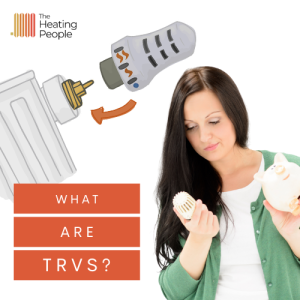
Thermostatic radiator valves or ‘TRVs’ are a heating control that attach to the side of your radiators. They control the air temperature of your rooms by automatically adjusting the amount of hot water that enters the radiator they are attached to.

This means that you can have different heating zones throughout your home, so you’re not wasting energy heating rooms that you don’t use very often.

The Greenage says that the use of TRVs has been linked to energy savings as significant as 40%. But this will vary greatly depending on factors such as the performance of your radiators, insulation and how many rooms they are installed in.

6.    Reduce your gas bill by turning your thermostat down

One of the simplest ways to save energy is by turning your heating down a single degree.

Although one degree might not sound like much, Government research has shown that turning down your thermostat by just 1 degree can save up to 10% on your heating bills.

According to the Energy Saving Trust, this one simple tip could reduce your energy bills by around £80 a year, and would you even notice the difference?!

7.    Reduce your gas bill by rescheduling your heating

As well as turning your thermostat down by one degree, you should think about whether you can alter your heating schedule without affecting your comfort.

Could you switch your heating off a little earlier, and turn it back on again a little later?

If you’ve got decent insulation (more on this later) your home should generally retain heat for an hour after the heating has been turned off. So, you might not need your heating on for as long as you think. It’s certainly worth trialing a slightly shorter schedule!

8.    Reduce your gas bill by using less hot water

 As well as heating the rooms in your home, your boiler is also using energy to give you hot water.

Combi boilers deliver the hot water directly, whereas heat-only and system boilers do this through a hot water cylinder. But either way, it’s contributing to your gas bill.

And unlike with the heating, which we might switch off in the winter months, we use hot water all year round.

The average person in the UK uses a whopping 145 litres of water a day.

The Centre for Sustainable Energy says that around a quarter of the water we use is for showers and baths, and this accounts for about 10-20% of a typical household’s energy bills. And this doesn’t include heating water for washing-up or doing the washing.

So, it’s not surprising that hot water can make up a significant part of your gas bill!

Here are some simple ways you could reduce your hot water usage:

  • Take a shower instead of a bath;
  • Spend one minute less in the shower (The Energy Saving Trust says this can save £4 per person per year);
  • Fit an eco-shower head on your power shower;
  • Wash up in a bowl, rather than running a tap;
  • Only turn on washing machines and dishwashers when they are full;
  • Wash clothes at 30 degrees wherever possible;
  • Fix any dripping taps;
  • Insulate your hot water cylinder if you have one, and make sure it is set to the correct temperature.

9.    Reduce your gas bill by using your boiler rather than an immersion heater

If you have a hot water cylinder with an electric immersion heater, you should use your boiler to heat your water, even in the summer.

Heating water with an immersion heater is more expensive, and you should reserve this for use as an emergency back-up if your boiler breaks down.


10.   Reduce your gas bill by turning down your water temperature

If your hot water is extremely hot, you’ll be wasting energy (and money) by heating it past a comfortable temperature.

You can reduce the temperature of the hot water which comes out of your taps by adjusting a dial on the front of your boiler.

11.  Reduce your gas bill by turning down the flow temperature on your combi boiler

A recent report by the Heating and Hot Water Council (HHIC) found that households can save around 6-8% on their gas bill just by turning down the flow temperature on their condensing combi boiler.

This doesn’t mean turning down your thermostat. It means that your home is heated to a comfortable temperature while running the water in your heating system at a lower temperature.

To find out more about this, check out our related blog: The benefits of low temperature heating.

12.   Reduce your gas bill with regular boiler servicing

Booking an annual service with a Gas Safe engineer is not only vital in keeping you and your family safe; but also keeps your boiler working at maximum efficiency.

A well-maintained boiler will work more efficiently than a neglected one.

This is important because an efficient boiler uses less energy to heat your home, which means regular services can help keep energy costs lower.

During a service, your engineer will clean up any dirt and debris that has collected in your boiler. This improves the heat transfer, allowing your boiler to light more easily and burn efficiently.

Regular servicing helps your boiler to run optimally, using only as much energy as is necessary to heat your home.

Skipping your annual service could lead to faults, higher energy bills, and your warranty ending early – so get booked in!

13.  Reduce your gas bill by bleeding your radiators

Although they’re often overlooked, your radiators are just as important as your boiler in keeping you warm.

Over time, pockets of air can build up in your radiators, preventing the hot water from circulating properly. These pockets of air result in cold spots on your radiators and reduce the surface area for heat to be transferred to your room.

This reduces the efficiency of your heating system because your boiler will be burning more energy trying to get your rooms up to temperature.

The good news is that there’s a simple fix to remove the unwanted air from your system – bleeding your radiators.

Bleeding your radiators not only makes your home warmer but can also help to reduce your energy bill. Check out our step-by-step guide on how to bleed your radiators, here.

If after bleeding your radiators, they still feel cool, ask your engineer about a power flush.

14.  Reduce your gas bill by rearranging your furniture

Another simple tip to help your radiators do their job, is to check that they’re not being obstructed by any sofas or big pieces of furniture.

Move your furniture an inch or two away from your radiators to allow the air to circulate properly. And don’t hang your washing on them, use a clothes airer instead!


15.  Reduce your gas bill by improving your home’s insulation

The last thing you want when you’ve paid a premium for your gas, is for your heat to be pouring out of your house as quickly as you’re producing it. But without decent insulation, that’s precisely what’s happening!

And unfortunately, Britain has some of the worst insulated housing stock in Europe, leaving households extremely vulnerable to spikes in gas prices.

All buildings suffer from heat loss, but insulation slows this process down. The longer you can hang on to your heat, the less gas you’ll have to burn to keep warm. And this will save you money on your bills.

According to the Energy Efficiency Infrastructure Group, better insulation could save UK households more than £500 a year on energy bills.

Research by the Energy and Climate Intelligence Unit (ECIU) revealed that by upgrading the Energy Performance Certificates (EPC) of homes from a band D to a band C reduced gas demand in homes by 20%. This equated to an average saving of £194 per year from April 2022.

So, you should consider whether you can improve your insulation in any of the following ways:

16. Reduce your gas bill by insulating your walls

According to the Energy Saving Trust (EST), an average semi-detached house can expect to save approximately £225 per year on their energy bills and reduce their carbon dioxide emissions by 930kg by insulating their walls.

17. Reduce your gas bill by insulating your loft

The EST says that where an average semi-detached house goes from having no insulation, to 270mm of insulation, energy bills will be reduced by up to £150 per year, and carbon dioxide emissions will be reduced by up to 610 kg.

18. Reduce your gas bill by upgrading to double or triple glazing

Whilst there will be a cost to fitting double glazing, the annual savings on your energy bills for an average semi-detached house, is between £75-80, according to the EST.

19. Reduce your gas bill by draught-proofing your home

To effectively draught-proof your property, block up any unwanted gaps that let cold air in. This can be as simple as hanging heavy curtains; using a chimney balloon; and placing rugs over gaps in floor boards.

20. Reduce your gas bill by insulating your hot water cylinder

If you have a heating system with a hot water cylinder, check whether it has an insulating jacket. The EST says that just fitting your hot water cylinder with an insulating jacket will save you £20 a year in heating costs and 150kg of carbon dioxide emissions.

Check out our blog: How to reduce heat loss at home, for more tips.

21. Reduce your gas bill by replacing your boiler

If you have an old boiler, now is a very good time to consider replacing it with a new and efficient model.

You might like to read our guide: How to choose an energy efficient boiler.

Heating technology has come a long way in the last few years, and modern boilers are much more efficient, having to comply with the Boiler Plus Regulations on energy efficiency.

If you have an ancient boiler, it will have older, less efficient, technology. Add to this, the fact that boilers tend to lose some efficiency over time, and you’ve got a recipe for much higher running costs than with a modern replacement.

Modern A-rated boilers must be at least 92% efficient which means that only 8p in every £1 is lost in the heating process. Whereas an old G-rated boiler that’s only 70% efficient, will be wasting 30p in every £1. So, the savings can soon mount up.

If you’re swapping a G-rated boiler for an A-rated one, you’ll certainly see a huge difference on your fuel bills. According to the EST, you could save as much as £340 a year on your gas bill if you’re trading in an old-style non-condensing boiler for a new condensing one. And with the current price of gas being what it is, the savings are likely to be much higher than this!

For tailored advice on what you could save, contact one of our team today to book your free survey.

You might also like our related blog: 6 Top tips for buying a new boiler

22. Reduce your gas bill by checking whether you’re eligible for any energy efficiency grants or schemes

It’s also worth checking whether you’re eligible for any energy schemes or grants to help you pay your energy bills. Some schemes to investigate include:

  • Council Tax Rebate for bands A-D – You will get £150 back from the council to help pay your energy bills;
  • The Warm Home Discount – £140 mainly to pensioners and those who get certain benefits;
  • Cold Weather Payment – available if you already receive pension credit; income support; income-based Jobseeker’s Allowance; income-related Employment and Support Allowance; Universal Credit;
  • The Winter Fuel Payment – £100 – £300 per winter for those born before 26 September 1955;
  • Grants for energy debts – If you’re in debt to your energy supplier, you might be able to get a grant to help pay it off;
  • The Boiler upgrade scheme (from April 2022) – up to £5,000 to replace your current gas or oil heating with low-carbon heating.

Conclusion

Unfortunately, there’s nothing we can do about the current price of gas. But we can take simple steps to optimise the energy efficiency of our heating systems, to get more bang for our buck.

By following as many of these tips as you can, you should be able to make some savings on your gas bill.

We hope that you’ve found this article useful. For tailored advice on improving your heating system, contact The Heating People today to book your free survey.

Useful links

Ofgem: Statement on April price rises

The Greenage: TRVs

Categories
Advice

How much does a boiler cost?

If you’ve decided it’s time for a new boiler; there’s a good chance you’re feeling daunted by all of the different makes and models, and are wondering how much it’s likely to cost.

There are lots of factors that contribute to the cost of a new boiler, but this handy guide explains why the cost of a new boiler can vary. And will help you to understand how much you can expect to pay.

You might like our related blog: Boiler FAQs.

To start with, you’ll need to consider why you’re looking for a new boiler, and what type of boiler you need…

Why are you looking for a new boiler?

There are many reasons why you might be looking for a new boiler. And ultimately, the cost of a boiler will depend on what your heating and hot water needs are; and what you’re hoping to achieve from your new heating system.

Although we only tend to think about our boilers when they’re on the blink, there are lots of benefits of replacing an operational boiler, so you might be planning ahead.

But whether you’re replacing a boiler because your old one has stopped working; or you’re looking to improve your energy efficiency; remember that a cheaper initial outlay could cost you more down the line in fuel bills.

Although some modern boilers can be pricey, they could potentially save you money in the long run, by improving the energy efficiency of your home.

What type of boiler do I need?

Diagram of the 3 types of boiler.The next question to help determine cost, is what type of boiler you need. And whether this is a different type of system from what you already have.

Naturally, it will cost more to overhaul a whole heating system, rather than replacing like for like.

There are three main types of boilers: heat-only or conventional boilers; combination or ‘combi’ boilers; and system boilers.


Heat-only boilers

Diagram of a heat-only boiler system.‘Conventional’ or ‘regular’ boilers are sometimes known as ‘heat-only’ because very simply; the boiler provides the heating and a cylinder provides hot water.

These boilers have both a hot water cylinder (usually in the airing cupboard) and a cold-water storage tank in the attic or loft.

Heat-only boilers need a large feed tank which is usually stored in an attic or loft. This tank receives cold water from the mains and feeds it down to your boiler.

Once the fuel has been ignited, the heat exchanger warms water which is then transported to the hot-water cylinder by a pump.

This stored hot-water is then sent to your taps and radiators when you need it.

The main advantage of this system is that they work well in large households with multiple bathrooms because they can supply large amounts of hot water to multiple outlets at the same time.

They can also be fitted with an additional electrical immersion heater to provide you with back-up hot water in case your boiler ever suffers a breakdown.

The price of installing a conventional system will vary depending on your current situation and needs, but as a rough guide, the three cost scenarios are:

  • Replacing a heat-only boiler with a new heat-only boiler will cost between £1800-3000.
  • Upgrading from a heat-only boiler to a combi boiler will cost between £2200-£3500.
  • Switching from a heat-only to a system boiler will cost between £1800-3000.

Combi Boilers

Diagram of a combi boilerCombis are the most popular boiler type in the UK. They get their name because they provide both your heating and hot water from one all-in-one (combined) unit, with no need for external cylinders or tanks.

Combis can heat water directly from the mains when you turn on a hot tap. They typically have two heat exchangers, one for your heating (radiators) and the other for your hot water supply.

The primary heat exchanger focuses on your radiators and carries hot water around your home. The secondary exchanger is for heating the water that comes out of your taps.

The main advantages of combi systems are that they are space saving, due to there only being one component part, and they never run out of hot water. 

The price of installing a combi boiler will vary depending on your current system and needs, but as a rough guide, there are two main cost scenarios here:

  • The new combi boiler is replacing an existing combi boiler – this will cost between £1800-3000.
  • Upgrading from a conventional boiler to a Combi boiler will cost between £2200-£3500.

System Boilers

Diagram of a system boilerSystem boilers feature aspects of both a conventional boiler and a combi.

Like a heat-only boiler, a system boiler needs a hot water storage cylinder to heat and store hot water for your taps.

But it doesn’t need a tank in the attic because, like a combi, it takes its water supply directly from the mains.

This cold water is then heated via a heat exchanger, which transfers energy from the gas jets to the water. Once heated, the water is pumped into a large hot water cylinder, where it is stored until required.

Since there is a large store of hot water always available, a steady supply can be maintained even if multiple taps or showers are in use at the same time.

Similarly, to heat-only boilers, a main advantage of system boilers is that they work well in large households as they can supply hot water simultaneously to multiple bathrooms as it’s stored in the hot water tank.

It is unlikely that someone would wish to swap their existing system boiler for a combi or heat-only boiler, so the main cost scenario for a system boiler would be:

  • Replacing a system boiler with a new system boiler will cost between £1800-3000.

You can read about the pros and cons of system boilers here.

What brand of boiler?

A confused woman next to a Vaillant boiler.Just like with anything you buy, be it a mobile phone, or a pair of trainers; the brand (or manufacturer) of boiler that you choose can make a difference to the price that you’ll pay.

We often get asked: ‘which brand is best?’ by people looking for a new boiler.

People will often seek out the big brands when it comes to buying mobile phones and other gadgets, and want to know whether this is a tactic they should use when getting a new boiler.

But just as there’s no ‘one-size-fits-all’ boiler for everybody, there’s no ‘right’ boiler brand either. Each brand (and individual model within the brand) has their own pros and cons, which need to be weighed up for your particular needs.

But it’s definitely a good idea to do a bit of research into what options are available, so that you can make an informed choice on what will be the hardest working appliance in your home for at least the next decade.

The Heating People are not tied to any manufacturer and can work with the brand of your choice. But we have our favourites!

We are:

  • Vaillant Advance Installers;
  • Worcester Bosch Accredited Installers;
  • ATAG Selected Partners;
  • Viessmann Trained Installers.

Generally our favourites for the three different types of boiler system are as follows:

  • Vaillant ecoTEC Exclusive 835 with Green iQ and the ATAG iC Economiser Plus for combi boilers – due to their in-built FGHRS.  
  • ATAG for system boilers due to the advanced control options available; high build quality; and relatively low cost.

To find out more about our top 5 combi boilers of 2022, check out our related blog here.

What size boiler do I need?

When people talk about how powerful your boiler needs to be they are referring to the kW (kilowatt) output, rather than the physical size of the appliance itself.

The higher the kW output of a boiler, the more it can cope with your heating and hot water demands.

You need to choose a boiler that can cope with the heating demands of your home.

But this isn’t as easy as it sounds. It’s vital that you don’t oversize or undersize your boiler.

If you choose a boiler that’s too big, you’ll be wasting energy and paying over the odds on your bills.

But if it’s too small, it might not be powerful enough to heat your home, or give you enough hot water.

Size with a heat loss calculation

Worcester Bosch Greenstar 8000 next to a ruler and a question mark.But don’t worry – The Heating People will find the perfect size boiler for your needs by conducting a whole house heat loss calculation. This is included as standard as part of your free quotation, and it is industry best practice under The Building Regulations.

Beware of any engineer that wants to size a boiler by counting your radiators – this is completely inaccurate!

A heat loss calculation only takes about ten minutes on site. We use heat engineer software, as this gives us an accurate enough calculation to be able to size a gas or oil boiler.

For more detailed calculations for renewable energy systems or if your house is borderline between two boiler sizes, we can complete a room-by-room cross calculation for a more accurate result.

Rough guide to boiler size

But since we get asked this a lot, here is a very rough guide on the kW boiler that will cater to your home.

  • 24 – 30 kW Combi

Suitable to provide heating and hot water to a home with one bathroom. If you have an en suite with an electric shower, this size of boiler will still be suitable.

  • 30-36 kW Combi

Suitable for homes with two bathrooms. 

  • For larger homes with more than two bathrooms, a storage combination boiler or stored hot water should be considered. Although larger combi boilers are available, they’re often not the best solution.

How much does it cost to install a new boiler?

The price of replacing a boiler costs less than you might think. It obviously depends on what you are changing from, and what you are changing to. But as a rough guide, at The Heating People:

  • Replacing an existing combi boiler with a new combi boiler will cost between £1800-3000.
  • Upgrading from a heat-only boiler to a combi boiler will cost between £2200-£3500.
  • Replacing a heat-only boiler with a new heat-only boiler will cost between £1800-3000.
  • Switching from a heat-only to a system boiler will cost between £1800-3000.
  • Swapping a system boiler with a new system boiler will cost between £1800-3000.

Contact The Heating People today to arrange your free quotation.

What’s involved in a new boiler installation?

Once you have decided you need a boiler replacement, you may be wondering what process you can expect from The Heating People.

Although all homes and heating systems are different, this is a rough guide to the work included in the cost of an installation with us:

Survey

When you get in touch, we’ll arrange a convenient time to carry out a survey of your home.

On this visit we will discuss your wants and needs from your new heating system, review your existing system, and discuss the options available to you.

We’ll also take some technical measurements such as water flow rate, and we’ll measure your home for an estimated heat loss calculation. This enables us to determine the correct boiler for your home.

Quotation

After visiting your home, we’ll send you a fixed price quotation. This will have details of the boilers we recommend based on your survey, together with any accessories and options that you may wish to add to your quotation.

Booking

Once you’ve decided to go ahead with the work, we’ll take a small deposit and confirm your installation date.

Arrival of the engineer at your home

On installation day, your engineer will discuss the planned work with you. They’ll explain where they need access to, and for how long, so that you can plan your day.

Protecting your home

Rest assured that your engineer will take good care of your home, and will put down floor coverings in all work areas and transit routes, so that your carpets will be protected from any debris.

Draining your old system

Your engineer may need to switch off your water for a short period while they drain down your old system.

Test the gas for leaks

Your engineer will complete a let by and gas tightness test to ensure that your gas emergency control valve is working correctly, and that there are no leaks on your gas pipework.

Removal of the old boiler

Your engineer will remove the old boiler and any old redundant equipment.

Flush and clean

Before and after a power flush.Depending on what we have discussed during the quotation stage, we will use the flushing method agreed upon, to ensure that your heating system is clean for your new boiler.

This will help to preserve the guarantee on your new boiler; extend the life of your boiler; help to prevent future breakdowns; and improve the efficiency of your heating system.

Upgrade and change pipework if required

To fit your new boiler properly, your engineer may need to alter or upgrade pipework. The Heating People use only copper or professional press fit systems; we do not use DIY style push-fit systems.

Making good

Where your new boiler’s flue is in a new position, we will make good the existing flue hole, with bricks that are of a close match to your home.

Fitting the boiler

Your engineer will then install your new boiler, the boiler flue, and make all the pipework connections.

Controls

Your engineer will then fit controls and accessories as agreed, such as: temperature sensors; thermostats; timers; system filters; and filling loops.

Commissioning of the system

Your engineer will then fill; test; set to work; and commission your system; filling out all commissioning test results in your benchmark log book.

This will document all safety test results and confirm that the installation complies with safety regulations.

Handover

Your engineer will then complete a handover with you when all the work is complete. This ensures that you are as informed as possible on how to operate the boiler, how to use all the controls, and how to get the best efficiency from your system.

Register the boiler

Once The Heating People have installed your new boiler, we will register it with the manufacturers to activate its guarantee and we will notify your local building control via the Gas Safe Register.

How long does it take to install a new boiler?

How long a boiler replacement will take, will vary depending on what work is needed, if your boiler is moving location or if you have a like-for-like boiler. It usually takes between 1-3 days.

Final thoughts…

We hope that you’ve found this blog useful.

If you would like to talk to someone about the cost of replacing or upgrading your heating system, please contact one of our team at The Heating People, who will be happy to help you.

You might like our related blog: 6 Top tips for replacing your boiler.

Categories
Boiler types

What is a heat-only boiler?

Confused about what a heat-only boiler is? If so, we understand!

Looking for a boiler replacement can be very confusing. There is an overwhelming range of makes and models of boiler to choose from. So, starting the search for a new one can seem like a daunting task.

 But don’t worry, The Heating People are here to help!

The first thing to think about is what type of boiler you need.

Boilers fall into three basic types: heat-only or ‘conventional’ boilers; combi boilers; and system boilers.

In this handy guide, we explain what a heat-only or conventional boiler is; how it differs from the other two types of boilers; and discuss their pros and cons.

You might also like our related blog: Your options with a boiler replacement.

How do heat-only boilers compare to the other types of boiler system?

Before we look at heat-only boilers, let’s see how they compare to the two other types of boiler system:

1. Heat-only or ‘regular’ or ‘conventional’ boilers

ATAG iR24

Heat only boilers are also called ‘regular’ or ‘conventional’ boilers.

Many people think of them as being the traditional, or ‘conventional’ way of heating a home. 

They provide both heating and hot-water with the use of an additional cold-water tank and hot-water cylinder.

They’re a good choice for large families with a high demand for hot water. This is because they store large quantities of hot water in a cylinder.

Heat-only boilers need a large feed tank in your attic or loft. This tank receives cold water from the mains and feeds it down to the boiler.

When the fuel ignites, the heat exchanger warms the water. A pump sends the water to the hot water cylinder until its needed.

Heat-only boilers are either sealed or open vented.

Open vented systems are open to atmospheric pressure. They have a feed and expansion tank at the highest point in the property (usually a loft or attic). This feed and expansion tank maintains water pressure whilst a pump circulates the hot water to your home’s radiators.

Sealed systems are closed to the atmosphere and don’t have a feed and expansion tank. They maintain water pressure using an expansion vessel (which can be internal or external to the boiler).

Combis and system boilers can also work on a sealed system.

Read the pros and cons of heat-only boilers here.

2. System boilers verus heat-only boilers

System boilers are sometimes confused with heat-only boilers, because they also use a cylinder to store hot water.

This means that they are also a good choice for larger homes with a high demand for hot water.

But unlike heat-only boilers, system boilers don’t need a cold-water tank in the attic. They take their water supply directly from the mains – and in this way – system boilers are similar to combi boilers.

Since system boilers take their water directly from the mains, they don’t need as much space ass a heat-only boiler. It also means that they offer better water pressure. So you’ll get a more consistent flow rate throughout your home.

You can read about the pros and cons of system boilers here.

3. Combi boilers versus heat-only boilers

‘Combi’ is short for ‘combination’ boiler because it provides both your heating and hot water from one all-in-one (combined) unit.

Unlike heat-only or system boilers, combis don’t need any additional tanks or cylinders – everything it needs is inside the unit.

As soon as you turn on a hot water tap, a combi heats water taken directly from the mains. It doesn’t store hot water for later use, it heats it on demand. This eliminates the need for tanks and cylinders.

Combi boilers are a popular choice for homes that are limited on space.

However, combis are best suited to homes with relatively small hot water demands at any one time.

If you’re a household where everyone wants showers at the same time, then a combi won’t be suitable. And this is where a heat-only or system boiler would be more appropriate.

Check out our related blog: Pros and cons of combi boilers.

How does a heat-only boiler work?

With an unvented heat-only boiler, there will usually be:

  • two water tanks in the loft or attic;
  • a cold water tank and a small feed and expansion tank; and
  • a hot water cylinder in an airing cupboard.

The cold-water tank fills with water from the mains supply. It is then fed to the hot water cylinder, with the help of gravity.

The boiler fires up by igniting its fuel (usually gas); and the heat exchanger warms up the water in the cylinder. It is stored here until you need it.

When you set your thermostat, a pump circulates hot water around your radiators. The radiators emit the heat to warm up your rooms.

The hot water is also sent to your taps and showers, when you turn them on.

The feed and expansion tank brings in cold water to regulate the water levels. It helps to deal with the expansion that occurs when the water is heated. It also replaces any water that is lost because of evaporation or leaking.

Are heat-only boilers condensing boilers?

The terms ‘condensing boilers’ and ‘non-condensing boilers’ are misleading. They actually describe the technology within the boiler itself, rather than what sort of boiler it is.

In the past, we had non-condensing boilers which were very inefficient. But today, all modern boilers that you can buy are condensing boilers, which are much more efficient.

Condensing boilers make the fuel you’re burning (usually gas) go further. They do this by recycling the wasted exhaust gas that is created during a boiler’s normal operation.

By re-using the exhausted gas, water vapour and steam back through the system, some of the heat is retained. This makes the boiler’s operation more efficient.

They can typically extract 90-92% of heat from fuel, compared to 50-80% that a non-condensing boiler can.

According to the Energy Saving Trust, you could save £340 a year by replacing an old non-condensing boiler. And given the current price of gas, the savings are likely to be even bigger!

But don’t worry, the Boiler Plus Regulations) require all new boilers to use condensing technology as standard. So you won’t have to choose between condensing and non-condensing technology.

How efficient are heat-only boilers?

As we’ve mentioned, all new boilers have condensing technology which makes them much more efficient than in the past.

New models are ErP A rated, achieving up to 90% efficiency in optimum conditions.

However, heat-only boilers are generally the least efficient type of boiler because they have the fewest control options.

Since hot water is stored in a cylinder, you may waste energy by heating more water than you use. There will also be some heat loss from the cylinder. It’s therefore important to ensure that your hot water cylinder is properly insulated to prevent heat loss.

Can a heat-only boiler run out of hot-water?

Unfortunately, yes. But only for as long as it takes the boiler to heat up more water.

This is where heat-only boilers (and system boilers) are different from combis.

 A combi boiler will never run out of hot water because it heats water instantaneously on demand. But this also means that a combi will struggle to supply multiple outlets at the same time.

Heat-only and system boilers work differently because they heat water and store it in a cylinder for use later. Once all the water has been used, you’ll have to wait for more water to be heated again. 

During your survey, your engineer will ask you about your hot water usage. This will help with the correct sizing of your cylinder. This will of course be limited by the space available in your home.

What are the advantages of a heat-only boiler?

A woman looking at a diagram of a heat-only boiler.Let’s look at some of the advantages of a heat-only boiler:

Advantage: Heat-only boilers work well in large households with multiple bathrooms

Heat-only boilers store hot water in a cylinder. This means that they can supply large amounts of hot water to multiple outlets at the same time.

They’re ideal for bigger families who want to be able to shower and run taps at the same time.

This is a particular advantage over combi boilers, which heat water instantaneously, rather than storing it.

Advantage: Heat-only boilers are effective in areas with low water pressure

Another advantage that heat-only boilers have over combis, is that they don’t need good pressure systems to work.

Heat-only systems are fed by gravity (hence the tank being in your loft or attic). This makes them perfect for regions where the water pressure is too low for a combi boiler to work.

Advantage: Heat-only boilers can use an electrical immersion heater

Electric immersion heaters can be fitted to the hot water cylinder of a heat-only boiler system. This can heat the water instead of the boiler.

This is handy if your boiler ever suffers a breakdown. You can switch to your immersion heater, and won’t be left with no hot water.

Advantage: Heat-only boilers are compatible with renewable heating systems such as solar thermal

Another advantage of heat-only boilers is that they can be integrated with renewable heating systems. This can save you money whilst helping the environment.

Solar thermal heating systems use free heat from the sun to heat your water. This means you won’t have to burn gas, which currently costs a lot!

What are the disadvantages of a heat-only boiler?

But as with all things, there are drawbacks too. Here are the cons with a heat-only boiler:

Disadvantage: Heat-only boilers require a lot of space

Heat-only systems require the most space out of all three types of boilers. This is because they need external tanks and cylinders in addition to the boiler itself.

Disadvantage: heat-only boilers don’t have instant hot water

Combi boilers produce hot water instantly, on demand. They never run out of hot water, although they struggle to supply multiple outlets at once.

This is different from heat-only boilers which heat water and store it in a cylinder, for use later.

This means that the amount of hot water a household can use is limited by the size of the tank. After the cylinder is emptied, you’ll need to wait for the boiler to heat up more water. 

Disadvantage: Heat-only boilers are generally the least efficient type of boiler

As we mentioned earlier, heat-only boilers are generally the least efficient type of boiler. Because they have the fewest control options, and they store hot water in a cylinder.

If you’ve ever noticed how warm an airing cupboard is, you’ve experienced heat loss from a hot water cylinder!

Your boiler will be working harder to keep the cylinder warm, and you’ll be spending more on your energy bill. Therefore, insulating your cylinder is a must.

Final thoughts…

What is a heat-only boiler?

Heat-only boilers are a good choice for larger homes with a high demand for hot water.

 But if you live on your own; or have a small household where people aren’t wanting to use multiple hot water outlets at the same time; a combi might be fine for you.

For tailored advice, call one of our friendly team today to book your free survey.

Useful Links:

Viesmann: What is a heat-only boiler

Vaillant: What is a heat-only boiler

Worcester Bosch: Boilers explained

Energy Saving Trust: Boilers

Which? Reviews – energy efficiency

Categories
Advice

6 Signs that you need a new boiler

6 signs that you need a new boiler…

Is your boiler past its best?

Boilers are hardworking appliances that have been known to keep ticking over for twenty years or more!  But like anything, they don’t perform at their best forever. 

Even if your boiler is still running, you might benefit from a boiler replacement.

And it’s worth thinking about it before your boiler packs in completely; and you’re left with no heating or hot water!

So, if your boiler is over ten years old; is underperforming; or has become a bit temperamental – it could be time to consider a boiler replacement.

By replacing your old boiler with a new efficient model, you could save money on your energy bills. Whilst also benefiting from increased comfort and control.

To help you decide whether it’s time for an upgrade; we’ve put together this list of 6 signs that you need a new boiler.

For tailored advice, contact one of our friendly team at The Heating People, to book your free survey.

 How Long Does a Boiler Last?

The average lifespan of a boiler is between 10 and 15 years. But they can exceed this standard lifespan with regular servicing by a Gas Safe engineer.

But as we mentioned earlier, even if your boiler is still running, it’s worth considering a replacement if it’s old.

This is because boilers that pre-date the Boiler Plus Regulations are far less efficient than modern ones. So you’ll be paying over the odds on your energy bills.

The Heating and Hotwater Industry Council (HHIC) say that there’s a real problem with so-called  ‘zombie boilers’; lurking around UK homes.

According to the HHIC, 4 million people are still using outdated and inefficient boilers; that are bad for your wallet, as well as the environment.

Signs that you need a new boiler

When your boiler completely conks out, it’s easy to see there’s a problem! But what are the more subtle signs that suggest your boiler isn’t running smoothly?

Here are 6 signs that indicate it might be time for a boiler replacement:

1.    Your boiler is old

Just because your boiler is knocking on a bit, doesn’t necessarily mean it should be sent to the scrap heap.

But age (and its energy efficiency rating) is definitely a key consideration when you’re thinking about a boiler replacement.

Most boilers last around 10 to 15 years. But with regular servicing, your ten-year-old boiler might still have a few good years left in it.

But it can sometimes be more economical to replace an aging and inefficient boiler, rather than hanging on to it.

Older boilers may start to deteriorate, costing you money on repairs. Most boiler warranty periods are around the ten-year mark. And repairing a boiler that has exhausted its warranty, can be expensive.

Even if your old boiler seems to be ticking over smoothly; it might be costing you over the odds on your energy bills.

Heating technology has come a long way in recent years. And your old boiler simply won’t be able to compete with the efficiency and control options of a newer model.

2. Your old boiler isn’t A-rated

A zombieWhen considering the age of your boiler, you should look at its energy efficiency rating.

Since heating accounts for about 60% of your fuel bill, having an efficient boiler can help to reduce your bills. And this is more important than ever, given the current high price of gas!

To check how efficient your boiler is; look for a little sticker on your boiler with an energy efficiency rating on it.

The Energy Related Products (ErP) energy scale is a seven-point colour scale. Starting from dark green (A-rated and most efficient) down to red (G-rated and least efficient).

If your boiler is old or you can’t find a sticker; you can use your boiler’s model number to find out it’s efficiency rating. The Greenage has a good article on how to do this. We’ve linked to this at the end of this blog. 

But once you’ve found it…

Your boiler will be rated on a scale from A-G, with A being the most energy efficient.

All new boilers must be A-rated for energy efficiency, meaning they have an energy efficiency of 90% or more. But if your boiler’s very old, it may be much lower than this.

An old G-rated boiler has an efficiency of 70% or less. This means that for every £1 you spend on your heating bill you are wasting 30p on lost energy.

So, if your boiler is old and inefficient, you should definitely be considering a replacement! You might like our related blog: How to choose an energy efficient boiler.

3. Your boiler isn’t performing like it used to

Sometimes your boiler will carry on working, but only just!

If you’ve noticed that your boiler is struggling to perform like it used to; it could be time to consider a replacement.

You should ask yourself whether you’ve noticed any of the following:

Your radiators are taking ages to warm up

If you’ve noticed that your radiators are taking forever to get hot; or your home never feels warm enough; it could be a sign that your boiler is on its way out.

But sluggish radiators could also be caused by air or sludge in your heating system.

If air or sludge is present in your radiators; there will be less space for hot water to circulate; which can result in your radiators feeling cool, or having distinct cold spots. 

So, you should eliminate these two possible problems first.

Start by bleeding your radiators, to release any trapped air. This is a straightforward task that you can do yourself with just your radiator key.

If this doesn’t improve things, you should ask a Gas Safe engineer about a power flush.

If the issue is with your boiler, you need to consider a replacement. Otherwise, you’ll have a boiler on at full blast, causing high heating bills, and only a cool home to show for it!

You keep running out of hot water

A cold woman with no hot water.If you find that you’re regularly running out of hot water for your baths, showers, or other normal household activities, it could be a sign that your family has outgrown your boiler.

This is more likely if it’s been a very long time since your boiler was installed, or if you inherited the boiler when you bought the house.

If you have a combi boiler, but you have multiple bathrooms, or several family members all wanting to use hot water at the same time, it might be time to change to a heat-only or system boiler.

Heat-only and system boilers are able to meet much higher demands for hot water because they store large quantities of hot water in a cylinder, and can supply multiple outlets at the same time.

Your heating engineer will be able to specify the correct size and type of boiler for your needs.

Your boiler has suddenly stopped producing hot water

If your boiler has suddenly stopped producing any hot water, or your water is always tepid, you could have a pressure fault or a problem with your heat exchanger.

Your heating engineer will establish the cause of your hot water problems and will be able to advise whether a fault can be repaired economically, or whether a replacement is on the cards.


4. Your boiler is frequently breaking down

If it seems like there’s always something wrong with your boiler, and you’re constantly paying out for repairs, it may be time to bite the bullet and get a replacement.

It can be a false economy to ‘mend and make do’, especially if finding replacement parts for your boiler is difficult and expensive because of its age.

The money you’re spending on repairs and emergency call-outs could be better put towards a reliable and efficient new boiler.

You’ll benefit from the peace of mind that comes with a substantial boiler warranty, and you might save some money on your energy bills too.

5. Your boiler or radiators are noisy

Does it sound like there’s aircraft taking off in your utility room?!

Does your boiler sound like a kettle?

Have you noticed banging, whistling, whooshing or gurgling noises coming from your heating system?

Some noises are an inevitable part of the heating process, but if you’ve noticed any unfamiliar, loud or strange noises, you should get them checked right away.

Strange noises are a warning sign that your boiler is out of kilter, and they shouldn’t be ignored. Failing to address the issue could pose a safety risk; a more expensive repair bill; or result in the need for a replacement that could have been avoided. 

Your heating engineer will determine the cause of the strange noises and will advise you on whether repairs or replacements are needed in your situation.

6. Your boiler is leaking

Forgive us for pointing out the obvious, but puddles of water around your boiler are a bad sign!

And it’s also possible to have a leak that you can’t see. If you’ve noticed low water pressure or a slower than usual heating process, these might also indicate you have a leak somewhere in your system.

Unfortunately, a water leak is a clear indication that your boiler itself, or its pipes, are not working.

There are several possible causes of leaks, from high boiler pressure; corroded pipes; loose joints; problems with the pump or heat exchanger; to simple wear and tear over time.

But whatever the culprit, you should contact a Gas Safe heating engineer without delay. Ignoring a leak could lead to serious damage.

Some leaks, such as those caused by loose joints, may have a cheap and easy fix.  But leaks caused by a heavily corroded heat exchanger, might spell the end of the road for your boiler.

7. Your energy bills are increasing without explanation

If you’ve noticed your energy bills or your energy meter are going up faster than normal – and this isn’t just because of the price cap going up in April 2022 – it could be that your boiler is inefficient.

As we mentioned earlier, if you have an old boiler which pre-dates the Boiler Plus Regulations, it will be inefficient, and will cost you more to run.

Modern boilers are A-rated and operate at more than 90% efficiency, whilst old G-rated models run at 70% or less.

Boilers also lose efficiency over time. So if your boiler started life at 70% efficiency, it’s probably pretty dire fifteen years down the line!

The Energy Saving Trust estimates that if you replace an old G-rated boiler with a modern A-rated boiler that has a full set of heating controls, you could save around £350 a year on your heating bill.

But with the price of gas now set to rise by 54%, the savings are likely to be even greater!

Should I repair or replace my boiler?

If your boiler isn’t old, and it only breaks down occasionally, or only needs minor repairs then you probably don’t need a replacement. But your heating engineer will be able to give you tailored advice after assessing your system.

How much will a new boiler cost?

The price of replacing a boiler costs less than you might think. It obviously depends on what you are changing from, and what you are changing to. But as a rough guide, at The Heating People a boiler replacement costs between £1800-£3000.

But don’t worry if you don’t know what type of boiler you need. The Heating People are experts at finding the right type and size of boiler for your home and lifestyle.

We can offer extended guarantees of up to 14 years on our boilers, for your peace of mind.

Contact one of our team today to book your free survey. 

Final thoughts

A clock next to a Worcester Bosch boiler.When your boiler reaches its golden years, or starts acting up, it can be hard to know whether you should keep repairing it or replace it with a new model.

So, we hope that this guide has been helpful in highlighting some of the signs that it might be time to invest in a new boiler for your home.

If you choose to replace your old boiler, you’ll potentially benefit from:

  • increased home comfort;
  • more control over your heating system;
  • reduced energy bills;
  • reduced carbon footprint;
  • the peace of mind that a reliable new boiler brings; and
  • a substantial warranty on your new boiler.

For tailored advice on the best heating solution for your home, contact one of our friendly team today.

Useful Links

HHIC: Zombie boilers

The Greenage: How efficient is my boiler?.

Categories
Advice

The best combi boilers 2022

Wondering if it’s time for a boiler replacement? If so, you’ll want to know what the best combi boilers of 2022 are…

With combi boilers being the most popular type of boiler installed in the UK today; it’s no real surprise that there’s a lot of choice when it comes to the make and model. And this can be overwhelming!

At The Heating People, we pride ourselves on finding the perfect boiler to meet your needs and budget. But if you want to get the lowdown on our personal favorites before your survey, then this blog’s for you!

We believe that Vaillant, ATAG, and Worcester Bosch offer the best boilers on the market.

All these brands offer outstanding engineering, efficiency, reliability and guarantees. So, whichever you choose, you’ll have a great boiler.

But in no particular order, here are our top 5…

1.   The ATAG iC Economiser Plus

An ATAG Economiser Plus.ATAG describe their revolutionary iC Economiser Plus boiler as: ‘the combi of the future’; because of its revolutionary industry-leading innovation. And we would have to agree that it’s pretty special.

The main reason we love ATAG’s iC Economiser Plus; is because it has an in-built flue gas heat recovery system (FGHRS).

Flue Gas Heat Recovery Systems or ‘FGHRS’ are energy devices. They enable your boiler to reuse or ‘recycle’ heat that would otherwise be wasted as gases out of the flue.

This means that you’ll need to burn less fuel to heat your home; saving you money on your energy bills, whilst also reducing your carbon footprint.

The fact that the Economiser has this built in; means that it is automatically compliant with the Boiler Plus legislation, which sets out the law on boiler efficiency.

In case you didn’t know; the Boiler Plus requires that all new combi boilers have one of four energy saving devices fitted:

So, by having built-in FGHRS, no other add-ons are needed to make the Economiser Boiler Plus compliant.

What are the other key features of the iC Economiser?

Let’s look at why we rate the ATAG Economiser…

Highly reputable company that is loved by customers

Liam next to an ATAG boiler installation.We’re proud to be ATAG Selected Partners. Because ATAG’s boilers aren’t just the most efficient in Europe, they’re built to last.

ATAG don’t skimp on their components, using only the highest quality stainless steel and brass components.

This is why they come with the longest warranties on the market. ATAG is a favourite with customers too, and is the UK’s highest rated boiler brand on Trustpilot.

 iCon stainless steel heat exchanger

We also love the Economiser because of its unique iCon heat exchanger. The heat exchanger is a vital component in all boilers. It’s the bit that transfers the heat from the fuel (usually gas) to the water.

What’s special about this one is that it’s made from stainless steel and; uniquely, it maintains 98% of its original efficiency levels throughout its lifetime. It therefore comes with a unique lifetime replacement guarantee.

According to ATAG, it is the most efficient heat exchanger in Europe, with the lowest Nitrogen Oxide (NOx)  emissions.

Guarantee of up to 14 years

ATAG has such faith in their boilers, that they come with hefty guarantees. Every ATAG boiler carries a 10 year guarantee as standard with options up to 14 years.

This means that if something goes wrong with your boiler within the guarantee period; ATAG will cover the cost of all parts and labour.

So you can be pretty confident that if you choose to invest in an ATAG boiler; you’ll have peace of mind for at least a decade!

But you need to have an annual service with a Gas Safe engineer in order to preserve your guarantee.

 Excellent energy efficiency

All ATAG boilers are ErP (Energy-related Products) A-rated. And adding an ATAG ONE or TADO V3+ internet-connected Smart controller; can further boost your heating system efficiency to an impressive 98% (also known as A+).

A more efficient boiler doesn’t just help the planet by reducing your carbon footprint. It also reduces your energy bills since it needs to burn less fuel to do its job.

More efficient with third party smart controls

An ATAG boiler with a speech bubble. All the boilers featured in this blog are compatible with third party smart controls, such as Nest and Honeywell. This means that you have much greater control over your heating, from wherever you are, at any time of day.

You’ll have smarter control of your heating, remote access, and the promise from manufacturers of energy savings of between 20-30%.

However, another reason we love ATAG, is because ATAG works better with third party controls than boilers from other manufacturers.

This is because ATAG Speaks in open language or ‘opentherm’. Rather than the simple on/off communication used by the other boilers; opentherm allows two-way communication between your boiler and smart controller.

Weather compensation

As well as having built in FGHRS, ATAG’s combi boilers also come with an outside weather compensator. Which is yet another of the four energy saving devices from the Boiler Plus legislation.

The Heating People favour weather compensation over other energy efficiency devices; because it offers the biggest efficiency gain and is a simple technology to integrate.

Weather compensation devices monitor both the temperature inside your home, and the temperature outside, and adjust your boiler’s operation accordingly.

This allows your boiler to run at a lower temperature; saving energy (and money) and avoids spikes of over and under heating.

Available in three sizes

The Economiser comes in three power outputs: 27kW (12.6 litres);  35kW (16.1 litres); and 39 kW (17 litres). 

This means that there will be a size to meet your home and lifestyle. But don’t worry about knowing what size you need. We’ll calculate that for you through a heat loss calculation during your survey.

2.   The Vaillant ecoTEC exclusive with green iQ

The EcoTEC exclusive with green iQ is Vaillant’s premium boiler. And they describe it as ‘the best in the business’ – and we rate it too.

The ecoTEC exclusive is one of our favourites because it has Vaillant’s unique Green iQ mark. This means it gives you the ultimate in energy efficiency, the lowest fuel consumption and lowest running costs.

Another nifty thing about this boiler is that it’s so smart it can adapt itself. So it’s always giving you the precise level of heat you need – which means less waste and lower fuel bills.

It’s best suited to homes with a high demand for hot water and central heating. For example, a property with more than 3 bedrooms and 2 bathrooms/en suites.

What are the other key features of the ecoTEC exclusive?

Let’s look at why we like the Vaillant ecoTEC Exclusive…

Highly reputable company that is loved by customers

We’re proud to be Vaillant Advance Installers.

Vaillant has built up a solid reputation for quality over the last 140 years. Vaillant actually invented the combi boiler and their award-winning boilers are renowned for their reliability, performance and efficiency.

Excellent energy efficiency

Vaillant pride themselves on their focus on sustainability, with ‘thinking ahead’ being their motto. This is reflected in their products’ high energy efficiency ratings and low emissions.

All Vaillant boilers are ErP (Energy-related Products) A-rated; which can be further boosted to A+-rated when combined with their vSMART heating controls.

FGHRS

Cycling arrows.Another fantastic thing about the exclusive (as with the ATAG iC Economiser), is that it comes with in-built FGHRS. This helps improve efficiency, and reduce energy bills.

Green iQ

The ecoTEC exclusive has green iQ. This is Vaillant’s quality label for green technology. Only appliances that meet highest standards in the fields of sustainability, efficiency and connectivity have the green iQ label.

The reason for the ecoTEC exclusive carrying the label is that it has an impressive modulation of 1:10; which gives the boiler a high level of efficiency with lower fuel bills. The boiler can adapt itself to give only the exact heating output you require, ultimately lowering fuel bills.

The exclusive is Vaillant’s most eco-friendly boiler, with 85% of its parts being recyclable at the end of its life. 

Quiet mark approved

If noise from your boiler bothers you, then a Vaillant might just be for you. Even when running at their full capacity, Vaillant boilers are renowned for their quiet performance.

Just like all of their models, the exclusive has been awarded the Quiet Mark accreditation; by the International Eco-Award Scheme; to manufacturers of the quietest products.

Guarantee of up to 10 years

The exclusive comes with a 5-year guarantee as standar. This can be extended to 7 years when you book a Vaillant Advance installer. Or 10 years when fitted with a Boiler Protection Kit by a Vaillant Advance installer, such as The Heating People.

Available in two combi models covering 35 or 43kW output

The ecoTEC exclusive range consists of two large output combi boilers, which are suitable for larger homes with multiple bathrooms. The 43kW model delivers Vaillant’s highest ever flow rate of 17.8 l/min.

 3.   The Vaillant ecoTEC plus

The ecoTEC plus is a higher spec version of the Vaillant ecoTEC pro. And is described by Vaillant as their ‘flagship’ boiler.

With its range of heating outputs; it’s flexible enough to meet the demands of a whole range of different homes and lifestyles.

It’s an efficient choice because its smart technology means that it knows when you don’t need as much heating power. And can drop to using 16% of its maximum power, which is better for the environment, and your wallet!

The ecoTEC plus is typically best suited to medium sized properties (from 2 bedrooms with 1 bathroom to 3 bedrooms with 1 bathrooms + ensuite).

What are the other key features of the ecoTEC plus?

In addition to what we’ve already said about Vaillant as a company; here are some of the reasons why the ecoTEC plus is one of our favourite combis:

Available in four combi models

The Vaillant ecoTEC plus comes in four combi models: 25, 32, 35 or 38kW heating outputs. This means that there will be an option to suit your home and lifestyle.

Guarantee of up to 10 years

The EcoTEC plus comes with a 5-year guarantee as standard; which can be extended to 7 years when you book a Vaillant Advance installer. Or 10 years when fitted with a Boiler Protection Kit by a Vaillant Advance installer, such as The Heating People.

Quiet mark approved

As with all their models, the ecoTEC plus is Quiet Mark approved, so it’s whisper quiet!

User friendly

The ecoTEC plus has a standard control panel installed on the front of the boiler; which is hidden away by a flap. The display on the front will also show any fault codes if something has gone wrong with the boiler. This makes it easier for engineers to be able to diagnose the problem quickly.

4.   The Worcester Bosch Greenstar 4000

Worcester Bosch Greenstar 4000New for 2021, the Greenstar 4000 is the new and improved successor to the hugely popular Greenstar i.

Worcester describe the Greenstar 4000 as being ‘instantly familiar and yet totally transformed’.

It features many of the much-loved features of the i series; whilst boasting improvements in speed and ease of installation; commissioning and servicing; alongside improvements in efficiency and control.

And the good news? Worcester have priced it the same as its predecessor.

To find out how the Greenstar 4000 compares to the old Greenstar i, check out our related blog here.

What are the other key features of the Greenstar 4000?

Let’s look at why we rate the Greenstar 4000…

Highly reputable company that is loved by customers

An engineer and a customer next to a boiler.The Worcester Bosch Group has built up a solid reputation for quality over the last 50 years. Which? has helped them to become a household name by giving them the highest brand score for several years running.

Feedback from customers is consistently positive for Worcester Bosch, indicating a high level of customer satisfaction.

YouGov have ranked Worcester Bosch as the UK’s best value boiler brand; the most recommended boiler brand; and the best quality boiler brand.

You can check out other reasons why you should consider a Worcester boiler here.

10 year guarantee

Worcester Bosch provides hefty 10-year warranties. So you can have peace of mind that should anything go wrong, you’ll be covered.

However, this is only when the boiler is installed by a Worcester Accredited Installer, such as The Heating People. You’ll also need to have your boiler serviced annually to maintain your guarantee.

Excellent energy efficiency

The Worcester Bosch Greenstar 4000 is A-rated for energy efficiency, with an impressive 94% efficiency.

And according to Worcester Bosch; adding a Bosch EasyControl internet-connected Smart controller to their Greenstar range of boilers; can further boost your heating system efficiency to an impressive 98% (also known as A+).

The Greenstar 4000 has a 1:10 modulation range that reduces gas consumption, energy bills and wear and tear on components.

The 25 and 30kW combi can modulate down to 3kW and the 12kW system to just 1.9kW!

So, as well as being environmentally friendly; this can save you a lot of money on your energy bills. What’s not to like?!

Stylish

The Greenstar 4000 is Worcester Bosch’s mid-range boiler, sitting between the 2000 and 8000 boilers.

But this boiler could easily be mistaken for the premium 8000 Lifestyle range of boilers. With its curved edges; and LCD digital display; it’s a more modern look compared to the traditional white box in the corner.

User friendly LCD control panel

The Greenstar 4000 has a pioneering control display which is similar to the 8000 Style. The user-friendly LCD display provides you with complete control of the boiler and heating system; for faster commissioning and future fault-finding, system control, servicing and current boiler status.

Available in 25 kw and 30kw combi boilers

You can also opt for a system boiler in 12kW, 15kW, 18kW, 21kW and 24kW outputs.

You might be interested in our related blog: Worcester Bosch Greenstar 2000.

 5.   The Worcester Bosch Greenstar 8000 Life

Worcester Bosch Greenstar Lifestyle boilers.The Greenstar 8000 Life is part of Worcester Bosch’s Lifestyle range, which is the premium offering from the brand.

The Greenstar 8000 Life is a direct replacement for the much loved Worcester Bosch Greenstar CDi Classic.

It retains all of the popular features of the Classic, but features a modern new design; greater energy efficiency; and a range of other extras designed to make controlling your heating and hot water easier.

What are the other key features of the Greenstar 8000 Life?

In addition to what we’ve already said about Worcester Bosch as a company, here are some of the reasons why the Greenstar Life is one of our favourite combis:

Excellent energy efficiency

The Greenstar Life is A rated for energy efficiency, and exceeds the energy efficiency of the CDi Classic; with 94% energy efficiency available.

It also has an increased modulation ratio (1:10); to improve fuel efficiency, user comfort and boiler longevity by preventing on/off cycling.

Design-led aesthetics

Up until recently, boilers have been thought of as ugly white boxes that are hidden away out of sight.

But Worcester Bosch have turned that on its head.

Their Lifestyle range of boilers feature sleek and contemporary design reminiscent of an iPhone.

Rather than being hidden away in a cupboard; these Lifestyle boilers are styled specifically to look great taking centre stage in modern kitchens.

The Life is available in gloss white, but with the Style, you can also choose gloss black – an industry first!

Powerful

A boiler next to a boy dressed as a superhero.Both Lifestyle boilers are available in outputs of up to 50kW for combi boilers. Making them the most powerful wall hung combi boilers on the market.

This means that they’re suitable for larger properties with multiple bathrooms, and a high demand for hot water.

But you need to be careful here. A 50kW boiler is only great if you actually need it! When it comes to boiler sizing, bigger isn’t necessarily better.

Whilst it can be tempting to oversize the boiler, ‘just in case’, this is a mistake.

If you choose a larger boiler that has a much higher capacity than you need; you’ll be wasting money not only on the initial purchase; but also on escalating energy bills.

You might also end up needing to repair your boiler due to damage caused by boiler cycling. But don’t worry, The Heating People will be able to tell you precisely how much power you need.

12 year guarantee

The Worcester Bosch Greenstar 8000 Life comes with a guarantee of up to 12 years when installed by a Worcester Bosch accredited installer; such as The Heating People.
This gives you peace of mind that should anything go wrong, the manufacturer will cover the cost of repairs.

Final thoughts…

We hope you’ve found this article helpful. You might like our related blog: Pros and cons of combi boilers.

For tailored advice on the perfect boiler for your home, give us a call today to book your free survey.

Useful Links:

ATAG website – Economiser combi boilers

Which? Review of Vaillant ecoTEC with Green IQ

Vaillant website – ecoTEC Exclusive

Worcester Bosch website – Greenstar 4000

Worcester Bosch one page consumer PDF on the Greenstar 4000

Which? Review of Worcester Bosch Greenstar Life

Worcester Bosch website – Greenstar 8000

Quiet Mark – Vaillant ecoTEC

Categories
Gas

The gas fuel crisis

If you’ve noticed your gas bill soaring in recent weeks, or your energy supplier has gone bust – you’re not alone.

The wholesale price of gas has skyrocketed, leaving the industry in a sorry state.

Ofgem says that gas bills are increasing by 54% in April. This will likely push an extra half a million people into fuel poverty.

Since this is a very worrying time for many; we’re looking at what’s going on; and what you can do to minimise what you’re paying out.

How much have gas prices increased?

The wholesale price of gas has increased by 250% since January 2021. It rose 70% from August to September, according to trade association Oil & Gas UK.

At one point during the autumn, wholesale gas prices soared by a mind-boggling 400%!

The full impact of the price rise hasn’t been fully been felt by consumers yet. This is because of the consumer energy price cap. This cap limits what companies can charge per unit of gas.

Since companies have not been able to pass on the full costs to consumers, many of them have gone bust.

That’s certainly not to say that consumers haven’t been feeling the pinch too.

The price cap rose by 12% at the start of October to reflect increasing prices. Ofgem has confirmed it will go up by around 54% in April 2022.

So how much more will I be paying for my gas?

Energy firms can increase your bills by 54% when the new price cap is introduced in April.

The amount your bill will go up depends on how much energy you use, and what tariff you’re on.

Households on standard tariffs will see an average increase of £693 – from £1,277 to £1,971 per year.

Around 4.5 million prepayment customers will see an average increase of £708 – from £1,309 to £2,017.

Is the government offering any support?

So far, the government says it will offer extra help worth a total of £350.

In April, you’ll get a one-off £150 discount on your council tax bill, if your home is in band A-D.

In October, if you live in England, Scotland, or Wales, you’ll receive a £200 rebate on your energy bills. This is basically a loan. You’ll have to repay £40 a year for five years, starting in April 2023.

The warm house discount scheme is also set to be expanded. This may give households on low incomes up to £140 off their annual electricity bill.

Why have gas prices increased so much?

So, what’s to blame for these eye-watering price rises? There isn’t a single answer to this. Instead, there’s been a perfect storm of factors which have resulted in the current crisis:

We have a heavy reliance on natural gas

The UK has become more and more reliant on natural gas. It’s currently used to heat 85% of homes in the UK. We also heavily rely on it to generate our electricity.

Aimee Broseley, Professor of Energy Policy at Sheffield Hallam explains that natural gas makes up about 40% of our energy; oil about the same; renewables (primarily wind) about 15%; followed by a small amount of nuclear energy; and an even smaller amount of coal-based generation.

This reliance on gas has left us vulnerable to price hikes.

Brexit

Dare we mention the B word?!

Yep, Brexit has played its part in the crisis. Although gas prices are high in Europe, the member states can trade gas between themselves. This helps to balance out price hikes. We no longer have this luxury, and again, are more vulnerable to price hikes.

Up-tick in global demand following Covid-19

As countries (especially across Asia and Europe) reopened their economies following the Covid-19 pandemic; the demand for global gas rose sharply.

We had a long cold winter

Thanks to climate change, we also had a much longer and colder winter in 2020-2021.

According to the EU’s Copernicus programme; it was the coldest April in the UK since 1922; and the coldest in Europe since 2003.

Since 85% of UK homes rely on gas to heat their homes; the colder temperatures caused an increase in our demand for gas. This created an unusually large reduction in our supplies – and we don’t really have enough gas storage either…

We don’t have enough gas storage

The UK has a much lower gas storage capacity than other countries in the EU. We only hold 1% of Europe’s total available storage.

The Netherlands can store more than nine times the amount that we can. And Germany’s stores are 16 times the size. And when supply is low and demand stays the same, prices rise.

Labour MP Stephanie Peacock has accused the government of leaving the UK “vulnerable” to the gas fuel crisis. She says it was a mistake to close our main gas storage site.

In short, the UK’s been increasingly operating a “just-in-time model”. This means it’s more vulnerable to price fluctuations in the wholesale gas market.

Asian and South American nations are buying more gas

A solution to our shortfalls would usually be to buy more liquified natural gas. But Asian nations including China; Japan; and South Korea; have been buying huge quantities of LNG to try and replace their reliance on coal.

If you’ve read our blogs: What is Boris Johnson taking to COP26; and Key outcomes of COP26; you’ll know that coal is being phased out.

We’ve had problems with our other sources of power

To add to our woes with gas; we’ve had more than our fair share of struggles with most of our other sources of power too!

We’ve had power outages at our nuclear reactors; a major fire at the site which brings electricity from France to the UK; and we’ve produced less wind and solar power than expected this year.

The reduction in energy production from other sources caused an increase in demand for natural gas to produce electricity. It even forced us to reopen coal-burning stations to keep up with the demand.

The Nord Stream 2 gas pipeline’s approval was suspended

The Nord stream 2 natural gas pipeline goes under the Baltic Sea. It was designed to double the amount of gas that Russia sells to Europe.

It took 5 years to build and was finished in September 2021. However, in November, Germany’s energy regulator suspended approval of the pipeline, saying it was non-compliant with German law.

This suspension of the pipeline caused wholesale gas prices to rise by 17% in the UK and Europe.

Why are gas companies going bust?

As we mentioned earlier, companies are collapsing amid the ongoing surge in gas prices. This is because they are being forced to sell gas for much less than they bought it for (because of the price cap).

Thirty energy companies have ceased trading since the start of September. This has left over four million households reliant on Ofgem to maintain their supplies; and protect their credit balances while it moves them to a new supplier.

What happens if my supplier goes bust?

If your supplier goes bust, don’t panic – your gas supply won’t just be cut off!

Ofgem will keep your energy flowing and will find you a new supplier. You won’t need to do anything. Your accounts will be moved to the new supplier; and any customer credit balance that you may have should stay in place.

The trouble is, you can’t choose the new supplier. You might be put on a higher tariff than the one you were on previously.

Whilst it’s possible to change suppliers once the transfer is complete; you’re unlikely to find a better deal for the foreseeable future.

Price comparison site Uswitch has acknowledged that with prices as they are; the usual advice to shop around doesn’t stand now. People already on fixed deals are advised to stay put.

Are there any ways that I can save money on my energy bills?

Yes! Instead of searching for a cheaper deal (which currently don’t exist!); the Energy Saving Trust is encouraging householders to look at maximising the efficiency of their heating systems. and making changes to their homes and habits to help offset current price rises.

Let’s look at some of the steps you can take:


Reduce your energy bills by investing in a new efficient boiler

When gas prices are sky-high, you need a boiler that’s going to give you the most bang for your buck.

The last thing you want is your old inefficient boiler wasting your precious gas by burning more than it needs to.

A new efficient boiler needs to burn less gas to keep you comfortable and will therefore save you money on your energy bills.

According to The Energy Saving Trust, you could save as much as £340 a year on your gas bill if you’re trading in an old-style non-condensing boiler for a new condensing one.

If you’re wondering whether it’s time for a replacement, you might like to read our blog: Does my boiler need replacing? And remember that it needs to be sized correctly to optimise its efficiency.

And once you have an efficient boiler, keep it that way by getting it serviced annually by a Gas Safe engineer.

Reduce your energy bills by reducing your heat loss

When you’re paying a premium to heat your home, that last thing you want is for all of your lovely warm air to be escaping.

But that’s precisely what will be happening if you don’t have decent insulation, and you don’t deal with draughts.

According to the Energy Saving Trust (EST) topping up your loft insulation from 120mm to 270mm will save around £12 a year on energy bills.

If you have uninsulated cavity walls, adding cavity wall insulation could save you up to £150 a year off your energy bills (based on a typical 3-bedroom semi-detached house).

If you have solid wall insulation, you can save around £260 a year off your energy bills (based on a typical 3-bedroom semi-detached house).

Draught-proofing around windows and doors could save you around £20 a year, and if you have an open chimney, draught-proofing your chimney when you’re not using it could save around £15 a year.

For more detailed tips on saving money on your energy bills, check out our related blog here.

Check if you’re eligible for the Warm Home Discount

You could get £140 off your electricity bill for winter 2021 to 2022 under the Warm Home Discount Scheme. The money is not paid to you – it’s a one-off discount on your electricity bill, between October and March.

You may be able to get the discount on your gas bill instead if your supplier provides you with both gas and electricity. To find out if you’re eligible, you need to contact your supplier.

Check how you manage your energy account

It’s often worth managing your account online and paying your bills by Direct Debit, because some suppliers will charge you more for sending out paper bills and for receiving payment in other ways.

Get a smart meter installed

Getting a smart meter installed or sending regular meter readings to your supplier will help to ensure that your bills are accurate and not being overestimated.

Talk to your energy supplier

If you’re really struggling with your bills, please don’t struggle alone. You need to talk to your energy supplier. They must agree to a payment plan that you can afford.

Conclusion…

Unfortunately, gas prices are on the rise. So, it’s more important than ever to optimise the energy efficiency of your heating system.

If you’re wondering about replacing your current boiler with a more efficient model, but are confused about the future of gas boilers, check out our related blog here.

For tailored advice on your options, contact one of our friendly team at The Heating People today.

Useful links:

Ofgem statement on price increase from April 2022

inews: Why are energy prices rising?

The Guardian: How UK energy policies have left Britain exposed to winter gas price hikes

The Conversation: Causes of the energy crisis

The Eco Experts: Reasons for the UK gas price increase