 If you currently control your central heating by using a simple timer and thermostat; the time might have come for you to get smart – smart controls, that is.
With heating accounting for as much as 60% of the energy used in your home; having smart heating controls can potentially save you money; as well as helping to keep your home warm and comfortable.
In this blog, we look at what you stand to gain from investing in smart controls; and give you an overview of the different options available.
Do I need smart controls?
 To determine whether you would benefit from smart controls, you should ask yourself these questions:
- Do you find that it’s difficult to get the temperature in your home just right?
- Are you constantly turning the thermostat up and down to get the temperature setting perfect?
- Do you argue with family members about the temperature because they’re cold, when you think it’s warm enough?
- Are you frustrated with paying to heat up rooms that you aren’t even using?
- Have you found yourself paying for heating that has come on at home; when you’re still at work, or stuck in traffic?
- Do you wish you could turn the heating on from the comfort of your sofa; or in the car; so that your house is warm when you get home?
- Would you like to save money on your energy bills?
- Are you interested in reducing your carbon footprint, without compromising your comfort?
If you answered ‘yes’ to any of these questions, it might be time to look at smart control options.
These would give you greater control, and more advanced features that allow your heating system to be more effective and prevent wasted energy.
And the good news is that you don’t necessarily need to upgrade your boiler to do this (although that’s often a good idea).
And the bonus? You may even save energy (and therefore money) because smart controls aim to save energy by increasing and decreasing the temperature of your home as quickly as possible.
What are smart controls?
 ‘Smart’ stands for “Self-Monitoring Analysis & Reporting Technology”, and covers a large group of controls.
Smart controls can often connect to the internet and can be controlled remotely through a tablet or smartphone.
This means that you have much greater control over your heating, from wherever you are, at any time of day. There are a huge variety of options available with smart controls, such as zoning, geo-fencing and intelligent learning systems.
This gives you smarter control of your heating, remote access, and the promise from manufacturers of energy savings of between 20-30% (more on this later).
With a smart control, you won’t have to go over to the boiler and physically turn the dial hoping that you find the perfect setting.
You simply operate the heating, in any room of your home, with the touch of a button in an app on your phone, from wherever you happen to be.
Smart thermostats try to avoid going above the target temperature by learning how your home heats up, so that the boiler switches off at the right moment.
If I get smart controls, will I always have to use an app to adjust my heating?
 No, most smart controls allow you to adjust your heating manually too.
Some smart controls are so clever they know when you’re using rooms within your home and adjust temperatures automatically, without you having to do anything.
This type of smart heating system lowers the heating automatically when you are not at home and raises the temperature ready for your return home, all without the need for an app.
Will smart controls still work if I lose internet connection?
Yes, don’t worry! Although smart controls need the internet to use all of their functions, they will still work as a standard control if your internet fails.
Can smart controls work with my current system?
If you like the sound of smart controls, but are worried about disrupting your existing heating system, fear not – you don’t need whole scale changes to your home. Most heating systems will allow a smart control to be fitted without any need to replace your boiler or your existing system, and you don’t need to switch energy providers either.
Will smart controls save me money on my energy bills?
 This is a tricky question because there are lots of factors that affect whether installing smart controls will save you money. It depends on:
- What type of smart control you opt for (more on this later);
- Whether you use your smart control efficiently or not;
- What sort of boiler you have;
- How many people live at home;
- How well insulated your home is.
Nonetheless, manufacturers of smart controls make bold claims about how much money you could potentially save after installing their products.
Tado says that its smart thermostat ‘will pay for itself within a year’ by reducing your heating bills by up to 31%.
Netatmo claims that its smart thermostat will reduce the energy you use by 37%.
According to Ofgem, a smart thermostat can bring savings of around £150 per year.
Ofgem (2014) estimates that a multi zoned heating system could save up to £400 on the annual dual fuel bill of £1385.
But all these estimates assume that you previously left your heating on all the time, to maintain a constant temperature. So, if you already turn off the heating when you leave your home, you’re unlikely to save as much as the manufacturers claim.
What are the advantages of smart controls over just a boiler with a timer?
 With a boiler timer, you program your central heating to turn on when you’re getting up, to switch off whilst you’re at work, and to come on again when you get home.
This would be fine if your routine never changed, and you never got stuck in traffic, or stuck at work, or made any last-minute plans.
But the reality is, that unless you have smart controls which can allow you to control your heating remotely, you will inevitably end up paying to heat your home when you’re not even in it.
A further problem with a timer, is that unlike smart technology, it doesn’t know when your home is getting too hot, to switch off, and so it continues to waste energy.
What types of smart controls are available?
 You’ve probably heard of some smart controls which are on the market, such as Nest and Hive, but there are a lot of options out there.
Deciding which smart control to choose will depend on your individual requirements, and how interactive you want to be with your heating system.
But The Heating People have put together a quick overview to some of the options available.
Smart thermostats
 You’ve probably come across smart thermostats, but you might be wondering how they differ from conventional, or ‘traditional’ room thermostats.
A traditional room thermostat is a control used to regulate the temperature in your heating system. Once you have set a preferred temperature, your thermostat works to keep your rooms at this desired level.
A thermostat works by monitoring the ambient temperature in your room, and then turning your heating on or off to maintain your chosen temperature.
The key difference between this and a smart thermostat, is that a smart thermostat can be controlled by your smartphone or tablet.
These devices offer you total convenience, because you can control your heating without moving a muscle.
You can switch your heating on or off with just a couple of clicks on your mobile or tablet – from bed if you like!
There’s no need to come home to a cold house ever again because you can switch your heating on when you’re on your way home.
Are there different types of smart thermostats?
 Yes! Within the category of smart thermostats, there are a huge array of options.
Some devices are more advanced than others. Here are just a few examples of the different types of technology that are available with different models of smart thermostats:
Programmable smart thermostats
Programmable smart thermostats allow you to program your heating temperature around your schedule and preferences.
Depending on the model, you may be able to set different temperature preferences for each day of the week. This is handy if you know you’re at home more on the weekends, for example.
Smart thermostats with learning capability
 Some smart thermostats are so clever, they ‘learn’ exactly how long it takes to heat each room in your home and then check the weather report, to ensure they provide the most energy efficient heating for you.
Some of the smartest devices can also learn how you like your home heated, and over time know your patterns and preferences – such as the fact you like a lie-in on a Sunday!
Another great thing about a device that learns your habits, is that if your lifestyle changes, it will gradually adjust the heating to fit your new schedule. This means that you’ll not only enjoy increased comfort, but also savings on energy consumption.
Nest smart learning thermostat
The 3rd generation Nest is an example of a smart thermostat with learning capability.
Nest learns what temperature you like, turns itself down when you’re away and connects to your mobile phone, so that you can change the temperature from wherever you happen to be.
There’s no more programming involved, because you just turn the temperature up and down. The Auto-Schedule feature allows Nest to learn from you and program itself.
Zoning with smart thermostats
 Zoned thermostats can control the temperature of individual rooms rather than just controlling the overall temperature of the whole house.
This means that the family member who’s always cold can have their room warmer than the others. It also allows you to save energy by heating or cooling just the rooms that are in use, not the entire home.
Drayton Wiser smart thermostat with zoning technology
Wiser is an example of a smart thermostat with zoning technology.
Wiser allows your heating engineer to create up to 16 individual heating zones, meaning that different temperatures can be set for each room in your home.
Wiser’s geo-fencing technology allows it to switch off the heating when you leave your home, so that you’re not wasting money heating an empty house.
Wiser has an ‘Eco Mode’, which combines optimum stop and weather compensation to adapt to the weather outside. It also has a ‘Comfort Mode’ which uses optimum start to learn how long your home takes to heat up, so that it switches on at the right time.
Smart thermostats with geofencing
Smart thermostats with geofencing technology are able to detect your presence through your smartphone and will turn your heating on and off accordingly. So no more wasting energy by forgetting to switch your heating off when you leave!
Smart thermostats with holiday mode
Some smart thermostats have a holiday mode that will keep your home just warm enough to prevent pipes freezing if you are away.
What are the advantages of smart thermostats over a traditional room thermostat?
Smart thermostats are convenient
 The obvious advantage is that an internet connected smart thermostat can be controlled from wherever you are, whereas with a standard thermostat, you must be at home to control your heating.
The ability to adjust the heating remotely is convenient for people with unpredictable schedules, allowing their homes to be warm when they get home, without wasting energy heating an empty building.
Smart controls may be particularly helpful for those who have elderly relatives who may forget how to control their heating. Remote technology means that you can switch it on and off for them from your own home.
Remote heating control may also be useful for those with air BnB properties which they rent out to holidaymakers, because they can ensure the house is warm and cosy whilst in use, and double check that the heating is not running during periods of vacancy.
Smart thermostats offer flexibility and options
Standard room thermostats are quite limited, and don’t offer the same degree of flexibility as a smart control.
Smart thermostats help your boiler to be more efficient
Many smart controls use the open therm protocol which means they have an intelligent conversation with your compatible boiler allowing your boiler to work more efficiently more often.
Smart thermostats give you feedback on your energy usage
 Smart thermostats can give you monthly feedback on the way you’ve used your heating. This includes information on how many hours you’ve spent heating your home, compared against previous months. This can help you to keep an eye on your spending and adjust your energy usage.
Smart thermostats help you to learn more energy efficient ways of heating your home
Some smart thermostats suggest more energy-efficient settings. For example, Nest uses a leaf symbol when you use a temperature that is more energy efficient.
Smart thermostats save you money on your energy bills
 Smart controls will potentially save you money on your energy bills. Wolseley found that homeowners had a 20% decrease in their heating costs when using smart controls compared to the previous year with a standard thermostat.
How easy is it to install smart heating controls at home?
It is a straightforward job for The Heating People. How long installation takes will depend on what you’ve opted for and how large your heating system is, but as a guide it usually takes between 1-4 hours.
Do any boilers work better with heating controls than others?
 ATAG has an advantage over other boiler manufacturers when it comes to communicating with third party controls such as Nest and Honeywell.
This is because all ATAG boilers feature OpenTherm technology. This means that they allow two-way communication with third party devices, as opposed to the simple on/off switch that other boilers use with third party controls.
This means that ATAG can offer greater levels of efficiency when paired with a smart control that isn’t their own.
I’m considering investing in a smart heating control system, what features should I be looking out for?
 If you’re now convinced that you need smart controls, but are wondering what features you want – you could start by asking yourself these questions to narrow down your options:
- Do you want a control that will learn your behaviour and habits at home so that you don’t have to program it?
- Are you always rushing out the house so it would be useful to have geofencing technology that automatically recognises when you leave or return home?
- Do you travel often and would therefore benefit from ‘Holiday’ or ‘Away’ modes?
- Would you like your rooms to be different temperatures? If so, a zoned system would be useful.
- Will you want a ‘boost’ or override feature?
- Would you like feedback on your energy usage?
- Do you want to connect your controls to Amazon Alexa?
If you would like to discuss upgrading your heating system, call one of our friendly team at The Heating People for advice.
Useful Links:
Energy Saving Trust article on thermostats and heating controls
 Why choose a Vaillant boiler?
 Before we dive in, let’s start with a question that we get asked a lot; how important is the brand anyway?
 If you’ve done a basic Google search for boilers, you’re bound to have come across Vaillant. After all, it was them that invented the
  Vaillant is one of the only heating appliance manufacturers to produce both high efficiency
 Vaillant boilers are well known for their outstanding efficiency.
 Vaillant has a large range of gas boiler solutions to suit different lifestyles. So regardless of
  Vaillant boilers are also renowned for their reliability. Nonetheless, they come with substantial guarantees for your peace of mind.
 Vaillant boilers are manufactured to run as quietly as possible, as well as to be very efficient.
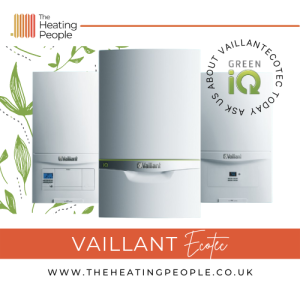 When you choose Vaillant, you’ll have an excellent choice of boilers and controls to meet any heating requirements; from a highly reputable company.
 Why is my boiler leaking?
 Whilst this sounds like a daft question; there are actually a few signs that your boiler is leaking, aside from the obvious puddles of water!
 Whilst a leaking boiler is alarming and inconvenient, it isn’t usually dangerous.
 If you’ve spotted a leak, you should follow these simple steps to minimize any further water damage:
 Now that you’ve contained the leak, you might be wondering what the possible cause is. And how expensive a repair is likely to be!
 Whilst low pressure is a possible sign of a leaking boiler;
  If you’ve noticed dripping water coming from underneath your boiler, corroded pipes could well be the culprit.
 Another possible explanation of water dripping from pipe fittings is poor installation.
 Boilers are fitted with a temperature control valve (TCV) which monitors the temperature of the water within the boiler; and stops it from getting too high.
 If your boiler is in its golden years; a leak from the bottom of the appliance could be caused by a corroded heat exchanger.
 Unfortunately,
  Even if the leak is only slight, it’s important to deal with it quickly. A leak of any size is telling you that there’s a problem, and left untreated, it will only get worse.
 As with anything, prevention is better than cure. The best way to prevent your boiler from springing a leak, is to maintain it with an
  You could also ask your engineer for advice on whether your heating system would benefit from a
  Should I leave my heating on?…
 How many times have you been told as a child (or maybe an adult!) to switch your appliances off; rather than leaving them on standby, to save energy?
 According to experts at the Energy Saving Trust, you should only have the heating on when you need it. They’re clear that by doing this, you’ll save energy and therefore
  Whilst the Energy Saving Trust’s argument sounds sensible, it’s not quite as clear-cut as that.
 If you have
  Whilst leaving your heating on can work well if you’ve got decent insulation; it won’t if your home has high levels of heat loss.
 The Greenage say that whether you should leave your heating on all the time or not; depends entirely on how well insulated your home is.
 If you want to put the two theories to the test, you can.
 As is so often the case in life, the answer to whether or not you should leave your heating on or not; is – it depends!
 Whether we like it or not, all buildings lose heat. It’s an inescapable fact of science!
 Boiler modulation
 But not all boilers are created equal. How much a boiler can ‘dial down’ its output to, is stated by the manufacturer as a modulation ratio.
 A cycling boiler is a problem because it:
 One of the main culprits of a cycling boiler is that it’s been oversized.
 We’ve said it before, and we’ll say it again… Your boiler installer is the number one contributor to your heating system’s energy efficiency.
 As with all things, prevention is better than cure!
 10 common boiler problems…
 The dreaded no heating or hot water scenario is probably your biggest fear when it comes to boiler problems, and you’re not alone. Nobody wants to be without heating or hot water, particularly in the winter months.
 If you can have a hot bath or shower, but your heating isn’t working, you should start by checking whether all your radiators are hot.
 If your home is warm and cosy, but you’re only getting cold water out of your taps, then you have an issue with your hot water supply.
 If you’ve noticed that your radiators are cold or have cold spots; or are making funny noises; this might indicate that air is trapped inside them, and needs to be released.
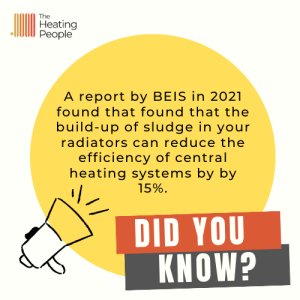 Another potential cause of your cold radiators is that they are being blocked by sludge.
 If you’ve been experiencing boiler problems such as a lack of hot water, it could be that low pressure in your boiler is to blame.
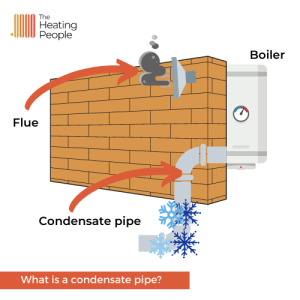 If your boiler has stopped working when it’s freezing outside, there’s a chance that your boiler’s
  The pilot light in a boiler is crucial because it ignites the fuel (usually gas) that heats the water inside the boiler.
 If you’ve noticed that your boiler is making a strange noise a bit like a kettle boiling – a sort of whistling sound – it’s probably due to a common problem called ‘boiler kettling.’
 If it’s not whistling you’re hearing, but something else, this could indicate a different problem to boiler kettling.
 Most people use a thermostat to
  If you’ve got an
  We hope that you’ve found this trouble shooting guide helpful.
 The benefits of replacing your boiler…
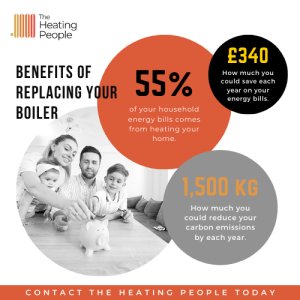 If you’ve been putting up with a heating system that
 If you’re replacing an old boiler with a much newer one; chances are, your new model will give you much more control.
 With
With  We’re all starting to appreciate our own social responsibility in finding cleaner and smarter ways of heating our homes. Not just to
  If your old boiler has been temperamental and has been breaking down; you’ll love the peace of mind a new boiler will bring.
 If your old boiler was noisy, you might well notice how much you don’t notice your new one!
 If you switch from a heat-only boiler to a combi boiler; you’ll have hot water on demand because combi’s don’t have a water tank to heat up.
 If you’re planning on moving home soon, a new A-rated boiler can make your property more attractive to prospective buyers.
 5 benefits of your annual service…
 First and foremost, an annual service is vital in keeping you and your family safe.
 Want to keep that nice long guarantee that came with your
  Nobody wants to be left without heating and hot water. But it’s often not until misfortune strikes in the form of a breakdown; that you realise how much you rely on your boiler!
 As well as avoiding breakdowns, an annual service will identify any small problems early; before they turn into larger more expensive ones!
 Replacing a boiler can be costly. So you’ll want to make sure that you get the most out of your investment. To keep your boiler running smoothly for the next 10-15 years, you’ll need to look after it.
 A well-maintained and regularly serviced boiler will work more efficiently than a neglected one.
 Landlords are under a legal duty to have an annual safety check on all gas appliances and flues.
 A gas safety check assesses the basic safety of gas appliances in your home. Its purpose is to ensure everything is working correctly and is safe.
 To keep your boiler operating safely and efficiently; it’s critical that you have it regularly serviced by a Gas Safe registered engineer.
 Although we only tend to only think about our boilers during the winter, when the weather turns colder; you rely on your boiler all year round.
 It’s a legal requirement for landlords to have their gas appliances serviced every year by a Gas Safe engineer.
 To sum up… you wouldn’t dream of driving a car without a valid MOT, and the same is true of your boiler.
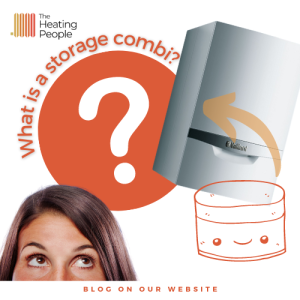 What is a storage combi? … So, you’ve read our previous blogs on the
  Before looking at the ins and outs of the storage combi, it’s a good idea to start with a quick refresher on what a ‘normal’ combi is, so that you can see the differences between the two.
 The main advantages of combi boilers are that they:
 A storage combi is similar to a standard combi boiler; however it has a hot water cylinder housed within the boiler unit itself.
 Combi boilers are generally a great choice in most situations, even in larger homes, and that’s why they’re the most popular choice of boiler in the UK.
 Because storage combis have a hot water cylinder within the unit itself; you won’t need extra space in a cupboard and/or your loft to house any additional tanks and cylinders.
  As with all things, there are drawbacks too:
 Although bigger than a standard combi boiler, the main benefits of a storage combi is that it doesn’t require an external hot water cylinder.
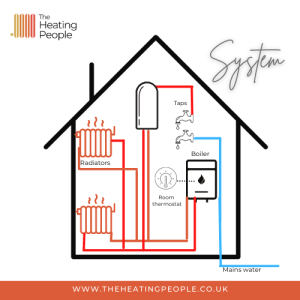 If you’re considering a storage combi, you should also look at whether a system boiler is a good option for you.
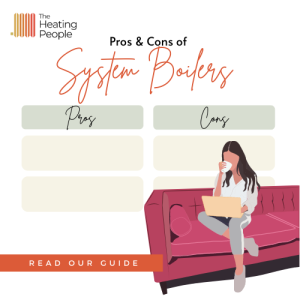 System boilers…
 If you have a high demand for hot water and are struggling with choosing between a storage combi and a system boiler, contact one of our experts at The Heating People, who can give you tailored advice.
 7 ways to improve the your boiler’s energy efficiency…
 To start with, what do we mean by ‘boiler efficiency?’ Unfortunately, no boiler is 100% efficient.
 Since 2015, boilers have been given a rating from A-G under the European energy label ‘ErP’, which stands for ‘Energy-related Products’.
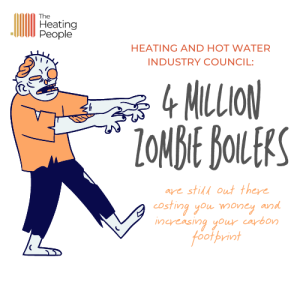 If you were surprised by our comparison of the A-rated versus the G-rated boiler, you might be wondering why it is that older boilers are so much less efficient than their modern counterparts.
 Unfortunately, the answer to this is – it depends.
 The first (and most important way) to maximise the energy efficiency of your boiler is to have it
  It really grinds our gears to see installers just using the physical size of your property and the number of radiators you have, to determine boiler size. This is completely inaccurate and isn’t following industry standards.
 You can have a very efficient boiler, but if it’s poorly programmed or has limited to no controls, you’ll be wasting lots of energy.
 As well as investing in heating controls (smart or otherwise) you should think about how you’re actually using them.
 You wouldn’t dream of driving a car without having a valid MOT, and car manufacturers also provide a recommended process for car servicing too.
 This is a nice simple task that you can do yourself, which can help to improve your boiler’s efficiency.