Categories
Boiler types

What is a system boiler?

Diagram of a system boilerIf you’re looking for a new boiler; but are wondering what a system boiler is – then this blog’s for you!

When it comes to boilers, there’s a lot of jargon out there. Before you can even start looking at manufacturers; models; and sizes of boiler; you need to know what type of boiler best suits your needs.

And it’s not a decision to be taken lightly; because a new boiler is a big investment for you and your family.

But don’t worry, The Heating People are here to help!

There are three main types of boilers available – conventional or ‘heat-only’ boilers; system boilers; and combi boilers.

We find that people have often heard of combis, but are often confused about what a system boiler is.

So, here’s a handy guide to everything you need to know about system boilers, and whether they’re right for you.

You might like our related blog: 6 top tips for buying a new boiler.

How do system boilers compare to the other types of boilers?

Before we dive in, it’s useful to see how system boilers compare to heat-only and combi boilers…

Heat-only or ‘conventional’ boilers

Heat-only boilers are sometimes called ‘conventional’ or ‘regular’ boilers. This is because they’re often thought of as being the traditional, or ‘conventional’ way of heating a home.

Heat-only boilers provide heating and hot-water with the use of an additional cold-water tank and hot-water cylinder.

The cold-water tank is usually stored in an attic or loft. It feeds water down to the boiler when needed to be heated up. After the water is heated, it’s stored inside the hot-water cylinder until needed for your taps and radiators.

Since heat-only boilers store hot water, they work well in large households with multiple bathrooms. Unlike combi boilers, they can supply large amounts of hot water to multiple outlets at the same time.

Heat-only boilers don’t rely on pressure from the mains. They’re gravity fed cold water from the tank in the loft. This makes them a good choice for homes in areas that suffer from low pressure.

System boilers

System boilers are sometimes confused with conventional boilers because they also store hot water in a cylinder for later use.

As with heat-only boilers, system boilers are a good choice for larger homes with a high demand for hot water. They can supply multiple outlets with hot-water at the same time. This is great in homes where family members want to shower at the same time.

But unlike heat-only boilers, system boilers don’t need a cold-water tank in the attic. Insteaad, they take their water supply directly from the mains (like a combi boiler).

So, system boilers share some similarities with both heat-only and combi boilers  – hence the understandable confusion surrounding them!

Combination or ‘combi’ boilers

A combi or ‘combination’ boiler provides both heating and hot water from one all-in-one (combined) unit.

Combi boilers are the most popular type of boiler sold in the UK.

 Unlike heat-only or system boilers, combis don’t need any additional tanks or cylinders – everything it needs is inside the unit.

A combi gets its cold-water supply directly from the mains (like a system boiler). This means that it doesn’t need a cold-water storage tank in the loft.

A combi doesn’t need a hot-water cylinder either because it heats water instantly on demand. When you turn on a hot tap, a combi heats the cold mains water instantaneously.  

But whilst combi boilers provide both heating and hot water; they can only perform one of these tasks at a time. And they always prioritise hot water. 

Since combis don’t need external water tanks or cylinders, they’re space saving. Many models are compact enough to fit in a small cupboard.

Another advantage is that with no water tank to heat up; combi boilers can provide an unlimited supply of hot water on demand. This is ideal in busy homes where showers may be used back-to-back each morning.

But since combi boilers don’t store hot-water; they’re best suited to homes with relatively small hot water demands.  If you’re a household where everyone wants showers at the same time, then a combi won’t be suitable.

And this is where a system boiler might come in for you…

How does a system boiler work?

Now let’s take a closer look at how system boilers actually work.

System boilers receive cold water directly from the incoming mains supply and pass it over a heat exchanger.

As the temperature of the heat exchanger rises; energy is transferred from the gas jets to the incoming mains water that meets it.

Once the water is hot, the in-built pump diverts some of it to the hot water tank for later use. This will then be used to supply hot water to taps, showers, and baths around the home. The rest of the hot water travels to the radiators, powering the central heating.

Since there is a large store of hot water always available; a steady supply can be maintained even if multiple taps or showers are in use at the same time. This is perfect if you want to have multiple hot water outlets running at the same time.

Are system boilers condensing boilers?

Efficient boilers are definitely (and quite rightly) on the political agenda. So you may have encountered the term ‘condensing boiler’ and are wondering what it means.

There’s a common misconception that a ‘condensing boiler’ is a type of boiler, when in fact, it isn’t.

The terms ‘condensing boilers’ and ‘non-condensing boilers’ are misleading. They actually describe the technology within the boiler itself, rather than what sort of boiler it is.

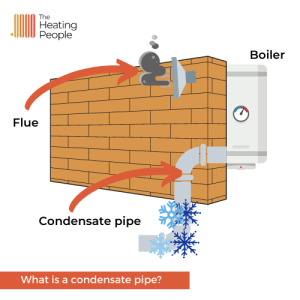
A condensing boiler works by recycling the wasted exhaust gas that is created during a boiler’s normal operation. By re-using the exhausted gas, water vapour and steam back through the system; some of the heat is retained making the boiler’s operation more efficient.

But don’t worry, you won’t have to choose between condensing and non-condensing technology. The Boiler Plus Regulations require all new boilers to use condensing technology as standard.

So whatever type of heating system you opt for, it will be condensing.

This is because condensing boilers are more energy efficient than their non-condensing counterparts. They can typically extract 90-92% of heat from fuel; compared to 50-80% that a non-condensing boiler can.

How efficient are system boilers?

Diagram showing Boiler Plus.As we’ve mentioned, system boilers have condensing technology which makes them extremely efficient. New models are ErP A rated.

But it’s important to ensure that your hot water cylinder is properly insulated to prevent heat loss.

Another great thing about system boilers, is that they can are compatible with renewable technologies, such as solar thermal. And they can be installed to high efficiency, low temperature heating systems. This can help to save you money on your energy bills, as well as reducing your carbon footprint.

Can a system boiler run out of hot water?

The only limitation to the amount of hot water a system boiler can supply – is the capacity of the hot water cylinder.

 If you use up all the hot water in the cylinder, you will have to wait for more to be heated.

During your free survey, The Heating People will ask you about your hot water usage. This helps with the correct sizing of your cylinder. This is limited by the space available in your home.

What are the advantages of a system boiler?

We’ve dedicated a whole blog to the pros and cons of system boilers, which you can read her. But in summary, here are some of the pros to opting for a system boiler:

System boilers don’t need as much space as heat-only boilers

Because there’s no need for a cold-water tank in the attic, system boilers take up less space than heat-only boilers. This is good if you’re short on space. But remember that you will still need space for a hot water cylinder.

System boilers work well in large households with multiple bathrooms

System boilers store large amounts of hot water in a cylinder. So they can supply multiple outlets at the same time, without there being a drop in flow or temperature.

This is an advantage over having a combi boiler, which will struggle to supply several outlets at the same time.

So, if you have a larger family, with people wanting to have a shower; a bath; or do the dishes; all at the same time; a system boiler could be a good option for you.

System boilers can use an additional electrical immersion heater

With a system boiler, you can install an electric immersion heater to the hot water cylinder. This heats water instead of the boiler in the event of a breakdown. This is great because you won’t be left in the dreaded no hot water situation!

System boilers are easy to integrate with renewable heating systems such as solar

Another advantage of system boilers is that they are easier to integrate with renewable heating systems.

Solar thermal heating systems use free (and environmentally friendly) heat from the sun to heat your water. This means you won’t have to burn as much expensive gas!

This can save you money on your energy bills as well as helping to reduce your carbon footprint.

System boilers have a wider range of control options available, compared to heat-only boilers

Boiler controls make a big difference to your heating system. They can boost your system’s overall performance; whilst reducing your energy bills.

System boilers have a much wider range of control options available, compared to heat-only boilers.

System boilers can run low temperature heating systems

Low temperature heating (LTH) systems are becoming more popular as our awareness of climate change continues to grow. LTH doesn’t mean that your house is cold.

It means that you can be comfortable whilst running a more efficient system at a lower temperature. And a system boiler can be part of that.

To find out more about this, check out Heat Geek’s article (listed at the end of this blog). You can also ask expert engineer, Liam, who is passionate about greener heating!

What are the disadvantages of a system boiler?

But as with all things, there are drawbacks too. Here are the cons of a system boiler:

System boilers require more space than a combi boiler for the hot water cylinder

Whilst system boilers take up less space than heat-only boilers, they do still require a hot water cylinder.

System boilers need more space in your home than a combi boiler; which houses all of its component parts in one compact unit.

System boilers don’t have instantaneous hot water

Combi boilers produce hot water instantly, on demand. They will never run out of it (although they struggle to supply multiple outlets at once). This is different from system boilers which heat water and store it in a cylinder, for use later.

Since system boilers use stored water; it is possible to run out of hot water (just until the cylinder refills). But you can minimise this problem with the correct sized cylinder and properly set up controls.

Final thoughts?

Vaillant System boilersSystem boilers are a great choice for larger homes with a high demand for hot water.

But if you live on your own; or have a smaller household; with lower hot water demands; a combi might be fine for you.

For tailored advice on which is the best type of boiler for your home; call one of our friendly team today to book your free survey.

You might also like our related blog: Your options with a boiler replacement.

Useful Links:

Vaillant homeowners advice on system boilers.

Viesmann: what is a system boiler

Energy Saving Trust – solar thermal

The Greenage article on solar thermal

Heat Geek article on low temperature heating

Categories
Advice

Weather compensation

Is there anything us Brits like more than talking about the weather? It’s more than just a stereotype, it’s a national pastime.

And it’s not just a polite ice-breaker either, studies have shown that we spend six months of our lives talking about it.

And thanks to our understanding of climate change globally, talking about the weather has become more than just small-talk.

Regulating the temperature inside your home is now vital in stabilizing the global weather outside your door. If we are to meet our carbon reduction target of net-zero by 2050, then energy efficiency is key.

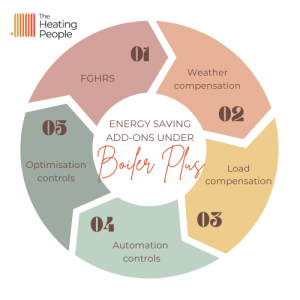
Since April 2018, all new boiler installations have had to use one of four energy saving features – one of which is weather compensation – which is ideal for a country with our changeable weather.

So today we’re going to talk about how weather compensation devices can keep you comfortable when it’s ‘absolutely Baltic out there’, whilst saving you money, and reducing your carbon footprint.

Weather compensation and Boiler Plus

Diagram showing Boiler Plus.What does Boiler Plus say about weather compensation?

There are many different types of central heating controls available, all of which can all help to improve your boiler’s performance; increase your comfort; and save you money.

The Boiler Plus regulations require that all new combi boilers must have one of four requirements fitted:

The Heating People favour weather compensation over the other options because it offers the biggest efficiency gain and is a simple technology to integrate.

ATAG boilers come with weather compensation as standard, which is one of the reasons we love them.

What is weather compensation?

Two rain clouds.The Heating and Hotwater Industry Council (HHIC) defines weather compensation as:

“a control function which maintains internal temperatures by varying the flow temperature from the heat generator relative to the measured outside temperature.”

In other words, weather compensation devices monitor both the temperature inside your home, and the temperature outside, and adjust your boiler’s operation accordingly.

The reason that the outside weather matters when it comes to heating your home; is because the heat we generate to keep our homes warm gets lost through the walls and the roof; and the speed in which this happens will depend on the temperature outside.

On a cold day, the heat will be lost more quickly than on a warm day. To find out more about this, you should read our blog: What is heat loss and why is it important?

A weather compensator tells your boiler to increase or decrease the temperature of your radiators to match the heat loss caused by the weather.

So, instead of your boiler switching on or off depending on when your home gets too cold or too hot, weather compensation will monitor and maintain your chosen temperature without having spikes of over and underheating.

Why does weather compensation keep the heating on at a low level?

A cold woman thinking about the weather.At first it might seem counterintuitive to have your heating on at a low level all the time; in order to save energy. But it’s a bit like driving your car at a steady 50mph…

Whilst you might want to put your foot down to get to your destination quicker; you would use far less fuel over the course of your journey; by driving at a slower pace; with fewer variations of speed.

Weather compensators work in a similar way.

The weather compensation control runs the boiler at as low a flow temperature as possible; whilst still providing enough output to the radiators to maintain your chosen temperature.

You’ll have a more comfortable and consistent environment without your heating cycling on and off. And by running at a lower flow temperature; your boiler’s operation in condensing mode is optimised. It will never generate more energy than is needed.

Not only will this save you money on your energy bills, but it will reduce your carbon footprint too.

How does weather compensation improve energy efficiency?

The reason weather compensation is so efficient; is because modern condensing boilers are happiest when the central heating system runs at lower temperatures.

Many boilers never achieve the sweet-spot in condensing mode, as the operating temperature is set too high.

Weather compensation allows your boiler to reduce water temperatures, which increases efficiency without compromising your comfort.

You’ll be more comfortable because your boiler will be able to maintain a steady internal temperature; by adjusting boiler output to account for the weather.

How does weather compensation work?

A diagram of weather compensation.Weather compensators work in a more straightforward way than you might expect. We’ve broken it down into five steps for you:

1. An outdoor sensor measures the outside temperature

An external sensor (which can be hard-wired or wireless); may need to be installed on a north or west facing wall. This measures the outside temperature. However, many smart controls can now use GPS weather-data to provide the same functionality; without the need for an external sensor.

2. The temperature reading is sent to an electronic controller.

The temperature readings taken by the external sensor (or from GPS weather data) are sent to the weather compensation controller.

3. The temperature controller calculates the heat supply needed to maintain a steady temperature.

The weather compensation controller looks at the outside temperature, and the temperature you want your home to be. And runs the boiler at as low a flow temperature as possible; whilst still providing sufficient output to keep your home at your chosen temperature (normally 19-21 degrees).

Running the boiler at a lower flow temperature helps to optimise its operation in condensing mode. Think of your car doing a consistent 50mph –  saving energy and maximising boiler efficiency.

 The controller automatically knows what temperature the boiler needs to flow at to get to and maintain your chosen temperature.

4. If required, the controller will adjust the boiler heat supply to the radiators.

Not only does the controller know what temperature the boiler needs to flow at; it then automatically adjusts as the temperature outside or inside changes. The controller alters the boiler flow temperature as soon as the outside temperature changes.

If the temperature outside rises the boiler reduces its output; and if it drops; the boiler increases its output, to match the heat loss.

This avoids the situation sometimes experienced with conventional room-thermostats; where your home gets too cold or too hot; before your boiler receives a message from the thermostat.

5. The system records both indoor and outdoor temperatures so it can fine tune its adjustments.

Weather compensators also record data on the indoor and outdoor temperatures; so they can learn about how quickly your home loses heat in different weather conditions. This means that the controller can fine tune the instructions given to your boiler; on how much heat to generate; and for how long.

What are the benefits of installing weather compensation devices?

There are lots of advantages of installing weather compensators. Here are just a few:

Weather compensation is low maintenance

The beauty of weather compensation is that you don’t have to lift a finger. The temperature controller does all the sensing and calculating of the required temperatures; and gives the instructions to the boiler. All you’ll notice is a comfortable home, whatever the weather. 

Weather compensation can be left on all year round, only firing up when it is needed.

Once installed, you really can just forget about it. Your weather compensator will only fire up your boiler when it’s needed.

Weather compensation can save you money

According to The Energy Saving Trust (EST), the cost of heating a home; particularly during the colder winter months; makes up about 60% of household energy bills.

Weather compensation systems can lower your fuel bills. Because they help your heating system to work more efficiently, reducing fuel usage.

And with the current price of gas, that’s got to be a good thing!

 With a boiler flow temperature being kept as low as possible, around 55°C or less; the boiler can condense as it is designed to; running more efficiently; and saving you money.

BEIS found that bill savings from weather compensators varies from home to home. But the greatest savings are for households with the highest bills in the first place.

Viessmann conducted research at Salford University. They found that a simple weather compensation sensor typically saves the householder anything from 10-30% off their energy bills. This equates to a good £40-£100 or more per year.

A report by an environmental science consulting group; published similar estimated energy savings. They say the savings are between 10-40% for electronic weather compensators in one-family houses.

You might like our related blog: Does smart heating save money?

Weather compensation reduces your carbon footprint

According to the Climate Change Committee (CCC), energy use in homes accounts for about 14% of UK greenhouse gas emissions.

These emissions need to fall by at least 24% by 2030; from 1990 levels; for us to meet our national target under the 2015 Paris Agreement.

In response to this, and as part of the Government’s ‘Heat in Buildings’ programme; Boiler Plus was created to maximise energy efficiency in homes from April 2018.

Fitting weather compensation technology, is one of the four ways to comply with the energy saving requirements for new combi boilers.

This is because most of the time; your radiator’s temperature only needs to be at a fraction of its maximum output; to keep your room temperature just right. Any degree above what is actually needed, is just a waste of energy.

Weather compensation avoids wasted energy. Because it instructs your boiler to burn a minimal amount of gas to maintain your chosen temperature.

Burning less gas means that less carbon dioxide is being emitted, and thereby reduces your carbon footprint.

Weather compensation provides a more comfortable and consistent environment

Since weather compensation keeps your home at a steady consistent temperature, you’ll benefit from increased levels of comfort.

Weather compensation is a proactive approach to your heating. It alters the radiator output before the house drops in temperature. Whereas a conventional system only notices an increased demand for heat after the room temperature drops.

So, no more feeling cold waiting for a reactive system to catch up. With weather compensation, you won’t even notice that it’s started snowing outside. 

Weather compensation avoids spikes in over and underheating.

Weather compensation technology keeps your heating system on all the time at the lowest level possible; instead of it being continually switched off and on by a timer and an indoor room thermostat.

Although keeping your heating on all the time, sounds less energy efficient, this isn’t the case.

We’re back to the example of keeping a constant lower speed on the motorway to save fuel.

Keeping your heating on at a low level; is much more energy efficient than your heating ‘cycling’ off and on all the time. Because your boiler isn’t working hard to heat your house from a completely cold start once or twice a day.

Instead, your heating system will constantly be reacting to gradual temperature changes outside. This allows your home to always be at the right temperature, without over and underheating.

Weather compensation can improve the lifespan of your boiler

Avoiding boiler cycling (through proactive weather compensation) can also prolong the life of your boiler.

This is because your boiler will always be gently ticking over at the lowest temperature possible. And it isn’t having to start-up and shut down so often.

Constant stop-starting is tiring for anyone, and the same is true for your boiler.

Weather compensation not only creates a more consistent home temperature for you; but it also makes life easier for your boiler, meaning break-downs are less likely.

Weather compensation is quick and easy to install

Weather compensators can be quick and easy to install. Once connected to the boiler; your engineer will set the appropriate heating curve from the options supplied by the manufacturer. And the technology will do the rest.

How is weather compensation installed?

If you’re installing weather compensation with an external sensor (rather than one that uses GPS weather data); then a sensor will need to be installed on a north (or possibly a north-west facing wall).

The sensor is wired to the internal controls of your boiler; so that it can communicate instructions on how much heat to generate (and for how long); depending on the outside weather conditions.

The instructions are based on a heat curve which will be set by your engineer.

The heat curve determines what temperature your boiler should heat the water to, at a particular outdoor temperature.

This is shown with a line on a graph. The vertical side of the graph is the radiator temperature and the horizontal side is the outside temperature.

Your engineer will choose the right curvature to maintain the same temperature inside the building at different outside temperatures; using the manufacturer’s instructions; and the heat loss calculations taken from your home.

When it gets colder outside, the controller automatically raises the boiler water temperature, which prevents your rooms from cooling down.

What if my home has a high heat loss rate?

You don’t need to worry about whether or not your home has a high heat loss rate. Weather compensation will still work for you.

Different buildings will have different heat loss rates depending on factors such as their insulation and glazing. To find out more, read our blog: What is heat loss and why is it important?

A brand new house will hold heat for longer than an old house built in the 1900s. This isn’t a problem because manufacturers of weather compensation devices create different curves for different homes.

Your engineer will  match the curve to suit your properties heat loss.

Weather compensation – final thoughts?

Weather compensation is a brilliant way to improve the efficiency of all heating systems. And offers extensive benefits to all homes.

But precisely how much you stand to gain from a weather compensation system will depend on your individual circumstances.

The HHIC says that systems using weather compensation generally perform best where continuous heating is being used; or for an extended period “once” a day.

So, if you’re at home a lot throughout the day; you’ll obviously benefit from the consistent temperatures, more than a person who is out at work all day.

Temperature sensitive occupants such as babies and the elderly might also benefit significantly from having a consistent, constant temperature.

In terms of monetary savings; research suggests that those with the biggest bills to begin with, will see the biggest reductions by using weather compensation.

But whatever your situation, weather compensation will:

  • create a more comfortable and consistent living environment;
  • prolong the life of your boiler;
  • save you money on your fuel bills;
  • and reduce your carbon footprint.

So, we should all be using the weather to our advantage. Now that really is something worth talking about.

Useful Links:

The Independent article about Brits talking about the weather

Boiler Plus factsheet from the government

Boiler Plus consultation reponse

The Heating and Hot Water Industry Council article on weather compensation

Government report on compensating heating controls

Energy Saving Trust article on heating and hot water

Categories
Uncategorized

What is Power Flushing?

Before and after a power flush.What is power flushing?

Our heating systems are vital for keeping us warm and safe all year round. And to do this effectively, they need to be clean.

Over time, the water in your pipes, boiler and radiators deposits unwanted by-products like rust.

This rust (plus other dirt and debris) becomes an unpleasant, muddy substance, known as ‘sludge’.

This sludge plays havoc with the efficiency of your heating system, causing corrosion and blockages.

A report by the Department for Business, Energy and Industrial Strategy (BEIS) in February 2021 found that the build-up of sludge can reduce the efficiency of central heating systems by by 15%.

This means that your heating system can’t perform like it used to, and you might start to notice your radiators getting colder.

It can also damage individual parts of your heating system, leading to breakdowns, and can eventually lead to the need for a full boiler replacement in the most severe cases.

Fortunately, there’s a simple way to avert all these sludge-induced problems – a power flush.

A power flush is a cleansing process which cleans your entire central heating system, removing the sludge, which would otherwise cause damage and reduce efficiency. 

So if you’ve been having problems with cold radiators lately, read on!

Do I need a power flush?

Since a power flush deals with problems that you can’t even see, you might be wondering how you know if you need one.

Here are a few tell-tale signs to look out for:

Sign you need a power flush: Unexplained increases in your energy bills

A man emptying a piggy bank.If you’ve noticed that your energy bills are creeping up, this could signal that your heating system is not working as efficiently as it used to.

A possible cause of this, is that over time, sludge, rust and limescale has built up in your heating system.

Your boiler then must work harder, and burn more energy, to try and get hot water through blocked pipes, and past leaks.

Unfortunately, you might be noticing this reduction in efficiency in your wallet. But a power flush might be a simple fix for this.

Sign you need a power flush: Cold spots on your radiators

Are your radiators taking forever to warm up? Or have you noticed cold spots on them?

If the pipes are hot but your radiator’s cold, this could indicate a blockage.

In this state the heating system burns a lot more fuel as it struggles to heat the home.

If your radiators are stone cold all over (not just in spots) then corrosion debris may be blocking radiator pipes and the sooner the system is power flushed the better before blockages become permanent and need to be cut out.

Sign you need a power flush: issues when you bleed your radiators

If when you bleed your radiators, the water is discoloured, or no water escapes at all, this may also signal the need for a power flush.

Sign you need a power flush: Your hot water is unreliable

A sad woman with a towel on her head.If you’re finding that your hot water is fluctuating between hot and cold, or the water flow is reduced to a trickle, this could indicate problems such as corrosion in the heat exchanger, and limescale in the pipes.

Sign you need a power flush: Excessive noise

All heating systems will make some noise. But if you notice a new or unusual sound, such as a banging or knocking sound, this could be a sign that a power flush is needed.

Boilers make loud banging noises called “kettling” because corrosion debris blocks and damages the heat exchanger. Blockages reduce circulation causing boilers to overheat and cut out.

Boilers can also make a whistling noise as parts of it overheat or cycle on and off as the overheat stat continually cuts in.

A cold couple sitting by a radiator.

Sign you need a power flush: Boiler breakdowns

A mucky boiler and pump causes breakdowns. Evidence suggests that as many as 87% of boiler breakdowns are due to dirty water in your heating system, and this can be avoided by keeping your system clean.

What happens during a power flush?

If you think you might need a power flush, you might be wondering what’s involved.

During a power flush your engineer will connect a pump to your central heating system.

This pump will push chemicals and a descaler through the pipes, boiler and radiators at a high pressure. These chemicals remove sludge, rust, and limescale.

They will also use a corrosion inhibitor to help prevent future rust from forming. The engineer will collect and dispose of any contaminated water, debris or particles that they remove from the system.

Depending on the condition of the system, your Gas Safe engineer may also use special tools on the exterior of the radiator to dislodge stubborn blockages.

They should be able to measure the temperature of your radiators before they have started work and then show you the improvement after the power flush.

How long does a Power Flush take?

The length of time needed for a Power flush typically depends on your system’s size and condition, but it usually takes about a day.

What are the benefits of a power flush?

Here is what you stand to gain from having a power flush:

  • More efficient, hotter radiators
  • Greater energy efficiency and lower energy bills
  • Reduction in noise caused by blockages
  • Boost your heating system’s lifespan
  • Prevent costly breakdowns
  • Improved system reliability
  • Maintain boiler warranty

How often will I need a Power flush?

If you’re installing a new boiler, it may be necessary to flush your system to ensure that your new boiler can heat your home effectively, and won’t be damaged by sludge that is already in your radiators and pipes.

After all, there’s not much point installing a new efficient boiler if you’re connecting it to an absolute mess of blocked and corroded pipes.

The Heating People will be able to advise you on this.

If your system is correctly maintained, then a power flush should only be necessary once every 5 years.

As part of your annual boiler service, The Heating People will perform a visual inspection of your central heating system. They’ll identify any problem areas where corrosion has occurred, and will tell you whether a Power flush is necessary to remove any blockages.

Is a power flush messy?

No, a Power flush isn’t messy because it’s confined to your current heating system. Your engineer will just need to connect their power flush machine to the heating system at a convenient point and they’ll use a suitable drain to dispose of the waste water.

I have an old heating system – can a power flush cause a leak?

No. Power Flushing machines are designed so that there is no increase in pressure in your system. It is a high flow rate that makes power flushing effective, not high pressure.

Occasionally, an old heating system may have radiators with holes that are just holding together with rust. The Power flush may dislodge the rust, leading to a leak from the radiator. But this leak would occur imminently even without a power flush.

If a problem is revealed by the flushing process, it is better that it occurs whilst a heating engineer is present to remedy the problem, preventing an emergency situation.

Can pressure from a power flushing pump damage the boiler or heating system?

No. A power flushing machine does not increase the pressure in the system; it works using high flow rates and therefore won’t over-pressurise and damage the internals of a boiler.

How much does a Power flush cost?

There are lots of factors that will affect the price of a power flush such as size and complexity of your heating system, and whether any other issues or faults come to light.

As a guide, a Power Flush with The Heating People will cost approximately £400.

Useful Links

BEIS report

BEIS energy efficiency statistics Feb 2021

Which? Reviews on reducing energy bills

Categories
Advice

Load compensation

A puppy on a sofa next to a thermometer.Are you thinking about upgrading your heating system to improve your comfort? And reduce your energy bills? If so, you might have heard the phrase ‘load compensation’ and be wondering what on earth it is!

Load compensators are one of four energy saving devices recognised by the Boiler Plus regulations.

Under Boiler Plus, all new combi boilers are required to have one of four energy saving features fitted. This is all part of the Government’s plan to achieve the UK’s carbon reduction target of net-zero by 2050.

Two of the energy saving devices are load compensation and weather compensation devices. And there’s often a lot of confusion between the two.

So, in this blog, we’ll explain the similarities and differences between weather compensation and load compensation. And explain the factors that will help to decide which one would work best for you.

The good news is, that both of these devices can help you to save money on your fuel bills; as well as reducing your carbon footprint.

What is weather compensation?

A diagram of weather compensation.The Heating and Hotwater Industry Council (HHIC) defines ‘weather compensation’ as: a control function which maintains internal temperatures; by varying the flow temperature from the heat generator relative to the measured outside temperature.

In other words, weather compensators monitor both the temperature inside your home; and the temperature outside; and adjust your boiler’s operation accordingly.

They maintain the temperature in your home by varying your boiler’s flow temperature; depending on what the measured outdoor temperature is.

Weather matters when it comes to heating your home, because of heat loss. The heat generated by your boiler will get lost through your walls and roof faster on a cold day; compared to a warmer one.

A weather compensator monitors the outdoor temperature. It tells your boiler to increase or decrease its output to precisely match the heat loss caused by the weather.

This means that your home will always be at a comfortable and consistent temperature; without your boiler cycling on and off, saving you energy.

What is load compensation?

Load compensation controls work in a similar way to weather compensation. They too use intelligent communication between temperature sensors and your boiler.

But unlike weather compensators, which use an external sensor; load compensation controls use an internal sensor to achieve your desired indoor temperature.

They do this by measuring the difference between the current temperature in your room; and the desired temperature that you’ve set. The controller then tells your boiler to increase or decrease its output to precisely close the gap.

If your desired temperature is dramatically different from the current room temperature; the load compensator tells the boiler to increase its flow temperature to the maximum. As the room temperature gets closer to your desired temperature, the boiler is told to reduce its flow temperature. 

How do weather and load compensators save energy?

Both weather and load compensation controls keep your boiler running at a consistently low flow temperature all the time. Whilst this might sound counterintuitive when you’re trying to save energy, there are two main energy saving advantages to this.

Saving energy by preventing boiler cycling

Firstly, it avoids your boiler from constantly cycling on and off.

Now you might be thinking that switching your boiler off would save energy. Because we’re always being told to switch devices off; and not just leave them on standby when we’re not using them.

But this doesn’t apply to heating your home.

When you think about it, stop-starting anything is hard-work, and the same is true for your boiler. It takes much more energy to heat up an entire house from a very cold start; than to just maintain its temperature.

Think of it as being like boiling a pan of water on a gas hob.

If you put cold water into a pan; you’ll need a high flame; and a lot of gas to get the water to boil. But once it’s boiling, you can turn the flame down low, and keep the water hot.

If you turn the gas off completely and let your water get cold; you would have to turn the flame up high and waste a lot more gas; than if you had just let it tick over at a lower temperature.

The same applies for your boiler. It burns less gas (saving energy) and keeps your home comfortable by not constantly fluctuating between being hot and cold.

Not only that, but the lifespan of your boiler will also be extended. Because just like stop-starting a car, boiler cycling puts stress on boiler components.

Saving energy by optimising condensing mode

Running your boiler at a lower flow temperature also more efficient because your boiler can run in condensing mode.

So, what is condensing mode?

All central heating systems work by sending hot water to your radiators in a loop. When the water goes out from your boiler, it’s called ‘the flow’. When it comes back from your radiators, it’s called ‘the return’.

Modern condensing boilers need the return to be below the dew point of the flue gases to be efficient.

When the temperature of the return is less than 54 degrees C; the boiler runs in ‘condensing mode’.

This sweet-spot in condensing mode is when the boiler starts to recover its lost heat; by turning the returned heat back into water on its second heat exchanger.

But most boilers don’t hit this efficient mode because their operating temperature is set too high. And so the return temperature of the water is too high for the boiler to condense.

The boiler will still work, but it doesn’t condense and won’t reach its maximum efficiency.

Compensation controls allow your boiler to operate in condensing mode; because its output is never higher than it needs to be, saving energy and money on your heating bills.

What are the differences between weather and load compensation?

As we’ve seen, load compensation works in a similar way to weather compensation. But the difference is that it reacts to the internal, rather than the external temperature.

Another difference is that weather compensation is more of a proactive approach than load compensation; because it alters the radiator output before your home drops in temperature.

Load compensation is more reactive than weather compensation; because it jumps into action as soon as the temperature in your home drops or increases.

Although this might sound less desirable than weather compensation, there is an advantage to this.

Load compensation can adjust your heating when you have an internal heat source on; like your oven on full blast; or if you have solar gains because of a conservatory; or lots of windows.

Which is better – Weather or Load Compensation?

A woman thinkingThere is no ‘right’ answer to this question because it really comes down to your individual circumstances.

But, in general, The Heating People favour weather compensation over load compensation. This is because it offers the biggest efficiency gain (up to 30% off your energy bills, according to Viessmann). And is a simple technology to integrate.

Whether load or weather compensation is the best option for you though, will depend on a range of factors, including:

How you use your home

A happy family at home.How often you are at home is a very important factor to consider when choosing between weather and load compensation.

If you work away from home; or are out of the house for long hours; or have irregular working patterns; load compensation might be the better choice for you.

After all, there’s no point heating your home to comfortable levels when nobody is home. And you’ll want to heat it as quickly as possible when someone is.

Where different heating patterns are in use; the more reactive option of load compensation is preferable. This ensures fast heat-up times following extended off periods.

The HHIC explains that weather compensation controls generally perform best where continuous heating is being used; or for an extended period “once” a day.

The size and layout of your home

When weather compensation is used, room temperatures are based on heat loss. Whereas load compensation is based on one area; which may not be reflective of the needs of the rest of the home.

So, if you have a larger home; and you are opting for load compensation; the location of the internal sensor will need to be strategically placed.

But if your home is open-plan, the indoor temperature will generally be much more stable than a house with lots of separate rooms. And an internal sensor will be less susceptible to temperature swings.

A benefit of load compensation is that it will automatically adjust to changes to your home such as installing insulation; and to variations in seasonal solar gains or shading due to foliage.

Your property type

Whether you live in a terraced house; a detached hous;, or a flat; will also affect which option is better for you.

Weather compensation controls might be adversely affected when heating a flat; where there is intermittent influence from flats above; below or either side of your home.

Solar gains

‘Solar gain’ is the increase in temperature in your home which is caused by heat from the sun.

Even though the UK isn’t renowned for its sunny weather; your home will still be getting some short-wave radiation heating directly through openings such as windows; or by indirectly heating the fabric of the building.

In a room or building which is significantly affected by the heat from the sun; the heating system needs to be responsive by heating up and cooling down quickly. This is whether the more reactive, load compensation controls can be particularly useful.

The thermal mass of your home

A calculator next to a thermal image.The thermal mass of your home is another factor to consider in your choice.

If your home has little thermal mass; when you leave a door or window open; your home will cool down quickly.

In this situation, load compensation is a good option. Because it responds to these internal influences, and heats up rapidly. Meaning that you can return a more comfortable room temperature as quickly as possible.

The amount of insulation your home has

A dog next to feet in socks.If your home has good insulation; it will be more easily affected by small internal heat sources such as ovens, and hairdryers; than a property with poor insulation. This is something to consider with load compensation.

However, a lot of people in the UK are living in brick built houses without particularly great insulation. And these homes are most likely to benefit from weather compensation controls.


Final thoughts…

A piggy bank next to the ErP scale.Weather compensation is generally best where continuous heating is being used, or for an extended period “once” a day. It has the advantage that room temperatures are based on heat loss; rather than one area, which may not reflect the rest of the home’s needs.

Load compensation controls are better suited to homes with more irregular or less frequent occupation; because they are more responsive with rapid heat up, and they respond to internal heat sources.

If you want to find out more about how The Heating People can help you find what type of control is right for you; contact one of our friendly team, who will be happy to help.

You might also like our related blog: Does smart heating save money?

Useful Links:

Boiler Plus Factsheet from the government

Boiler Plus Consultation

Government report: Heat in Buildings

Government report: The ten point plan for a green revolution

The Heating and Hot Water Industry Council document on weather compensation

Installer online article: 5 myths about weather compensation

Heat Geek article on weather or load compensation

Categories
Advice

How to reduce heat loss at home

A piggy bank next to a pink scarf.Today we’re looking at how to reduce heat loss at home.

If you want to be warm and cozy in the winter; whilst keeping your energy bills as low as possible, you need to think about heat loss.

The last thing you want when you’re paying to generate heat; is to have it escaping out of your home as quickly as you’re producing it.

But unfortunately, unless you look at ways to reduce your heat loss, that’s precisely what’s happening!

In this blog we’ll give you some simple tips on how you can reduce your heat loss. This will help you to keep your warm air in, and the cold air out.

This will not only keep you comfortable, but will help you to save money on your energy bills too.

What is heat loss?

Like it or not, all buildings lose heat – and we’ve got science to thank for that!

It helps to understand the science a bit here. Because it makes all the tips on reducing heat loss make more sense…

The reason your home loses heat is because of the second rule of thermodynamics. Don’t worry – this isn’t as complicated as it sounds!

If you know that your cup of tea will go cold if you leave it for an hour; you’re already aware of this rule!

The second rule of thermodynamics says that energy (in this case heat); spontaneously disperses from being concentrated to becoming spread out if it’s not stopped from doing so.

At its simplest level, heat flows in one direction: from hot towards cold. This can happen through conduction, convection, radiation, or a combination of all three.

So, the reason your rooms heat up is the same reason they’ll also go cold. Warm air moves towards cold air.

This is great for us at first because it means that when our boilers pump hot water into our radiators; the heat will move towards the cold air in our room, making it warm – fantastic!

But once the air in our homes is warm, it will naturally want to move towards the cold air outside. All that lovely warm air that you’ve paid money to create, will ultimately escape out of your building. H

Heat loss is a measure of how quickly this happens.

Obviously, we want to slow this process down so that we can keep our warm air for longer. And not have to spend more money keeping the heating on.

Make sure you read our related blog: What is heat loss, and why is it important?

What are the benefits of reducing your heat loss?

Let’s take a look at what you stand to gain from reducing your heat loss:

1.    A more comfortable home

Nobody likes to be cold. But the more heat that escapes from your home, the colder it gets inside.

So, reducing your heat loss will help to keep you and your family warm and comfortable, whatever the weather.


2.    Reduced energy bills

Nobody likes wasting money, but when you have a lot of heat loss, that’s precisely what you’re doing. All the lovely warm air that you’re paying for, is quite literally running out of the building!

The faster that your heat escapes, the more you’ll have to use your heating to keep warm; and the more it will cost you.

By reducing your heat loss, you’ll be lowering your energy bills; because you won’t need to burn as much fuel to stay warm.

A woman pointing to the symbol for carbon.3.    Reduced carbon footprint

The quicker your heat escapes from your home; the more you’ll need to use your heating; and the more fuel you’ll burn.

When you burn more fuel, you are producing a lot of excessive carbon emissions which is responsible for global warming.

To reduce your carbon footprint, and slow the progression of climate change; you need to make your home as energy efficient as possible by minimising unnecessary heat loss.

How is heat escaping from my home?

To reduce your heat loss, you need to know how heat is escaping from your home. But this isn’t always easy.

Whilst you might notice a draught of cold air in a particular spot, most heat loss isn’t visible. And the amount you lose in different places might surprise you.

According to the Energy Savings Trust (EST), the following estimates indicate the proportionate heat loss from different parts of a badly insulated house: 25% through the roof; 35% through the outside walls; 25% through the doors and indows; and 15% through the ground floor.

The precise amount of heat loss you experience depends on a number of factors; such as the type and age of property you live in; as well as your altitude and exposure.

Generally, the older your building is; the poorer the insulation is likely to be; and the more susceptible it will be to heat loss.

How is heat loss measured?

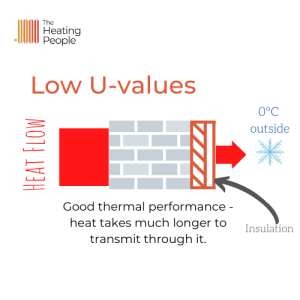
We measure how effective parts of your building are at insulating against heat-loss by looking at their U-values.

U-values are sometimes called heat transfer coefficients, or thermal transmittances.  They’re measured in Watts per square metre. And they tell you how much energy is lost for every 1°C difference between the two sides of each material used in your building.

In a dilapidated old building with draughty windows and shoddy brickwork; you would see very high U-values, indicating that heat is able to transfer very quickly through the building.

Whereas with a new build with double glazing and plenty of insulation; you would see low U-values, indicating that it takes heat much longer to escape.

How can I reduce heat losses?

Diagram showing low u-values.Heat is lost from your home through your roof, windows, walls, floors and through gaps around windows and doors.

 Air leaks (or draughts) are a double-edged sword. Because as well as heat escaping, cold air can also come in, further increasing your need for more heating.

The good news is that there are lots of simple but effective ways to reduce these heat losses in your home; so that you can be comfortable and minimise your bills and your carbon footprint.

1.    Reduce heat loss by checking your heating controls

A hand operating a smartphone.If your heating system is poorly programmed or has limited to no controls, you’ll be wasting lots of energy.

If you just turn your heating up to full blast in the winter, hoping for the best; this will waste energy because you don’t need the heating to be on full blast 24/7 to be comfortable. And you probably don’t need all your rooms to be at the same temperature at all times.

For example, if you only have one thermostat in your home, which is in a room that is quite cool; it will be telling your boiler to generate more heat, when you’re already warm enough.

If you get too hot, you might then find yourself opening a window – a sort of deliberate heat loss!

Investing in a programmer; room thermostat; and thermostatic radiator valves; could save you £75 per year and 320kg of carbon dioxide, according to the EST.

2.    Reduce heat loss by fitting wall insulation

The biggest source of heat loss from your home (about a third of it) is through your walls, so insulating them is a no-brainer if you want to minimise your heat losses.

The insulation you’ll need will depend on the type of walls you have.

Generally, houses built before 1930 have solid walls, and anything built after this date will have cavity walls.

Cavity walls are the easiest to deal with; because insulating material is simply blown into the cavity between your two walls.

The effect of this is that the material slows the heat from travelling through the walls via conduction. And prevents air moving freely inside the cavity, reducing heat loss by convection.

Solid walls are a bit trickier because there’s no space to fill. So the walls need to be insulated either internally or externally, which can be expensive.

According to the EST, an average semi-detached house can expect to save approximately £225 per year on their energy bills; and reduce their carbon dioxide emissions by 930kg by insulating their walls.

3.    Reduce heat loss by fitting roof (or loft) insulation

Since one quarter of your heat can be lost through your roof through conduction and convection; it’s important to look at your roof insulation in order to minimise these heat losses.

Laying insulation in your loft significantly reduces the amount of heat that can escape through your roof. And the fibres of the insulation can prevent the trapped air from circulating and causing convection currents.

The result is that your lovely warm air is trapped inside the rooms below the insulation; keeping you warmer for longer.

Another bonus is that the insulation will also help to keep out cold air from entering your home.

If you already have roof insulation, it’s worth looking at how thick it is. Just like putting on a big coat, the thicker your insulation is, the better it will perform.

The EST says that where an average semi-detached house goes from having no insulation, to 270mm of insulation, energy bills will be reduced by up to £150 per year. And carbon dioxide emissions will be reduced by up to 610 kg.

4.    Reduce heat loss by adding floor insulation

A dog next to feet in socks.About 15% of all heat loss in your home is through the ground floor. Because the cement slab, which sits underneath the floors of your home; has a high U-value, meaning that it has poor insulation capability.

So, you need to make sure that there is sufficient insulation between the ground and the floor surface.

In new buildings, insulation is installed during the construction. And in older buildings, insulation layers can be laid on existing floor surfaces.

5.    Reduce heat loss by covering bare floorboards

As well as your ground floor being a major source of heat loss; the other floors in your house account for as much as 10% of heat loss if they’re not insulated; according to the National Energy Foundation (NEF).

Carpets and rugs will keep your heat in longer than wooden flooring. And they also have the bonus of keeping your feet nice and warm too.

If you have any cracks or gaps in your flooring, the NEF advises filling these with a silicone-based filler.

6.    Reduce heat loss by investing in double glazing

Heat loss through windows can be reduced by using double or triple glazing. These energy efficient windows have air or a vacuum between two or three panes of glass; which are then sealed in a frame.

Just like how a vacuum flask works for keeping your tea warm, creating a vacuum between the panes of glass, reduces heat loss through conduction and convection.

Where there is a vacuum there will be no conduction or convection because air is a poor conductor, and there is little room for the air to move.

If you’re looking to install double glazing in your home, but are confused by all the choices available, look for the British Federation Rating Council (BFRC) rating.

Similarly, to how boilers are rated for their efficiency, windows are too. Window manufacturers can show the energy efficiency of their products using an energy-rating scale from A++ to E.

Whilst there will be a cost to fitting double glazing, the annual savings on your energy bills for an average semi-detached house, is between £75-80, according to the EST.

7.    Reduce heat loss with your curtains and shutters

Replacing your windows can be expensive, and if this isn’t an option for you right now you can minimise the frustration of your draughty windows in winter months, by installing heavy curtains or shutters.

Although these won’t completely stop air leaks, they will act as a thermal barrier, and will help to reduce heat loss, as well as reducing the amount of cold air coming in.


8.    Reduce heat loss by investing in energy efficient doors

Your doors can also be insulated and draught proofed to prevent heat escaping, and cold air coming in. A properly fitted new external door should include an effective draught-proofing system.

Older doors can be improved by fitting draught-proofing strips around the seals and installing covers on the keyhole and letterbox.

Fitting draught-proofing to the doors and windows will save the typical household around £20 a year.

9.    Reduce heat loss by draught proofing your chimney

If your fireplace is more decorative than functional, it’s probably a source of unnecessary heat loss.

The University of Liverpool calculated that we lose around 4% of household heat out of the chimney.

A chimney balloon is a simple solution to this problem because it is fitted and inflated in your chimney to create a barrier and prevent the transfer of heat.

Draught proofing your chimney when you’re not using it could save you around £15 a year on your energy bills, according to the EST.

10.  Reduce heat loss by getting an insulating jacket for your hot water cylinder

If you have a heating system with a hot water cylinder, check whether it has an insulating jacket. The EST says that just fitting your hot water cylinder with an insulating jacket will save you £20 a year in heating costs and 150kg of carbon dioxide emissions.


11.  Reduce heat loss by investing in a new, energy efficient boiler

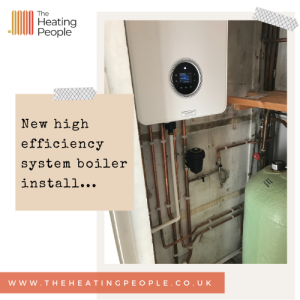
A high efficiency installation by The Heating People.How old and inefficient is your boiler? Although not strictly speaking relating to heat loss, the energy efficiency rating of your boiler will still affect your energy bills through lost energy.

Generally older boilers are less efficient than modern ones and cost more to run.

An A-rated boiler has an energy efficiency of 90% or more. The Boiler Plus regulations mean that new combi boilers are at least 92% efficient.

To put this in perspective, an older G-rated boiler has an efficiency of 70% or less which means for every £1 you spend on your heating bill you are wasting 30p on lost energy.

As well as older boilers tending to be less efficient to start with, their efficiency can also deteriorate further with age.

The EST estimates that boilers are responsible for 55% of your household energy bills, so upgrading from a G rated to an A rated boiler could save you up to £200 per year.

Final thoughts…

We hope that these tips will help you to minimise your heat losses and stay warm this winter!

If you want to talk to us about looking at the efficiency of your heating system, contact one of our team at The Heating People, who will be happy to help you.


Useful Links:

The Energy Saving Trust tips on draught proofing.

The Greenage article on draught proofing

Categories
Uncategorized

What are hydrogen boilers?

Worcester Bosch hydrogen ready boilerWhat are hydrogen boilers? Even prior to COP26 last month, the news has been full of talk about how the UK will meet its ambitious climate change target of achieving net zero by 2050.

From electric cars; jet-zero; carbon-trading; heat-pumps; and hydrogen boilers – it’s not easy to keep up with what’s going on!

So, you might be wondering about what all of these changes mean for you and your home.

Misleading newspaper headlines have been worrying people that they’ll soon need to fork out for a hydrogen boiler or a heat-pump because their gas boiler has been ‘banned’ and is soon to be evicted from their home!

But this isn’t true.

In this blog, we’ll bring you up to speed with what a hydrogen boiler is; why there’s talk of introducing them; and what this means for the future of heating our homes.

Will gas boilers be banned?

In a word, no.

There have been lots of attention-grabbing headlines about gas boilers being ‘banned’ from 2025. But this so-called ‘ban’ actually refers to the government’s plans to prevent all new-build homes from installing gas and oil boilers from 2025. It doesn’t include current housing stock.

Read our related blog: ‘The truth about the ‘The Boiler Ban’, to find out more about this.

According to the government’s recent ‘Heat in Buildings’ strategy, the ambition is that new gas boilers won’t be installed from 2035.

So, unless you buy a new-build house after 2025, the ban will not impact you. Any boiler you buy today will probably use natural gas for all its working lifetime i.e. the next 10 to 15 years. 

From 2035, you won’t be able to get a traditional gas boiler replacement when your old one breaks. 

After gas boilers have eventually been phased out, there will be two main ways of heating your home: either with a heat pump or a boiler that runs on hydrogen gas.

We’ve written a related blog on what heat-pumps are, but today we’re putting hydrogen boilers under the spotlight.

Why do we need to switch to heat-pumps and hydrogen boilers?

A hydrogen ready boiler and heat pump.Under the Paris Agreement, the UK has a legal commitment to reach net zero carbon emissions by 2050. By achieving this, we can hopefully limit global warming to 1.5C, and thereby avoid  catastrophic effects of climate change.

Since burning fossil fuels to heat our homes produces a third of our carbon emissions, we ultimately have to move away from using them.

Even though our current boilers are much more efficient than they used to be, heat-pumps and hydrogen boilers are much more environmentally friendly.

But replacing gas boilers is a tricky task because we will need to change lots of infrastructure.

What are our options?

So, we’re likely to see a mix of low-carbon technologies such as air-to-water or ground-to-water heat pumps, heat networks, and potentially switching the natural gas in the grid to low-carbon hydrogen to run hydrogen boilers.

Whilst the government has been clear that it wants to be installing 600,000 heat pumps per year by 2028, the future of hydrogen heating is less clear. 

As set out in the Prime Minister’s Ten Point Plan for a Green Industrial Revolution, the government is aiming for 5GW of low carbon hydrogen production capacity by 2030 for use across the economy. This will be no mean feat since there’s virtually no low carbon hydrogen produced or used currently.

The government has announced that they will ‘explore the potential’ to use hydrogen for heating buildings (using a Hydrogen Village trial) and will make a decision on it in 2026.

So, whilst we’ll look at what hydrogen boilers are; and how they work; it’s important to recognise that as of today, their future is uncertain.

Any changes that do happen will be a step-by-step transition that will happen over many years.

But boiler manufacturers are ready for this. Many are showcasing ‘hydrogen-ready’ prototypes.

What is hydrogen?

The symbol for hydrogen.You might be wondering how hydrogen – which is a gas – is ‘greener’ than our current natural gas

Well, the premise of using hydrogen to fuel our boilers is that it will reduce carbon emissions.

Our traditional boilers burn natural gas, LPG, or oil to create heat.

Unfortunately, when they burn these fuels, they release carbon dioxide into the atmosphere. Carbon dioxide is one of the greenhouse gases which is responsible for global warming and climate change. 

Hydrogen is different because it’s a clean-burning molecule. When water and hydrogen react to make electricity, they don’t release carbon – the only by-product is water. 

Why haven’t we been using hydrogen before now?

As we’ve mentioned Hydrogen is much ‘greener’ than our natural gas, and it’s also more abundant. It’s about 1,800 times more plentiful than oxygen! So, why haven’t we been using it before now?

Well, unfortunately, Hydrogen needs to be separated from other elements before it can be used.

The two main ways of doing this are by electrolysis or Steam Methane Reforming (SMR). The ‘cleanest’ way is by electrolysis using a renewable energy source.

But at present, 99% of Hydrogen is still made using fossil fuels, usually through a pollution-heavy process.

So, to meet our climate goals, we’ll need to make so-called ‘green Hydrogen’ using electricity from renewable resources, such as wind and solar power.

As you can probably imagine, this is a more expensive and complicated process than just burning the coal we dug out of the ground in days gone by!

How would hydrogen boilers be phased in?

As we’ve mentioned, the government isn’t planning to make any firm decisions on hydrogen heating until 2026, when timescales and technical details will hopefully be ironed out.

But, introducing hydrogen boilers would be likely to happen in three stages:

Stage 1 – Production of hydrogen boilers

The first stage in a transition to hydrogen would involve manufacturing new boilers to be able to run on 100% hydrogen. Currently, there are no 100% hydrogen boilers available, but a few of the bigger boiler manufacturers have created prototypes.

Stage 2 – Introducing a hydrogen-blend of gas

The next stage would be introducing a blend of natural gas and 20% hydrogen into the UK mains supply.

Some manufacturers are describing their newer boilers as being: ‘hydrogen-blend ready’. But this is misleading because virtually all boilers that are already installed in UK homes are!

Nearly all boilers are already able to run on a blend of hydrogen and natural gas. This means that this stage could come in almost instantly, and you probably wouldn’t notice any difference!

The HyDeploy programme at Keele University is testing the effects of using this hydrogen blend. It’s thought that using a blend alone would save approximately 7% in CO2 emissions, so it’s already a step in the right direction.

Stage 3 – Switching to 100% hydrogen

The final stage would be to switch the gas supply from the gas and hydrogen blend to 100% hydrogen. At this stage every new boiler sold in the UK would need to be a hydrogen boiler, and would look very similar to a traditional gas boiler.

What is a hydrogen boiler?

Hydrogen Boilers are very similar to our traditional gas boilers and could provide a like-for-like replacement should we switch the gas network to hydrogen gas.

Hydrogen boilers look virtually identical to gas boilers. Installing them will be a very similar process, as they too would be connected to the mains.

The big difference is, that as well as being able to run on natural gas (which is mostly methane) hydrogen boilers can run on 100% hydrogen.

This is much better for the planet because hydrogen is a carbon-free energy carrier and burning hydrogen for fuel produces no carbon dioxide at the point of use.

How does a hydrogen boiler work?

Hydrogen boilers are similar to traditional gas boilers that we’re familiar with. They’re built and function in much the same way.

Viessmann has a really good article and video on this, which we’ve linked to at the end of this blog. But we’ll summarise here.

Firstly, a hydrogen boiler would take in oxygen and hydrogen. The hydrogen will come from the main gas supply and the oxygen will come from the air.

A catalytic burner ignites a mix of hydrogen and oxygen. This burning of the gases creates hot flue gases which enter the boiler’s heat exchanger. The heat exchanger is surrounded by cold water, which is heated by the hot gas.

The hot water can heat your home and supply hot water to your taps.

This process looks very similar to what happens with a traditional boiler, but the only by-product from burning hydrogen and oxygen is water (rather than carbon dioxide). The condensate pipe takes this water away.

The hot flue gases (hydrogen and oxygen) can also exit the system via the flue along with some NOx emissions as a result of hydrogen combustion.

When will hydrogen boilers be available?

A woman thinkingCurrently, there are no 100% hydrogen boilers available. However, Viessmann, Baxi and Worcester Bosch have produced prototype “hydrogen-ready” boilers capable of burning either natural gas or 100% hydrogen.

Worcester Bosch say their engineers can convert their boiler from natural gas to hydrogen gas in about an hour.

How much would a hydrogen boiler cost?

The simple answer is, we don’t know!

There’s far too much uncertainty around the future of Hydrogen boilers to say. But there’s speculation that they won’t cost much more to buy than a traditional gas boiler.

The real issue is likely to be the running cost, because that could be around 2-4 times more than natural gas. This is why many favour the idea of heat-pumps as the best way to decarbonise our home heating.

What are the advantages of hydrogen boilers?

Let’s take a look at what we stand to gain from switching our traditional boilers to hydrogen ones…

A woman pointing to the symbol for carbon.Emissions from hydrogen boilers contain zero carbon

First and foremost when we’re talking about tackling climate change, is that hydrogen boilers produce no carbon. When you burn hydrogen fuel, all you get is heat and water. This is much more environmentally friendly than burning natural gas, which releases lots of carbon dioxide into the atmosphere.


Hydrogen is a renewable energy source

So this is another advantage over burning fossil fuels, which are rapidly running out.

Hydrogen is more efficient than gas

Hydrogen is much more efficient than natural gas. One kg of hydrogen can produce almost the same amount of energy as three kgs of fossil fuels. This means that you’ll need to burn less fuel to heat your home. At the moment that isn’t like to save you money on your energy bills though, because of the current high cost of producing hydrogen. 

Hydrogen boilers can use our existing gas infrastructure

Lots of different boilers.A big advantage of using hydrogen for our heating is that it wouldn’t require any behaviour change from us. A hydrogen boiler would look the same and provide the same delivery of comfort as our traditional boilers.

Some people worry about using a heat-pump (although we think these fears are unfounded!) and this solution would avoid the costs and learning curve of households adopting a completely new heating system.

It could be rolled out quickly across the UK because our existing gas infrastructure would be used to deliver the new hydrogen fuel.

Hydrogen boilers may be better than heat-pumps for homes with high levels of heat loss

A calculator next to a thermal image.There has been much discussion in the media about the need for a ‘Fabric First’ approach before low-temperature heating systems such as heat-pumps can work effectively.

Fabric First refers to the need to have decent insulation in order to reduce heat loss and maximise the efficiency of our heating systems.

Unfortunately, the UK has some of the worst insulated homes in Europe. Whilst we do need to tackle this regardless – this would be less of an immediate problem for a hydrogen boiler.

Compared to other technologies, boilers are a good option in hard-to-heat buildings because of their resilient heat delivery. They’ll be able to deliver consistent performance even in homes with high rates of heat loss.

Hydrogen also offers benefits for the energy system as a whole.

Another bonus of creating a national hydrogen infrastructure is that there could also be  wide-scale use of hydrogen for commercial and heavy transport.

What are the disadvantages of hydrogen boilers?

Unfortunately, there are some concerns about the feasibility of hydrogen heating, but this is under careful scrutiny by the government before any decisions are made…

Hydrogen is not cheap to produce

As we’ve mentioned, hydrogen doesn’t exist in a pure form, it has to be separated from other elements first. To do this in an environmentally friendly way isn’t cheap.

Right now, producing hydrogen is too expensive to be viable to provide nationwide supply. Researchers are investigating more affordable ways to produce hydrogen.

Some methods of producing hydrogen use fossil fuels

As we mentioned earlier, one of the most widely used methods of separating hydrogen for use as a fuel is by Steam Methane Reforming (SMR). This process generates quantities of the greenhouse gases that we wish to avoid. 

The technology isn’t proven yet

While some prototype hydrogen boilers exist, they need to be proven at scale before they can be rolled out. This is why the government has created so-called ‘hydrogen villages’ to test the technology.

Need for enabling infrastructure

Although we can use the existing gas infrastructure to deliver hydrogen, some adaptations will still need to be made.  For example, electronics must be explosion-proof, given the flammability of hydrogen – we’ll get to that! 

Hydrogen is flammable

Hydrogen has the National Fire Protection Association’s highest rating of 4 on the flammability scale. It’s flammable when mixed even in small amounts with ordinary air; and it has a lower ignition energy than gasoline or natural gas. This means it can ignite more easily.

Hydrogen is difficult to store

Due to the differences in flammability and composition, the storage of hydrogen gases is more complicated than with natural gas.

Final thoughts…

What’s clear is that to meet Net Zero virtually all heat in buildings will need to be decarbonised. The government has set the ambition of phasing out the installation of new natural gas boilers from 2035.

Precisely what the future of heating entails, is not yet determined. But it’s likely that it won’t be a one-size-fits-all approach. We’re likely to see a mix of low-carbon technologies being used for heating – perhaps including hydrogen boilers – but we’ll have to wait for the government’s announcement in 2028 to know for sure!

In the meantime, for tailored advice on the best heating sol

Useful links:

Worcester Bosch video on Hydrogen boilers

Viessmann article: How hydrogen boilers work

The government’s 10 Point Plan for a Green Industrial Revolution

The UK’s Hydrogen Strategy

Categories
Advice

A-Z of Heating Jargon

A confused woman.If you’re confused by heating terms such as ‘ErP rating’, ‘sealed system’ or ‘Power flush’ – don’t worry, you’re not alone! When it comes to central heating, there’s a lot of jargon out there.

So, we’ve put together this A-Z glossary of key terms that will help you to understand the lingo.

Heating jargon – A is for…

Accredited installers

You’ll often see engineers describing themselves as ‘Accredited Installers’ of a particular brand of boiler. This means that the engineer has completed additional training so that they can advise on and install a particular manufacturer’s boilers to the highest possible standard. We are:

  • Accredited Heat Geek installers
  • Worcester Bosch Accredited Installers
  • Vaillant Advance Installers
  • Viessmann Trained Installers
  • ATAG Selected Partners

An engineer installing a heat pump.Air source heat pump

Air source heat pumps (ASHPs) absorb heat from the outside air to heat your home and hot water. Therefore, they are a cheaper and more environmentally friendly way of heating your home.

Ambient temperature

This is is often used to refer to the ordinary or baseline temperature of a room. A lot of people think that ideal room temperature is 21 °C. But the best room temperature for your home is a steady 18 °C or 19 °C. By turning your thermostat down even by just a single degree, you’ll see some significant savings on your energy bills.

Annual service

An annual service is where a Gas Safe engineer will conduct various tests on your boiler to make sure that it’s functioning safely and effectively. A bit like an MOT for a car, a boiler service is vital maintenance for your central heating system. So, don’t forget to book yours!

ATAG iC boiler.ATAG

ATAG manufactures boilers that offer outstanding engineering, reliability, and energy efficiency. As ATAG Selected Partners, we can offer extended guarantees of up to 14 years on ATAG boilers. Consequently, you’ll have peace of mind that your ATAG boiler will stand the test of time!

B is for…

Backflow

This is where a loss of system pressure is causing water to flow in the wrong direction.

Balancing your heating system

Balancing your heating system means optimising the flow of water in your heating system, so that all of your radiators heat up evenly and give off the right amount of heat.

In unbalanced systems, some radiators (probably the ones closest to your boiler) take the bulk of the hot water flow, leaving other radiators with less. This can reduce your boiler’s efficiency and leave you with some rooms that feel warmer than others.

The idea is to get the water returning to your boiler to be 50 degrees or lower, so that your boiler can operate in its efficient condensing mode. 

Bar (pressure)

A bar is a metric measurement unit of pressure, relating to water, gas, or air. When the heating is on your boiler pressure should be between 1.5 and 2 bar. You can check this on your boiler’s pressure gauge.

Baxi

This manufacturer of boilers has some of the best known and trusted heating and hot water brands for residential and commercial heating customers in the UK and Ireland.

Benchmark

Benchmark is a universal ‘checklist’ that engineers follow when installing, commissioning, and servicing boilers. The HHIC created it to run alongside the Building Regulations in England and Wales.

Biomass boiler

Most boilers in the UK burn gas to produce heat. But a biomass boiler burns natural materials such as wood pellets, chips or logs to provide heating and hot water.

Radiators before and after being bled.Bleeding a radiator

Bleeding a radiator means letting trapped air out of your heating system using a radiator bleed key. As a result, your boiler can heat your home more effectively and helps to reduce your energy bills.

Bleed key

Bleed keys release trapped air from your radiators (‘bleeding’ radiators). They loosen and tighten the square headed bleed screw located in the middle of the bleed plug at either the top left or top right of a radiator.

Bleed valve

Bleed valves are usually found at the top of your radiator or heated towel rail. They allow you to expel trapped air from your heating system using the radiator bleed key.

Boiler

Before and after boiler installation.Boilers use fuel to transfer heat to water to warm your home, and give you hot water for your baths and showers. There are three main types of boiler system on the market: combi boilers, system boilers and heat-only boilers.

Boiler Plus

Introduced in April 2018, these standards improve the way people use energy in their homes, giving them a greater choice on how to maximise energy efficiency. Boiler Plus requires that all boilers must be at least 92% efficient and all gas and oil boilers must have appropriate time and temperature controls fitted. Bolier Plus also requires that combi boilers have one of four additional energy saving devices fitted: FGHRS; weather compensation; load compensation; or smart controls with automation and optimisation functions.

Building Regulations

The Building Regulations protect the health and safety of people in and around buildings. In addition, they improve the conservation of fuel and power, protect and enhance the environment and promote sustainable development.

C is for…

Carbon dioxide

Carbon dioxide (CO2) is a gas which is naturally present in the air (about 0.03 per cent). Plants absorb it during photosynthesis. Unfortunately, humans produce carbon dioxide through activities that involve burning fossil fuels.

Carbon dioxide is a major component of greenhouse gas, responsible for global warming and climate change. Globally, heat accounts for nearly half of all energy consumption and 40% of energy-related carbon dioxide emissions.

Carbon Monoxide

Carbon monoxide is a poisonous gas, which has no smell or taste. Exposure to this gas will make you very unwell and can cause death. Therefore, it’s vital to have your boiler serviced every year by a Gas Safe engineer to keep it safe.

Casing

Your boiler’s casing is the surround that protects the inner workings of the boiler. Only Gas Safe engineers can remove these.

Celsius

Celsius is a unit of temperature on the Celsius scale, a temperature scale originally known as the centigrade scale.

Central heating

Your boiler burns fuel to heat water, which it pumps through pipes to your radiators and hot taps.

Cistern

A cistern is another name for the header tank or feed and expansion tank. Its role is to supply water to the central heating system and maintain the level of water, which expands when heated.

Cold water storage tank

Used in open vented central heating systems to provide the system with mains cold water. They are usually located in a loft to allow gravity to feed the system.
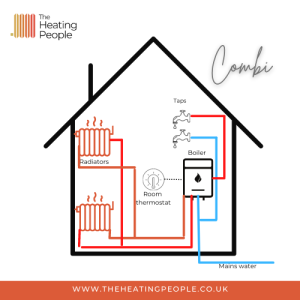
Diagram of a combi boilerCombination (combi) boiler

Combination boilers, or ‘combi’ boilers, provide heating and hot water from one compact unit, without the need for any external tanks or cylinders. Combi boilers are the most popular type of boiler sold in the UK.

Combustion

Your boiler relies on the process of combustion to provide heat for your home and hot water for your baths and showers. Combustion is a chemical process in which the fuel reacts rapidly with oxygen and gives off heat.

Commissioning

It’s a legal requirement (under the Building Regulations) to have your boiler commissioned by a Gas Safe engineer. Your engineer will follow the boiler commissioning checklist provided by the HHIC. Thid avoids common boiler issues by ensuring your new boiler has been set up correctly.

A boiler with a warning sign on it.Condemned

Condemned boilers are not safe to use. There are two categories of condemned boiler. An ‘immediately dangerous’ boiler is one which if operated or left connected to the gas supply is an immediate danger to life or property. ‘At Risk’ boilers have at least one fault which could endanger life or the property.

Condensate pipe

When your boiler burns fuel to heat water for your heating system, condensation also forms. The boiler expels this as a gas. Some condensate collects inside the boiler and is drained away through the condensate pipe.

Condensation

Condensation occurs when water reaches its dew point. Changes in temperature and pressure turn air from a vapour into a liquid. This will happen when your boiler burns a fuel (such as gas) to heat water.

Condensing boiler

A condensing boiler uses condensing technology to extract all usable heat from the combustion process. When a boiler burns gas to produce heat, it releases hot gasses through the flue into the atmosphere. Non-condensing boilers waste these gases. But condensing boilers capture the hot flue gasses and recycle them to help heat water in the system. Condensing boilers are therefore much more energy efficient than non-condensing boilers.

Conduit

A conduit is a tube that houses electrical wiring.

Controls

Controls allow you to easily regulate the temperature of your home without wasting fuel or heat. There are a huge variety of heating controls available, including: time switches; programmers; room thermostats; programmable room thermostats; smart thermostats; and thermostatic radiator valves (TRVs).

A kettleConvection

Convection transfers heat is by the movement of a heated fluid such as air or water. It’s the process that your central heating system uses to transfer the heat from water to the rooms in your home.

Corrosion

Corrosion is the gradual deterioration and degradation of materials (usually a metal) by chemical and or electrochemical reaction with their environment. Unfortunately, if you don’t look after your central heating system, the insides of your pipes and radiators can degrade, requiring a Power flush or replacement.

Corrosion inhibitor

A corrosion inihibitor can help to prolong the life of your central heating system by protecting your heating system against corrosion. You can protect the ineer workings of your heating system by using a chemical inhibitor during a power flush.

Cycling (boiler)

Boiler cycling is when a boiler turns on and off to maintain the desired temperature. Constant firing and shutting down wastes a lot of fuel and energy and takes its toll on your boiler.

Cylinder

Hot water cylinders (used by heat-only and system boilers) hold your hot water until its required.

D is for…

Domestic hot water (DHW)

This is potable water that is safe for washing or bathing in your home.

Double glazing

Double glazed windows have two layers (panes) of glass separated by an air space. This air traps heat, increasing the windows efficiency and ability to prevent heat loss.

Drain down

This is the process in which a Gas Safe engineer will remove all the water from your central heating system. This may be necessary when installing a new radiator or to power flush the system.

Duct

A round or sometimes rectangular tube that distributes the exhaust fumes from your boiler.

E is for…

A woman looking at the ErP scale on a tablet.Efficiency

Efficiency is the ratio of the useful work performed by your boiler to the total energy expended in that process. For example, for a modern boiler with 92% efficiency, 92% of the energy heats the home, and 8% is ‘lost’/used to run itself.

Efficiency class

The ErP Directive requires that space and water heaters to be labelled with an efficiency class.  Boilers, like other domestic appliances, have efficiency ratings of A-G, A being the most efficient to G which is the least efficient. For a very old boiler with 60% efficiency, only 60% of the energy used by the boiler goes to heating the home, whilst a huge 40% is wasted.

Emission

Processes such as combustion produce substances or pollutants called emissions.

Energy Savings Trust

An independent non-profit organisation set up in 1992 with the express goal of reducing energy use in the UK.

ErP

ErP stands for Energy-related Products. It relates to an EU Directive which drives improvements in the efficiency and performance of heating and hot water products across Europe.

ErP Directive

A European Directive on ErP came into force in 2015 and replaced SEDBUK (Seasonable Efficiency for a Domestic Boiler UK). The ErP Directive covers boilers, combination boilers, water heaters and other heating appliances up to 400kW.

ErP rating

The ErP Directive (see above) rates the efficiency of all energy-consuming goods between A++ and G and you can usually find this on the casing of your boiler. All new boilers fitted into existing properties must have an ‘ErP’ (Energy rated performance) of 92%.

Expansion vessel

Expansion vessels keep the pressure in a combi boiler stable while water heats and cools. Water expands by up yto 4% of its volume at room temperature when its heated. So, the expansion vessel accommodates this.

F is for…

Feed and expansion tank

Open vented heating systems need feed and expansion tanks. Often located in the loft, they to up the central heating system with cold water as well as providing somewhere for the hot water to go if your system overheats.

Filling loop

The filling loop is a small, braided hose with connections on either end. It provides a temporary connection to the mains so that you’re able add additional water to your heating system.

Flow rate

Flow rate is the amount of fluid or gas that flows through a pipe or a tube over a given time. A boiler’s flow rate shows how much hot water it can send to your taps in one minute. But this will depend on the flow rate of the mains water supply to your home. If the flow rate of your mains is lower than the flow rate of the boiler, then it will never reach that level.

Flue

A flue is a duct, pipe, or chimney which takes exhaust gases from your boiler to the outdoors. Flues are essential to keep you safe because they take the products of combustion (which contain carbon monoxide and other noxious gases) out of your home, and release them into the atmosphere.

Flue gas

Burning fuel produces flue gases. The flue releases flue gases safely outside your home.

Flue Gas Heat Recovery Systems

Flue gas heat recovery systems make boilers more efficient by capturing and reusing heat energy that would otherwise have escaped out of your flue or chimney.

Fuel

Any material (such as gas, oil or coal) that will react with other substances so that it releases energy as heat energy.

G is for…

Gas Safe Register

The Gas Safe register lists businesses that can safely and legally work on gas. It’s the only official gas registration body of the United Kingdom, the Isle of Man and Guernsey.The Gas Safe Register issues licenses for engineers to undertake gas work on behalf of a registered business if they have evidenced competence through a valid and current qualification. We are Gas Safe registered.

Gas Safety (Installation and use) (Amendment) Regulations 2018

These regulations came into force on 6 April 2018 and cover the safe installation, maintenance and use of gas appliances in private dwellings and business premises. The regulations improve safety and help to prevent carbon monoxide poisoning, fires, and explosions.

Green Power

Green power is a subset of renewable energy and covers energy produced from solar, wind, geothermal, biomass, and low-impact small hydroelectric sources.

Grid

A term used to refer to the system that distributes and transmits electricity.

H is for…

Header tank

Header tank is another name for a feed and expansion tank. Open vented systems usually have one in the loft. Its job is to supply water to the central heating system, and to maintain the level of water, which expands when heated.

Heat curve

A heat curve is a graph showing the relationship between the central heating system supply temperature and the outside air temperature. Weather compensation controls use them to ensure that the flow temperature of your boiler is matched to the actual heat demand.

Heat Exchanger

Your boiler’s heat exchanger transfers heat from your fuel (usually gas) to the water. The boiler pumps the hot water around your home to heat your radiators and supply your hot taps.

Heat Geek

Created to give expert advice on all aspects of the heating industry to both end users and industry professionals. The Heating People are proud to be Heat Geek Elite installers and Heat Geek Assured installers of heat pumps. This means we have undergone the best heating design training the industry has to offer!

Heat loss

Heat loss is a measure of the amount of heat escaping through your building’s fabric from the inside to the outside. All buildings lose heat, but the colder the outside temperature; the warmer the inside; and the worse the insulation of your building; the greater the heat loss will be. Reducing heat loss makes your heating system more efficient, reducing energy bills and your carbon footprint.

Diagram of a heat-only boiler system.Heat-only boiler

Also known as ‘conventional’ or ‘regular’ boilers, heat-only boilers provide heating directly to your central heating, and  work with a cylinder to provide your hot water. They can be ‘open-vented’, meaning that there’s a feed and expansion tank in the loft, but they can also work on a ‘sealed’ system too.

Heat pumps

 Heat pumps are electrical devices that transfer heat from a source (such as the heat of the soil in the garden) to another location (like the hot water system of a house). Although they use a small amount of electricity, they are extremely efficient, with an efficiency rate of between 200-600%.

Heat recovery

This recycles heat that would usually be lost into the atmosphere. It increases the efficiency of your heating system by reducing the heating and cooling demands. Modern condensing boilers will have some form of heat recovery built in, but additional Flue Gas Recovery Systems can further increase efficiency by recycling heat from waste flue gases.

Heat transfer

Heat energy can be transferred by conduction, convection or radiation. Your central heating system generates heat by transforming the chemical energy in fuel (usually gas) into thermal energy. It transfers heat to water, which is pumped around your home.

Heating and Hotwater Industry Council (HHIC)

The HHIC is committed to effectively driving, supporting and promoting the sustained growth of the UK domestic heating and hot water industry.

I is for…

Ideal

Ideal provides reliable, competitively priced boilers to all of its installers and consumers.

Immersion heater

An immersion heater is an electric water heater that sits inside a hot-water cylinder. They use a metal loop or coil to heat the surrounding water. They can be the main source of hot water or provide a back-up for a traditional gas boiler.

Installer

An engineer repairing a boiler.To work on gas, a heating installer must be Gas Safe registered.

Insulation

This is any material that reduces the transmission of heat (or sound) from one area to another. Insulation is important to reduce heat loss and improve the efficiency of your central heating system. 

Isolation valve

An isolation valve is part of a heating system that restricts or completely stops the flow of water through the system. Isolation valves are useful for fixing small issues like a dripping tap, because there is no need to turn off the mains water if one of these valves is installed.

J is for…

Joule

A joule is a unit of energy. One joule is equal to the work done by a force of one newton acting through one metre. It is also the energy dissipated as heat when an electric current of one ampere passes through a resistance of one ohm for one second.

K is for…

A boiler next to a boy dressed as a superhero.Kilowatt (KW)

Kilowatts measure the ‘size’, or the power output of a boiler. A kilowatt is equal to 1,000 watts and this unit helps us to measure the power your boiler can provide to your heating system. For example, a 25kW boiler uses 25,000 watts (25 kW) of power per hour to heat the water for your central heating. Generally, the more heat and hot water you require for your home, the higher the kW boiler you will need. But the type of boiler you have will affect this.

Kilowatt-hour (or kWh)

A Kilowatt-hour is the unit of energy utility companies use to measure how much gas and electricity you’re using. It refers to the use of power over a period – for example a 1 kW hair dryer used for an hour will use 1 kWh.

L is for…

A puppy on a sofa next to a thermometer.Load compensation

Load compensation is an energy saving control that uses an internal temperature sensor to measure the difference between your current room temperature, and your desired room temperature, to control your boiler’s output to precisely close the gap.

[sc name=”image-close” ][/sc]

Part L

Approved Document L was introduced in October 2010 as part of the Building Regulations and was recently amended by Boiler Plus. Approved document L provides guidance on the conservation of fuel and power. Part L1A applies to newbuild homes and Part L1B which sets the standards for work carried out in existing homes, to achieve carbon reduction targets.

M is for…

Modulation

Boiler modulation refers to the ability of a boiler to automatically reduce its output to suit the demand for heat, thereby lowering the amount of gas it’s using.
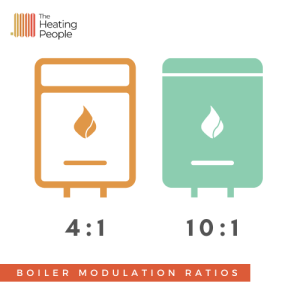
Diagram showing boiler modulation ratios.Modulation ratio

The modulation ‘ratio’ is how manufacturers express a boiler’s ability to modulate. The numbers refer to the boiler’s minimum output in relation to its maximum output. The wider the modulation range, the better the ratio.

N is for…

National grid

The National Grid is the system operator of Great Britain’s electricity and gas supply. This includes England, Scotland and Wales. It is the company that manages the network and distribution of electricity and gas that powers all our homes and businesses.

Natural gas

Gas is one of four fossil fuels (along with coal, sulphur and petroleum) that forms deep beneath the earth’s surface. It predominantly contains five gases – methane, ethane, butane, propane and nitrogen. The largest component of natural gas is methane. It is a non-renewable hydrocarbon used as a source of energy for heating, cooking, and electricity generation.

Net-zero

The Institute for Government says that net zero means “achieving a balance between the amount of greenhouse gas emissions produced and the amount removed from the atmosphere.” In other words, any greenhouse gas emissions that can’t be avoided must be matched by removing the equivalent from the atmosphere. For more on how the government intends to achieve this, check out our related blog here.

Nitrogen Dioxide

Nitrogen Dioxide (NO2) is a colorless, odorless gas that is commonly emitted when we burn fuels for our heating appliances (such as boilers and ovens).

Non-return valve

A non-return valve allows a liquid or gas to flow through it, but only in one direction. The purpose of this is to ensure that the liquid or gas flows through a pipe in the right direction, where it might otherwise have unwanted reversed flow.

O is for…

OFTEC

OFTEC stands for the Oil Firing Technical Association. It recognises installers who are approved to install oil, solid fuel and renewable heating equipment and to main oil and solid fuel systems.

Open flue

An open flue has a pipe which carries combustion gases from the appliance, whilst fresh air enters the appliance via the casing. For safe operation, additional air vents are required in the room where the appliance is installed to re-supply fresh air.

Open-vented central heating system

Heat-only boilers are sealed or open vented. Open vented heating systems are open to atmospheric pressure and have a feed and expansion tank at the highest point in the system. The water tank in the loft maintains the right water level whilst a pump circulates the hot water to your home’s radiators.


P is for…

PCB

PCB stands for printed circuit board. The PCB monitors your boiler’s pressure, temperatures and currents and controls the boiler electronically. Sometimes, it will develop a fault or stop working properly, or sometimes it may shut down the boiler because another component is not working properly.

Pilot light

The pilot light ignites the gas, which heats the water in your boiler and fires up your central heating.

Before and after a power flush.Power flushing

Power flushing is a way of cleaning and maintaining your central heating system. Your engineer will use a power flushing machine to send water at high velocity through your heating system. This dislodges and removes debris, limescale, and sludge which can build-up over time.

Pressure (boiler)

This refers to the pressure of hot water running in your sealed central heating system, while water pressure is the pressure of the water coming through your taps.

Pressure drop

Most modern (and some older) heating systems are sealed, and the system is pressurised to ‘push’ the water around your system. To work efficiently, it must maintain a stable pressure, which is determined by the volume of water in your heating system. If there is a pressure drop, your system can cut out, preventing your central heating from working. Re-pressurising your boiler will help to keep your boiler working well.

Pressure relief valve

Pressure relief valves are primarily used within sealed heating systems as a safety mechanism to release high pressure within the system. When the pressure gets too high, pressure relief valves open to reduce the pressure, and prevent damage to the system.

Programmable thermostat

Programmable thermostats are thermostats which adjust the temperature according to a series of programmed settings that take effect at different times of the day. They allow you to pre-set your heating schedule, so that your heating comes on and switches off depending on when it’s required.

PTFE Tape

Tape made from a material called polytetrafluorethylene.

Q is for…

A smiling couple.Quotation

A quotation is a formal statement setting out the estimated cost for a particular job or service. We will provide you with a fixed price quotation after completing a survey of your home and requirements.

R is for…

Radiator

Radiators are a vital part of your central heating system. Hot water from your boiler runs through the piping in your home, warming up each radiator in your system.  When water in the radiator is hot, the surrounding air heats up via convection and the hot air moves around the room as the air circulates.

Radiator key

(See also Bleed Key) Radiator keys are hand tools for undoing, tightening, and adjusting the fittings of a central heating radiator.

Renewables

A natural resource or source of energy that is not depleted by use, such as water, wind, or solar power.

Renewable energy

Renewable energy comes from natural sources or processes that are constantly replenished and do not diminish over time. Such fuel sources include the sun, wind, moving water, organic plant, and waste material (biomass), and the earth’s heat (geothermal).

Room thermostat

Individual room thermostats measure the temperature of the air in the room, if it is cold, it will tell the central heating to turn on, when it gets too warm it tells the central heating to turn off.

S is for…

Sealed heating system

A system that is closed to the atmosphere and does not have a feed and expansion tank. Instead of using a feed and expansion tank, a sealed system comprises an expansion vessel into which system water can expand as the water heats. As the system cools, this pressurised vessel pushes water back into the system.

S Plan

An S Plan Heating System has two separate motorised valves which control the temperature of the central heating and the hot water individually.

Standing loss

A measurement of the heat that escapes from a hot water cylinder through the high radiating areas of the casing, such as the immersion heater. This heat loss is commonly referred to as standing loss and is measured in kilowatt hours (kWh) lost over 24 hours.

Steam

Steam is water in vapour form. It is the operating fluid in many heating systems.

Stopcock

A stopcock is a type of ball valve that controls the flow of a liquid or gas, like a water main for example.
Statistics from BEISSludge

Over time, the water in your pipes, boiler, and radiators deposits unwanted by-products like rust. This rust (plus other dirt and debris) becomes an unpleasant, muddy substance, known as ‘sludge’. This sludge plays havoc with the efficiency of your heating system, causing corrosion and blockages. Sometimes it can be removed with a power flush.

Solar gains

This refers to the short wave radiation from the sun that heats a building, either directly through an opening such as a window, or indirectly through the fabric of the building.

Solar thermal

A solar thermal system uses the energy from the sun to heat up water to use in the home. Solar collectors absorb heat from the sun. The heated water or heat-transfer fluid then runs from the collectors to your hot water cylinder.
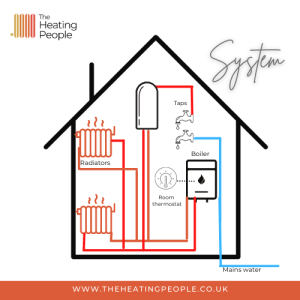
Diagram of a system boilerSystem boilers

System boilers feature aspects of both a heat-only boiler and a combi. Like a heat-only boiler, a system boiler needs a hot-water cylinder to heat and store hot water for your taps. But it doesn’t need a tank in the attic because, like a combi, it takes its water supply directly from the mains. The heat exchanger heats the cold water by transferring energy from the gas jets to the water. The boiler pumps the water into a large hot water cylinder.

T is for…

Temperature and Pressure Relief Valve

A Temperature and pressure relief valve is a safety device to relieve pressure from a hot water cylinder when they reach extremes. 

A woman standing next to an ATAG boiler and a Nest smart thermostat.Thermostat

A thermostat is a device that automatically regulates temperature, or that activates a device when the temperature reaches a certain point.

Thermostat (boiler)

This is a thermostat which is inside the boiler casing that limits the temperature of water passing through the boiler by switching it off. This temperature can be set by the user or may be fixed by the manufacturer.

TRV

TRV stands for thermostatic radiator valve. TRVs fit on the side of your radiator and allow you to control the heat output of a radiator and the temperature of a room. They can help you to save energy, and therefore money on your energy bills.

Timer

Timers or boiler time switches are the simplest type of heating control because they simply turn your boiler on and off at preset times. Time switches are generally not used on modern systems where more appropriate programmable thermostats or compensating control is used.

U is for…

Unvented cylinder

Unvented cylinders store and heat water that is taken directly from the incoming mains supply. This is different to a vented cylinder, which is gravity fed by a tank in the loft. You can get hot water out of an unvented cylinder at a much better pressure than with a vented cylinder, because it is pressurised.

V is for…

aroTHERM heat pumpVaillant

Vaillant are one of the leading manufacturers of boilers, heat pumps and heating systems in the UK. The Heating People are proud to be Vaillant Advance Installers.  

Vent

A vent is used to disperse or conduct fresh air in, or waste air and gases out of an interior space or appliance.

Vented cylinder

Vented cylinders store and heat water that is fed directly from a tank in the loft. They are sometimes referred to as gravity fed hot water systems. This is because the tank in the loft is higher than the vented cylinder, and the natural pull of gravity carries the water down from the tank to the cylinder.

Ventilation

The process of supplying a house or room continuously with fresh air.

Viessmann boilers in a home.Viessmann

The Viessmann Group is a German company specialising in heating, cooling, and refrigeration systems. The Heating People are proud to be Viessmann trained installers.

W is for…

Warranty

Reputable boiler manufacturers will give you a warranty on a new boiler. This is a promise to repair or replace the boiler free of cost if necessary, within a specified period of time.  The warranty covers the cost of repairs and maintenance and sometimes includes replacement parts and labour costs.  The Heating People can offer warranties of up to 14 years on ATAG boilers.

Water main

A water main is the principal or ‘main’ pipe that delivers cold water into your home.

Water pressure

Water pressure determines the flow of water from the tap. Low pressure can reduce water flow to a trickle, and it will take a long time to fill a kettle or a cistern.  Some modern heating appliances and showers will not work below certain pressure levels.

A diagram of weather compensation.Weather compensation

Weather compensation devices are heating controls. They use an outdoor sensor to monitor the outdoor temperature and adjust your boiler’s operation accordingly. By matching your home’s heat loss (which is caused by the weather) you can save on your energy bills, as well as reducing your carbon footprint.

Worcester Bosch

Worcester Bosch are one of the market leading brands in the heating and hot water systems industry. The Heating People are proud to be Accredited Installers of Worcester Bosch systems.

X is for…

Xylophone?!

We were stumped with this one!

Y is for…

Y-Plan

A Y-Plan heating system is a system that uses one motorised valve, which has 3 ports for water to flow through. ‘Y Plan’ refers to the wiring of motorised valves, to operate the heating and hot water independently.

Z is for…

Zoned heating system

A zoned heating system breaks your home into different areas or “zones”, each controlled separately by a thermostat. Zoning your home allows for several benefits including elimination of hot and cold spots and individual control of different rooms’ temperatures.

Zero carbon

Zero carbon means that no carbon emissions are being produced from a product/service.


Useful Links:

https://www.heatgeek.com/find-a-heat-geek/
Categories
Boiler types

Pros and cons of combi boilers

A woman looking ay a diagram of a combi boiler system.If you’re thinking about replacing your heat-only or system boiler with a combi, or you’re moving into a house with one, you may be wondering what the pros and cons are of combi boilers are.

Combi boilers are currently the most popular domestic boiler in the UK, but why are they so popular? And are they right for everybody? 

In this article, we look at what a combi boiler is, and discuss the pros and cons of this type of system, to help you decide whether a combi boiler is right for you or not.

What is a combi boiler?

Before we get into the pros and cons, it’s important to know what a combi boiler is, and how it differs from the other two types of boilers (heat-only or system boilers).

The clue is in its name…

A ‘combi’ boiler provides a ‘combination’ of hot water and central heating from one compact unit, without the need for external tanks or cylinders.

This is different to a heat-only boiler that also needs a cold water storage tank; a hot water cylinder; and a tank to maintain the water level of the central heating system.

You can read the pros and cons of heat-only boilers here.

It’s also different from a system boiler that requires a cylinder for storing hot water.

You can read the pros and cons of system boilers here.

A combi boiler is the only one that doesn’t store hot water in a cylinder, because it heats water directly from the mains.

With a combi, as soon as you turn on a hot tap, it heats the water instantly on demand. This means that there’s no need for a storage tank.

How do combi boilers work?

Diagram of a combi boilerSince combi boilers do two jobs (provide instantaneous hot water and central heating) from one unit, they have two independent heat exchangers.

The primary heat exchanger connects to your radiators, and the secondary heat exchanger connects to your hot water supply.

The primary heat exchanger heats the water that is pumped around the radiators in your central heating system. Once this hot water has warmed up the radiators, it recycles back into the boiler.

The recycled central heating water that has travelled through all of the pipes in your heating system is dirty and you obviously wouldn’t want to bathe in it!

So, when you want hot water for a bath, a combi boiler will pause your central heating, and open a diverter valve.

The diverter valve allows the recycled central heating water to enter the secondary plate heat exchanger.

The recycled central heating water is used to heat the sealed pipes which contain your clean mains water. Your cold mains water is heated instantaneously and is delivered to your taps, so you can have a clean hot bath.

You can see from this process that a combi can’t transport hot water to your radiators and to your taps at the same time. Your hot water usually takes priority.

Pros of combi boilers

Now that we understand what a combi boiler is, let’s take a look at the advantages of choosing this type of system:

Pro: Combi boilers are space saving

The first obvious advantage to choosing a combi boiler, is that it’s simple design won’t take up much space in your home.

Instead of needing additional cold water tanks and a hot water cylinder, a combi boiler is its own self-contained unit that will sometimes be small enough to fit inside a kitchen cupboard.

This means that you can free up cupboard and loft space that would otherwise be needed to house tanks or cylinders for a heat-only or system boiler.

Combi boilers are therefore popular in smaller homes where space is at a premium.

Pro: Combi boilers are energy efficient

A jar full of coins with a green shoot.Modern combi boilers are very efficient thanks to their condensing technology and the changes made by the Boiler Plus Regulations.

All combi boilers must have a minimum ErP (Energy related Products) rating of 92% and must have one of four additional energy saving devices fitted. These include: flue gas heat recovery; weather compensation; load compensation; or smart controls with automation and optimisation functions.

This means that your combi is very efficient and could help you to make savings on your energy bills in addition to helping with our ambitious national target of meeting net zero by 2050.

Combi boilers are economical when compared to heat-only or system boilers. Because a combi supplies hot water on demand, you only ever pay for what you use.

With a heat-only boiler (which stores hot water), hot water tends to be produced twice a day, even if it’s not needed. If it doesn’t get used, this hot water cools down, wasting energy.

To find out why having an efficient boiler is so important, you might like to read our related blogs: ‘What is an energy efficient boiler and why should I want one?’ and how to choose an energy efficient boiler.

Pro: combi boilers provide unlimited hot water

If you’ve ever had a heat-only boiler, there may have been times when you’ve run out of hot water…

You’ve gone to run a bath, but the water’s cold – and you’ve ended up squabbling with family members over who used the last of the hot water!

This situation will occasionally happen with a heat-only or system boiler because they store hot water in a cylinder for use later.

A cylinder can only hold so much hot water, and once it’s been used up, you’ll need to wait a while for the cylinder to refill.

A combi boiler doesn’t have this problem. With no water tank to heat up, combi boilers can provide an unlimited supply of hot water on demand.

A combi heats water as and when you need it, so you’ll never run out of hot water again!

Cons of combi boilers

However not all homes and families are suited to a combi boiler.

Con: Combi boilers struggle to meet high demands for hot water

Since combi boilers work by heating water for a tap instantly on demand, they’ll struggle when multiple taps are turned on simultaneously.

Most combi boilers provide between 9 – 16 litres per minute. Whatever the capacity, it will be halved if two hot water outlets are in use at the same time, i.e. to around 8 litres per minute at best.

Therefore, combi boilers are best suited to homes with relatively small hot water demands at any one time.

So, when you’re thinking about whether a combi is right for you, you should consider how many bathrooms you have, and how you use your hot water.

If everyone takes it in turns to shower in the morning, then a combi would work. But if you’re a household where everyone wants showers at the same time, then a combi won’t be suitable. 

In larger homes with multiple bathrooms, a heat-only or a system boiler would be a better choice.

Heat-only and system boilers can meet high demands for hot water because they store large quantities of hot water in a cylinder, which can supply multiple outlets at the same time.

Con: Relies on good mains pressure

Many heat-only boilers use gravity from a tank located in the loft to work effectively. But a combi boiler works differently and takes its water directly from the mains.

Combi boilers need good mains pressure to work effectively and so they’re not ideal for homes in areas with low pressure.

Con: If a combi breaks down there is no heating and hot water

Since a combi boiler provides both your heating and hot water, in the event of a break-down you’ll have neither!

Immersion heaters are incompatible with combi boilers because there’s no hot water tank. This means that if your boiler were to break down, there is no backup system, and you’ll have no heating or hot water until your boiler is repaired. 

Our favourite combi boilers

If you’ve decided that a combi might be right for you, you might be wondering which make and model to go with.

The Heating People are not tied to any manufacturer of boilers, we can work with all of them. But we do have our favourites!

We believe that Vaillant; ATAG; Worcester Bosch; and Viessmann offer the best boilers on the market.

All these brands offer outstanding engineering, efficiency, reliability and guarantees. So, whichever you choose, you’ll have a great boiler.

 But in no particular order, here are our top 5 combi boilers from these brands:

  1. ATAG iC Economiser Plus
  2. Vaillant ecoTEC exclusive with green iQ
  3. Vaillant ecoTEC Plus
  4. Worcester Bosch Greenstar 4000
  5. Worcester Bosch Greenstar 8000

Check out our related blog: The best combi boilers 2022.

For tailored advice about these or any other boilers, contact one of our friendly team to book a free survey.

Conclusion?

Whilst there are many advantages to having a combi boiler, they’re not right for everyone.

Combis are best suited to homes with relatively small hot water demands at any one time. For these households, combis are an excellent, efficient choice.

You might like our related blog: Pros and cons of system boilers.

Useful Links

The Heating Hub: System vs Combi boilers

Categories
Energy efficiency

TRVs

A woman holding a TRV.If you’re wondering what TRVs or ‘thermostatic radiator valves’ are, then this blog’s for you!

Thermostatic radiator valves, more commonly known as ‘TRVs’; are handy little heating controls that fit on the side of your radiator.

They allow you to control how much heat your radiator emits, and therefore the temperature of your room.

This is great because it means that you can enjoy different heats across different rooms; which is perfect if you don’t see eye to eye with your family members when it comes to warmth!

Not only that, but you can also switch off a radiator completely with a TRV.

So, if you’ve got a room that barely gets used; such as a spare bedroom; you can save money by not heating it as often as your other rooms.

TRVs let you keep your home at a comfortable temperature without wasting fuel or heat.

As a result, uptake of TRVs has grown rapidly in recent years.

According to BEIS, nearly half a million TRVs were sold across the UK in 2016. A report by BEAMA says that the average home can save 18% on the energy bills, by using TRVs.

What is the difference between a manual radiator valve and a TRV?

A piggy bank on a radiator.The radiators in your home will come with either manual valves or TRVs. Both manual valves and TRVs help to control the available heat the radiator can produce.

A manual valve works a bit like a tap. When you open the valve, more water enters the radiator, increasing its ability to heat the room. Conversely, when you close the valve; the amount of water entering the radiator is reduced, decreasing the radiator’s ability to heat.

A TRV is a smarter radiator valve because it self-regulates; meaning it automatically adjusts the flow of water into your radiator depending on the setting.

How do TRVs work?

TRVs are radiator valves that adjust the flow of hot water into your radiator; depending on the setting you choose, and the temperature of the room.

TRVs self-regulate by detecting the temperature in your room and adjusting the amount of hot water into the radiator accordingly.

The temperature is detected by a thermostatic valve head on top of the valve body. As the room temperature changes; the valve head expands, adjusting a pin in the valve body so that it opens or closes.

As the room gets warmer; expansion blocks the valve body to receive less hot water into the radiator to maintain the temperature.

If the room is cold; or the temperature begins to drop; contraction opens the valve body to receive more hot water into the radiator… and so on.

What do the numbers mean on a TRV?

There’s a common misconception that the numbers on a TRV refer to the temperature of the radiator. However, they actually refer to the temperature of the room.

TRVs work by detecting the temperature in the room; and using this information to allow more or less hot water into the room accordingly.

The numbers on the valve roughly correlate to the room temperature. When the room drops below these temperatures; the TRV will allow hot water to flow into the radiator to heat the room.

It’s important to recognise that the numbers or scales on your TRVs do not correspond to a precise temperature; but rather to a level of comfort.

How do I set a TRV?

The numbers or scales on your TRV don’t convert precisely to degrees Celsius.

This is because manufacturers of TRVs can’t guarantee the temperature in the room. This will be effected by other factors such as the level of insulation in your home; if the radiator is by a window; and how well your boiler is performing.

However, an approximate conversion can be made:

Valve position Reference temperature Recommended for
* 6℃ Frost protection
0-1 12℃ Cellar, stairs
1 15℃ Unoccupied room, laundry, recess
2 17℃ Entrance hall, corridor
2-3 18℃ Bedroom
3 19-20℃ Kitchen
3-4 20-21℃ Lounge, child’s bedroom
4 22℃ Bathroom
5 Max Valve completely open
Table showing the recommended valve positions for a TRV in different rooms of the home.

How do I find the right temperature with a TRV?

Finding the right temperature setting for you and your home is a personal choice; which will also depend on what size radiators and rooms you have.

Some rooms in your home may need the valve to be set higher; to get an adequate temperature in the room. Whilst in smaller rooms, the valve may be able to be set lower.

It’s a matter of playing about until you’re happy with the results. When starting out, it’s a good idea to set the valve in the middle setting. And then adjust accordingly depending on your own comfort levels.

It’s important to understand that turning a TRV to a higher setting won’t make the room heat up any faster. How quickly the room heats up depends on the boiler size and setting, and the radiator size.

Turning a TRV to a lower setting; will result in the room being controlled at a lower temperature and saves energy.

If your heating is set below 20°C; reducing the temperature by a single degree can save as much as 6% in energy use. And with gas prices set to rise, this can only be a good thing!

How much energy do TRVs save?

A woman and a piggy bank on a radiator.There’s a lot of variation in the figures given for energy savings from TRV’s.

This is unsurprising when you factor in all of the different types of housing; and central heating systems in the UK.

How much you stand to save will depend on factors such as the size of your home; the amount of insulation it has; and your current central heating system.

As we said earlier, BEIS state that TRVs save around 3% on average energy usage.

Tests carried out at The Energy House at Salford University; by The BEAMA heating controls association; found that savings of 40% can be achieved in a standard terraced house.

They also calculated that, at 2013 energy prices; this would save a householder £409.46 per year (if they fitted a full set of controls where none were previously present.)

So, research suggests you’ll save somewhere between 3%-40% on your energy bills; as well as having a much more comfortable living space.

You might like our related blog: Does smart heating save money?

Can TRVs save me money?

A family putting coins into a piggy bank.Yes – TRVs can save you money on your heating bills. Because they allow you to heat the rooms you want; just to the temperature you want; with no wastage on rooms you barely use.

Because TRVs keep your rooms at a consistent temperature; they are much more efficient than manual radiator valves which will simply keep working at the same output set, regardless.

So not only will TRVs save you money, but they also help the environment too.

 According to The Energy Saving Trust; a typical three-bedroom semi-detached home can expect to save £75 and 320kg of carbon dioxide a year; by installing and correctly using a programmer, room thermostat and TRVs.

How much do TRVs cost?

Prices vary depending on the style of radiator valve you want to buy and how many you need. As a guide, with The Heating People; it costs £85 to drain down your current heating system, add chemical corrosion inhibitor, and then £25 per valve installed.

How long does it take to install TRVs?

The amount of time taken to install TRVs will depend on your current setup. And how many valves are being installed.

It typically takes between 30 minutes and two hours to install a single valve. It will take longer to install multiple valves.

Can I install TRVs in every room in my house?

A cat relaxing on a bed.Whilst TRVs are an asset in most of your rooms, you can’t have one in your bathroom. This is because the heat produced by your shower or bath will confuse the TRVs thermostat; and it will shut off completely.

It’s also not a good idea to fit TRVs in the same room as your principal thermostat. This unit connects directly to your boiler. And so you will inadvertently create a competition between your TRV and central thermostat.

What are the advantages of TRVs?

Energy saving

The key benefit of TRVs is their energy saving potential.

An Ecofys-Institute study found radiator efficiency improvements as high as 19% when replacing a manual radiator valve with a TRV.

A report from the European Building Automation Controls Association estimates that about 500 million uncontrolled valves are still mounted on radiators across the EU.

If all of these were upgraded to TRVs, then EU citizens, would reduce CO2 emissions by about 24 million tonnes.

Money saving

If you have an uncontrolled or manual radiator valve; it will be running non-stop, even when your room has become warm. With a TRV, once your room has reached the temperature you have set, your TRV turns the radiator off. Since TRVs save energy by not overheating rooms unnecessarily, they will save you money on your energy bills.

Customisable to your comfort

TRVs allow you to make the most of the heating in your home; to suit how you live day to day.

In rooms that you don’t use much, like a spare bedroom; you can set the TRV lower to avoid wasting money heating an empty room.

You might have other preferences that can be catered for. For instance, if you like to be cosy while you watch TV in your lounge; but like your bedroom to be cool for you to sleep; your TRVs can manage this for you. This means you’ll be able to tailor your heating to your comfort preferences.

 Easy to change

TRV temperature settings are very easy to change. So they can be altered in seconds if your spare bedroom is going to be used again after a period of low usage.

Should I consider replacing my existing TRVs?

If your TRVs are older than 10 years, you should consider upgrading at least the TRV heads. Old TRVs can lose their accuracy and performance over time.

Are there any drawbacks of using TRVs?

With proper maintenance, there aren’t any drawbacks to TRVs. However, it’s possible to encounter issues with older TRVs; that can be confused about a room’s temperature due to draughts or ventilation. 

It’s also important that TRVs are mounted in ‘free air’ and not blocked by, for example; furniture; curtains; or enclosed within decorative cabinets.

TRVs can only work to the temperature which it can sense. So, if it’s covered, it can’t sense the room temperature properly; and may underheat or overheat the room.

What are smart radiator valves?

A smart thermostat is connected to WiFi; which enables you to control your heating via an app from a smart device.

If your smart thermostat is compatible with smart TRVs; you can control each TRV in your home from your app from wherever you are in the world.

Final thoughts…

A woman holding a TRV and a piggy bank.It’s clear that TRVs are an easy to install; cost-effective way to achieve better control of your home heating and energy costs.

If you want tailored advice on how to improve the efficiency of your heating system, contact us today.


Useful Links:

BEIS research paper on domestic heat

BEAMA report on savings from TRVs

The Greenage article on TRVs

The Energy Saving Trust article on thermostats

Government report on international evidence on heating controls

Danfoss report on making European homes more energy efficient

Categories
Advice

How to fix a frozen condensate pipe

A diagram of a condensate pipeHow to fix a frozen condensate pipe…

Feeling chilly? If your boiler has stopped working when it’s freezing outside, there’s a good chance that your boiler’s condensate pipe has frozen.

This pipe is responsible for taking waste from your boiler out into a drain. If it gets blocked with ice, your boiler will automatically shut down as a safety measure until it’s resolved.

Luckily, this isn’t a big problem, and it might be something you wish to try resolving for yourself. Read our step-by-step guide to get up and running again.

What are condensing boilers?

There’s a common misconception that a ‘condensing boiler’ is a type of boiler, when in fact, it isn’t.

The terms ‘condensing boilers’ and ‘non-condensing boilers’ are confusing, because they actually describe the technology within the boiler itself, rather than what sort of boiler it is.

Due to regulations introduced in 2005 and 2018, all new boilers in the UK must be condensing. This is regardless of whether your boiler is a heat-only, a combination, or a system boiler.

The regulations changed because condensing boilers are more energy efficient than their non-condensing counterparts, and can typically extract 90-92% of heat from fuel, compared to 50-80% that a non-condensing boiler can.

How do condensing boilers work?

Condensing boilers typically use gas as a fuel to condense water vapour to create heat.

This is different from old non-condensing boilers which worked by creating hot gases which passed through a heat condenser to then heat water. These old non-condensing boilers wasted between 30-50% of heat due to combustion gasses escaping into the flue.

Condensing boilers are much more efficient because they extract the latent or additional heat from the combustion gasses and ‘recycle’ them back into the heating system to heat the water inside the boiler.

What is condensate?

When your boiler is fired up to heat your home or produce hot water, it is burning a fuel (typically gas) and this process produces carbon dioxide and water vapour.

Once enough heat is produced from this vapour, the temperature of the flue gas is reduced from around 130℃ to 50℃. This rapid fall in temperature produces condensate water waste, as much as 2-3 litres per hour.

This condensate is slightly acidic (3-5 pH) and needs to be drained away from your heating system. The boiler condensate pipe allows this water to be drained and disposed of with your household waste water.

What is the condensate pipe?

Your boiler’s condensate pipe is a plastic pipe which is responsible for taking the wastewater from the condensing process away from the heating system and disposing of it into a sewer.

Often this pipe exits behind the boiler, through your external wall, and into a drain.

Condensate pipes that are fitted externally or that run through wall cavities or unheated outbuildings are vulnerable to becoming frozen in extremely low temperatures.

The problem with condensate pipes

During cold snaps, condensate pipes can freeze, causing your boiler to stop working completely. 

For this reason, it is desirable for the condensate pipe to discharge less than 3 m away from the boiler; be positioned at a gradient; and be insulated with lagging. 

Nonetheless, even with our best efforts, a condensate pipe will still freeze. This is one of the most common problems modern heating systems face in the winter months.

The water inside the pipe freezes and the boiler’s inbuilt sensors will therefore prevent the boiler from lighting. This means that you’ll have no heating or hot water, right when you need it most!

Luckily, this is a very straightforward issue to solve, because once the ice melts, and the water can flow again, your boiler’s sensor will recognise that it can ignite again.

How do you know when your condensate pipe is frozen?

You’ll know that your condensate pipe has frozen if you hear a gurgling sound coming from your boiler or if you have a digital display it may show error code: “EA”.

A quick guide to thawing your condensate pipe

If your condensate pipe has frozen, don’t panic – just follow these simple steps to get back up and running:

1.    Find your condensate pipe.

Your condensate pipe should be a white plastic pipe that comes out of the wall directly behind your boiler. Check that it runs from the boiler to an exterior drain.

2.    Get the kettle on

Boil your kettle and let the water cool. It’s important that you don’t try to thaw the pipe with boiling water. Instead, let the water cool for approximately 15 minutes. Pour the warm water down the length of the pipe until the ice has thawed.

3.    Reset your boiler

Now you need to rest your boiler. Wait a few minutes and check that it is working properly. If you have fully thawed your frozen condensate pipe, everything should be working as normal.

Preventing your condensate pipe from freezing again

Prevention is better than cure, so now that you’ve solved the problem, you’ll want to make sure that it doesn’t happen again.

The Heating People have some tips to help prevent your condensate pipe from freezing:

❖   Install a larger condensate pipe

A larger pipe is less likely to freeze. Usually, manufacturers will recommend pipes in the range of 32-40mm, but it is possible to have The Heating People install a thicker pipe if you are frequently experiencing very cold temperatures, or a recurring problem.

❖   Reduce external piping and check gravity is working in your favour

The less pipe that is external to your home, the less likely it will freeze. So, you may wish to speak to an engineer to see whether it;s possible for you to move your condensate pipe to minimise exposure to the elements. Ensuring that the waste water falls from your pipe as quickly as possible will help to keep the pipe clear so that it’s unlikely to become blocked.

❖   Get a siphon trap

If you’re going to be replacing your boiler soon, choose one that has a siphon trap. This will release the waste-water in one go (rather than in drawn out drips), thereby lowering the risk of freezing.

❖   Insulate the pipe

Insulation isn’t just for your house. Insulating your condensate pipe will help to keep it warmer, reducing the chances of it freezing again.

❖   Get a trace

A trace is an electrical element that can be bonded to the area below your condensate pipe. It is able to warm the pipe when the temperature drops below 5°C. If you install it, you must also add insulation to the pipe.

Final thoughts

We hope you’ve found this guide helpful. For more heating advice, check out our other blogs!