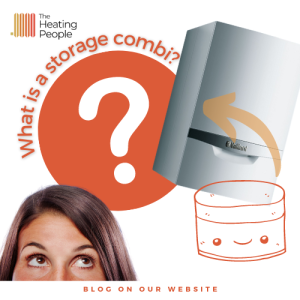
 What is a storage combi? … So, you’ve read our previous blogs on the three different types of boiler system, and you think you’ve got it sussed.
You understand the differences between the three different types of boiler, and the pros and cons of each.
And then, we go and throw a spanner in the works, by telling you that there’s another variety of combi boiler – the storage combi.
Yes, you heard us right. Although a ‘combination’ boiler gets its name from the fact that it doesn’t need storage tanks or cylinders, everything it needs is in one compact unit, we’re now introducing you to the storage combi.
A storage combi has a hot water cylinder housed within the boiler unit itself, which means it is better suited to larger homes with multiple bathrooms.
If you want to understand the difference between combi and storage combis, read on!
What is a combi boiler?
 Before looking at the ins and outs of the storage combi, it’s a good idea to start with a quick refresher on what a ‘normal’ combi is, so that you can see the differences between the two.
‘Combi’ is short for ‘combination’ boiler because it provides both your heating and hot water from one all-in-one (combined) unit; without the need for a separate cold water storage tank or an external hot water cylinder.
It’s important to point out that whilst combi boilers provide both heating and hot water, they can only perform one of these tasks at a time, and they always prioritise hot water.
A combi works by using two heat exchangers, one for your heating (radiators) and the other for your hot water supply.
The primary heat exchanger focuses on your radiators and carries hot water around your home. The secondary exchanger is for heating the water that comes out of your taps.
Combis can heat water directly from the mains when you turn on a hot tap so they don’t need to store hot water (unlike heat-only and system boilers), because they heat it instantaneously, on demand.
What are the advantages of a combi boiler?
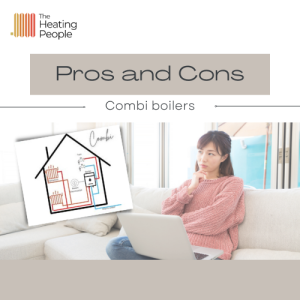 The main advantages of combi boilers are that they:
- are space-saving because the boiler itself is the only component part.
- never run out of hot water because they make it on demand.
- can be more efficient due to not having stored water and being compatible with low temperature systems.
- have fewer third party components required.
- have more control options than a heat-only system.
What are the disadvantages of a combi boiler?
The main disdavantages of combi boilers are that they:
- have a slower delivery of hot water, so it takes longer to fill a bath.
- are generally unsuitable for larger homes.
- can be difficult to integrate with renewable energy.
- can’t be fitted with a back-up immersion heater in the event of a breakdown.
- are not suitable in low pressure water areas.
Read our blog on the pros and cons of combi boilers here.
What is a storage combi?
 A storage combi is similar to a standard combi boiler; however it has a hot water cylinder housed within the boiler unit itself.
In this way, storage combi boilers combine the benefits of a combi boiler and system boiler all in one, whilst generally still being much smaller than a system boiler.
Storage combi boilers can be wall-hung or floor standing.
What sort of properties are best suited to storage combi boilers?
A storage combi is best suited to properties with a high demand for hot water but that lack space for an open vent or system boiler.
Storage combi boilers allow multiple outlets to be used at the same time, whilst still being space-saving.
Storage combi or ‘normal’ combi?
 Combi boilers are generally a great choice in most situations, even in larger homes, and that’s why they’re the most popular choice of boiler in the UK.
Whilst there are many benefits to having a combi boiler, they’re not right for everyone. Combis are best suited to homes with relatively small hot water demands at any one time.
If you’re a household where everyone wants showers at the same time, then a combi won’t be suitable.
If you have very high hot water demands, you might wish to consider a storage combi as well as a heat-only or system boiler.
When thinking about how much hot water you need from your central heating system, a good starting point is looking at how many bathrooms you have.
Generally, homes with multiple bathrooms have a higher hot water demand.
What is your hot water demand?

If you have two or more bathrooms, and want to have two showers running at the same time, a standard combi will struggle to meet your needs.
This is because they don’t store hot water and so the hot water that they are generating on demand is having to be split to two outlets, lowering the flow rate.
This won’t be an issue if your household takes it in turn to shower though because a combi has no problem supplying unlimited hot water to one outlet at a time.
Combi boilers will never run out of hot water because they heat water instantly on demand; unlike heat-only and system boilers, that might run out of hot water for a short time while the cylinder refills.
So, this is where it’s important to consider how you use the hot water in your home.
If you want to have more than one shower running at the same time in the morning, then you need a boiler that stores hot water, because they can supply multiple outlets at the same time.
If you don’t have the space for a heat-only or a system boiler, a storage combi might be a good option for you.
What are the advantages of a storage combi boiler?
Space-saving
 Because storage combis have a hot water cylinder within the unit itself; you won’t need extra space in a cupboard and/or your loft to house any additional tanks and cylinders.
Can supply hot water to multiple outlets at the same time
If a combi boiler appeals to you, but you have a high demand for hot water, a storage combi could be a good option.
Since storage combis store hot water, they are able to supply multiple hot taps at the same time, which is perfect for larger families who all want to be using the hot water at the same time in the morning.
Storage combis are cheaper than system boilers
Storage combi boilers are generally cheaper to purchase and install than system boilers. This is because there is less pipework required and because the system itself is generally smaller.
Storage combis are compatible with solar thermal options
Unlike standard combi boilers, storage combis are compatible with solar thermal options, which helps you to save money on utility bills, whilst reducing your carbon emissions.
What are the disadvantages of storage combi boilers?
 As with all things, there are drawbacks too:
More expensive than standard combi boilers
Storage combi boilers are generally more expensive than standard combi boilers because they have the added feature of the internal hot water storage cylinder.
Bigger than standard combi boilers
Although storage combi boilers are smaller than system boilers, they are larger than standard combi boilers. This is due to the fact that they need to house a hot water cylinder within the unit itself.
Different models of storage combi boilers have a different hot water capacity
As you would expect, the size of the hot water cylinder determines the capacity of the boiler, and how much hot water it will be able to supply your multiple outlets with before it needs to refill.
Each model of storage combi varies in cylinder size, so you need to check that you choose one that will meet your hot water demands.
Storage combis can sometimes have a reduction in flow rate
A storage combi can comfortably supply a larger home with multiple bathrooms with up to 25 litres per minute of hot water.
However, if you have three or four people all using hot water at the same time, you might notice a reduction in flow rate. If this is an issue for you, you might be better considering a system boiler – more on this below.
Will I need extra storage space for a storage combi?
 Although bigger than a standard combi boiler, the main benefits of a storage combi is that it doesn’t require an external hot water cylinder.
They are relatively compact and generally much smaller than system boilers. You can install a storage boiler in your home, without the need for extra storage space in cupboards or your attic.
Would a system boiler be a better option than a storage combi?
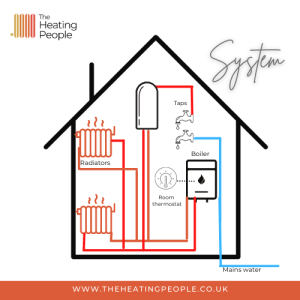 If you’re considering a storage combi, you should also look at whether a system boiler is a good option for you.
System boilers feature aspects of both a conventional or ‘heat-only’ boiler and a combi boiler.
Like a conventional boiler, a system boiler needs a hot water storage cylinder to heat and store hot water for your taps. But it doesn’t need a tank in the attic because, like a combi, it takes its water supply directly from the mains.
System boilers are high-pressure systems which can provide all the heating and hot water your home will ever need, direct from the mains, with no reduction in flow rate.
What are the advantages of a system boiler?
 System boilers…
- work well in large households with multiple bathrooms.
- can supply large amounts of hot water to multiple outlets at the same time.
- don’t require as much space as conventional boilers.
- can be fitted with an additional electrical immersion heater to provide you with back-up hot water in case your boiler ever suffers a breakdown.
- are easy to integrate with renewable heating systems such as solar.
- have a wider range of control options available, compared to conventional boilers.
- can be installed to low temperature, high efficiency heating systems.
What are the disadvantages of a system boiler?
System boilers:
- require more space than a combi boiler.
- have a lack of instant hot water – takes time to heat, although this can be minimised with the correct controllers.
- can run out of hot water if controls are not set up properly.
You can read more on the pros and cons of system boilers here.
The Heating People generally use ATAG system boilers due to the advanced control options available; high build quality; and relatively low cost.
Final thoughts…
 If you have a high demand for hot water and are struggling with choosing between a storage combi and a system boiler, contact one of our experts at The Heating People, who can give you tailored advice.
You might also like to read our related blog: 6 Top tips for buying a new boiler.
Useful Links:
Vaillant ecoTEC Plus combi store

 6 things to know before buying a new boiler…
 Unfortunately, people often take for granted the importance of choosing an expert engineer to install their new boiler.
 So first and foremost, safety. Only
  The second reason that choosing an expert installer is so important, is that your engineer is the number one contributor to your heating system’s efficiency.
 To get the best out of your new boiler, you need an expert engineer who understands emitter sizing, pipe sizing, hydraulic layout and principles.
 Here at The Heating People, we’re passionate about efficient heating – and we’re not alone!
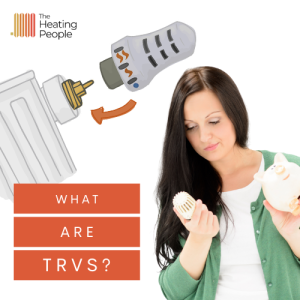 All boilers should as a minimum include a programmer (time control); at least one room thermostat; and
  Manufacturers of smart controls make bold claims about how much money you could potentially save after installing their products.
 As well as being efficient, you’ll want your boiler to be reliable. The more reliable your new boiler, the less money you’ll have to shell out on expensive repairs.
 One of the first things you need to know when you’re looking for a new boiler is what type of boiler you need.
 Which type of boiler you need will depend upon several factors, which The Heating People will discuss with you as part of your free survey.
 When it comes to heating, size matters!
 Rest assured that The Heating People follow industry standard and carry out heat-loss calculations to determine the correct size of boiler for your home.
  This links to our first point – finding the right installer. The right boiler installed by an expert installer will pay for itself.
 We hope you’ve found this article helpful.
 Heating checks for buying a new house…
 When buying a new house, you’ll be given an important document called a ‘TA6 form’.
 An Energy Performance Certificate or an ‘EPC is needed whenever a building is bought, sold or rented out.
 Most boilers in the UK are fuelled by natural gas, followed by heating oil, and occasionally liquid petroleum gas (LPG).
 The next thing to consider is the type of boiler system that’s installed in the property. And whether this will suit your lifestyle and needs, or whether
 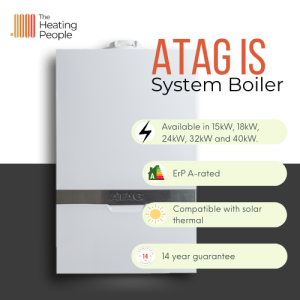 System boilers
 In addition to looking at the type of boiler in the house; you should also look at
  Ask the vendor if the boiler is covered by any form of guarantee.
 As well as checking the boiler, you should look at the radiators.
 Check whether the radiators have TRVs.
 Although often overlooked; the amount of insulation in a property has a huge effect on how efficient the central heating system is.
 The EST recommends making sure all windows are double or triple glazed, to improve the efficiency of your heating system.
 Heating issues aren’t the only thing you should be mindful of when burying a new home.
 If any of your gas appliances aren’t burning their fuel as they should; they can produce a highly poisonous gas called carbon monoxide (CO).
 An old and inefficient heating system doesn’t have to be a deal-breaker if you’ve fallen in love with the house.
 Condemned boiler?
 Let’s start by looking at what a condemned boiler actually is…
 Your
Your  You might be wondering what the risks are with having an unsafe boiler in your home. And why condemning it was necessary…
 As you might expect, ‘immediately dangerous’ is the most serious one!
 An ‘At Risk’ boiler has at least one fault; which could endanger life or the property.
 If your engineer cannot find the cause of the problem and fix it; they will need to make the situation safe either by turning the boiler off; or disconnecting the gas supply.
 Whilst it can be worrying to hear that your boiler is unsafe; you should be pleased that the fault has been found early.
 If you’ve decided that a
  You can sell a house with a condemned boiler, if you make the buyer aware of the situation. But, it’s advisable to replace a condemned boiler before selling. Would you want to pay to inherit this problem?!
 Prevention is better than cure, and an annual boiler service is vital in optimising the
 If you’ve been putting off replacing an old and temperamental boiler, it might be time to consider a replacement before it becomes dangerous.
 So, the takeaway from this, is that you don’t need to panic if your boiler is condemned.
 With
With  You’ve probably heard the terms: ‘smart heating’ and ‘smart controls’ being thrown around, but what do they mean?!
 When it comes to choosing a smart heating system, you’ll be spoilt for choice!
 A smart thermostat is at the heart of all smart heating systems. As its name suggests, it shares some similarities with a traditional thermostat, but it’s smarter!
 Smart thermostats also go above and beyond what you can do with a standard programmable thermostat. You’ll be able to fine-tune your heating. You can set much more complicated schedules, and different ones for the weekends.
 Your smart heating system will include a smartphone or a desktop app that allows you to control your heating remotely.
 Smart thermostats learn how quickly your home loses heat, and some also use weather data when communicating with your boiler.
 Your smart heating app will give you lots of data about your energy usage, so you can easily see how much you’re spending.
 There’s nothing magical about smart heating. It’s just smart.
 As we mentioned earlier, some manufacturers make very bold claims about how much you stand to save by installing their smart heating controls.
 Tado says that it will save users ‘up to 31%’ a year on their heating bills using its smart heating.
 Buying a new boiler?
 This is the most important tip for buying a new boiler.
 There’s little point investing thousands of pounds in an all-singing-and-dancing efficient new boiler; and asking a charlatan to install it for you. You’ll just be wasting your money.
 A lot of heating ‘engineers’ still use the crude method of counting radiators to determine boiler size. But this is inaccurate.
 Heat-only or conventional boilers
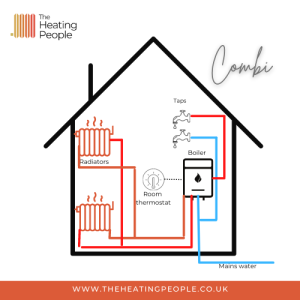 Combi boilers
 Combi boilers are useful in properties that are short on space because the boiler itself is the only component part. They’re often compact enough to fit inside a kitchen cupboard.
 Similarly to heat-only boilers, system boilers work well in large households with multiple bathrooms because they store hot water.
 The next thing to think about is what size of boiler you need.
 As we mentioned earlier, there are lots of ‘engineers’ that will install much bigger boilers than you actually need. Because they either don’t understand how to design a heating system properly, or because, frankly, they’re lazy!
 If you’ve done a Google search for a new boiler, you might be surprised by just how many boiler manufacturers there are. All offering their own extensive ranges of boilers, often with long and convoluted names!
 Don’t just pick the one that everyone else seems to be getting. Because what’s right for them, might not be right for you.
 To optimise your energy efficiency, you need to pair your new boiler with appropriate
  All new boilers come with a guarantee from the boiler manufacturer.
 System boilers are sometimes confused with heat-only boilers because they too have a separate hot water cylinder.
 A combi or ‘combination’ boiler
 System boilers take their cold water supply directly from the incoming mains supply. The cold water is passed over the boiler’s heat exchanger, which heats up the water.
 Another advantage of system boilers over combis; is that they are easier to integrate with renewable heating systems, such as solar power.
 Another great thing about system boilers is that they can be installed to low temperature, high efficiency heating.
 Another bonus of having a system boiler over a combi; is that it can have an electric immersion heater fitted to its hot water cylinder.
 Combi boilers never run out of hot water because they heat water instantly on demand. But as we’ve seen, system boilers don’t work like that. They heat water and then store it in a cylinder until it’s needed.
 System boilers are a great choice for larger homes with a high demand for hot water. They come with the added advantage of being compatible with low temperature heating and renewable energy sources.
 Wondering how the Worcester Bosch Greenstar 4000 compares to the old Worcester Bosch Greenstar i? …
 Even if you’re not aware of their different models; we’re willing to bet that you’ve heard of the boiler manufacturer, Worcester Bosch.
 The Worcester Bosch Group has built up a solid reputation for quality over the last 50 years.
 Worcester Bosch provide hefty 10-year warranties. So you can have the peace of mind that should anything go wrong, you’ll be covered.
 All Worcester Bosch boilers are ErP (Energy-related Products) A-rated.
 You can’t buy Worcester Bosch boilers directly from Worcester Bosch. Instead, you need to have one supplied through a Worcester Accredited Installer, such as The Heating People.
 Prior to the introduction of the Greenstar 4000, Worcester’s most popular combi boiler was the Greenstar i. The Greenstar i is no longer in production, but there are still some in the supply chain.
 The Worcsetr Bosch Greenstar 4000 is 10% quieter than the Greenstar i, so it’s whisper quiet!
 If you’re thinking of upgrading your old Greenstar 30i to theWorcester Bosch Greenstar 4000; the latest SimpleSwitch feature means that replacement is even easier.
 If you liked the old Greenstar i; you’ll definitely like the new Greenstar 4000, which is following in the footsteps of its best-selling predecessor.
 If you’ve read our blog:
  The energy price cap will increase from the 1st of April for approximately 22 million customers.
 Previously, a good way of saving money on energy bills was to check your bills and switch to a different (and cheaper) energy provider.
 The first step in reducing your gas bill, is to keep a watchful eye on how you’re using your energy.
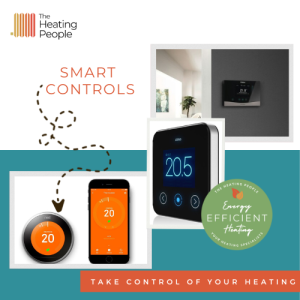 A significant step-up from the programmable thermostat, is the smart thermostat.
 One of the simplest ways to save energy is by
  As well as turning your thermostat down by one degree, you should think about whether you can alter your heating schedule without affecting your comfort.
 As well as heating the rooms in your home, your boiler is also using energy to give you hot water.
 If you have a hot water cylinder with an electric immersion heater, you should use your boiler to heat your water, even in the summer.
 A recent report by the Heating and Hot Water Council (HHIC) found that households can save around 6-8% on their gas bill just by turning down the flow temperature on their condensing combi boiler.
 Booking an annual service with a
  Although they’re often overlooked, your radiators are just as important as your boiler in keeping you warm.
 The EST says that where an average semi-detached house goes from having no insulation, to 270mm of insulation, energy bills will be reduced by up to £150 per year, and carbon dioxide emissions will be reduced by up to 610 kg.
 To effectively draught-proof your property, block up any unwanted gaps that let cold air in. This can be as simple as hanging heavy curtains; using a chimney balloon; and placing rugs over gaps in floor boards.
 It’s also worth checking whether you’re eligible for any energy schemes or grants to help you pay your energy bills. Some schemes to investigate include:
 If you’ve decided it’s
 There are many reasons why you might be looking for a new boiler. And ultimately, the cost of a boiler will depend on what your heating and hot water needs are; and what you’re hoping to achieve from your new heating system.
 The next question to help determine cost, is
  When people talk about how powerful your boiler needs to be they are referring to the kW (kilowatt) output, rather than the physical size of the appliance itself.
 But don’t worry – The Heating People will find the
  But since we get asked this a lot, here is a very rough guide on the kW boiler that will cater to your home.
 The price of replacing a boiler costs less than you might think. It obviously depends on what you are changing from, and what you are changing to. But as a rough guide, at The Heating People:
 Once you have
  After visiting your home, we’ll send you a fixed price quotation. This will have details of the boilers we recommend based on your survey, together with any accessories and options that you may wish to add to your quotation.
 Depending on what we have discussed during the quotation stage, we will use the
 Your engineer will then install your new boiler, the boiler flue, and make all the pipework connections.
 Your engineer will then complete a handover with you when all the work is complete. This ensures that you are as informed as possible on how to operate the boiler, how to use all the controls, and how to get the best efficiency from your system.
 How long a boiler replacement will take, will vary depending on what work is needed, if your boiler is moving location or if you have a like-for-like boiler. It usually takes between 1-3 days.