
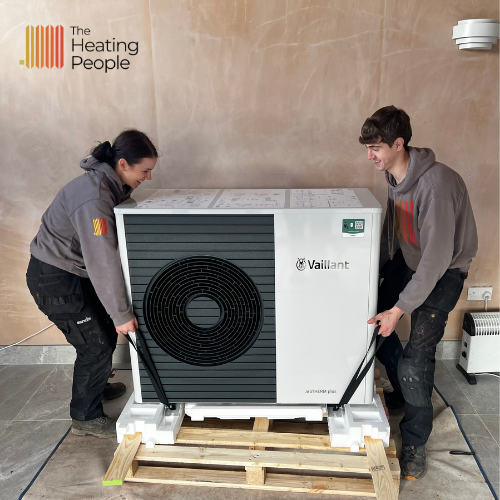
What is a heat pump?
 Heat pumps are often described as being like a fridge in reverse. Although this doesn’t make their operation entirely obvious, it’s not far off! Heat pumps use the same refrigerant cycle as a fridge to move heat from one place to another. Despite the common misconception, fridges don’t work by filling the compartment with cold air – instead, they move the warm air out. A heat pump works in a similar way, but instead of moving warm air out, it moves warm air in. A heat pump extracts warmth from the outside air before concentrating it and transferring it into your home to provide heating and hot water.
How do heat pumps work?
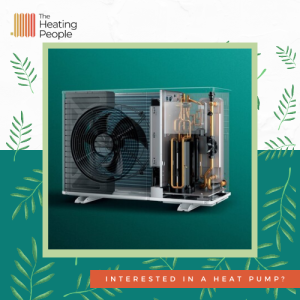 At its simplest, heat pumps transfer outside energy into heat for your heating and hot water system. Some heat pumps extract energy from the air, and these are known as ‘air source heat pumps’. Another type of heat pump extracts energy from the ground, and these are known as ‘ground source heat pumps’. As their name suggests, they pump heat, taking energy (from the air or the ground) from a low temperature source and forcing that heat to a higher temperature for our heating.
Do heat pumps work as well as boilers?
 As soon as any new initiative is launched, you can expect some scare mongering in the news and social media! But heat pumps (when properly fitted by an expert) are just as good, and in many ways better, than a conventional boiler. Despite what you might have read online, properly installed heat pumps are more than capable of keeping your home warm on the coldest of days.
It’s understandable that people are concerned about how a device is going to absorb heat from the ground when it’s snowy out – but there’s no need to worry! In the UK, the temperature of the ground doesn’t usually fall below 10 °C. Although you might think that’s a bit nippy, there’s still heat in the ground for the taking. Air source heat pumps will use ambient heat.
Do heat pumps work when it’s cold?
 Yes! Because of the way a heat pumps’ refrigeration cycle works, heat can be extracted out of the air at very low temperatures- even negative temperatures. Back to the fridge analogy, if you touch the grill on the back of a fridge, it feels warm. But it’s cold inside the fridge, and nothing warm has been put in it. This is similar to a heat pump, A heat pump will still operate to get your radiators and hot water to temperature, right the way down to -25c!*
What is an Air Source Heat Pump (ASHP)?
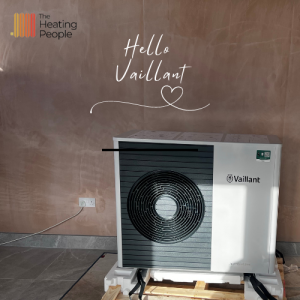 An air source heat pump works by using a fan to draw in air from the outside and absorbing the heat into a liquid refrigerant. Using electricity, the heat pump compresses the liquid to increase its temperature. It then condenses back into a liquid to release its stored heat. Heat is sent to your radiators or is stored in a cylinder to provide you with hot water when you need it. Air source heat pumps are easier to install than a ground source heat pumps because they don’t need the network of underground pipes that a ground source heat pump requires.
What is a Ground Source Heat Pump (GSHP)?
 Ground source heat pumps collect heat from the ground through a network of water pipes buried underground. A mixture of water and anti-freeze is pumped around the network of pipes and absorbs the naturally occurring heat in the ground. This heat is then transferred to a liquid refrigerant inside the heat pump. At this point, the process is the same as with the air source heat pump – electricity is used to compress the liquid refrigerant to increase its temperature. It then condenses back into a liquid to release its stored heat. Heat is sent to your radiators or is stored in a cylinder to provide you with hot water when you need it. Ground source heat pumps are more expensive than air source, because of the network of underground pipes that need to be installed. But they do tend to be more efficient.
How efficient are heat pumps?
 One of the biggest advantages of heat pumps is that they’re incredibly energy efficient – which is referred to as the Coefficient of Performance (CoP). The CoP is the amount of heat generated for every kilowatt of electricity used. An air source heat pump can convert each kilowatt (kW) of electricity into 3-4 kW of heat. This means that they’re between 300%-400% efficient! This is pretty impressive when you compare it to a modern gas boiler with an energy efficiency of about 92%!
Why are heat pumps so efficient?
Heat pumps manage achieve their impressive energy efficiencies because they transfer heat rather than generate it. Because your boiler has to generate heat by burning fuel (usually gas), there will always be some energy wasted in the heating process.
Are heat pumps expensive to run?
No – a heat pump that has been installed on a well-designed system won’t be expensive to run. But if you’re in the market for a new heat pump, it’s vital that you contact an expert. As you might expect, designing an efficient heat pump system is more complex than designing a system for a gas boiler. And poor design will lead to high bills.
This is where The Heating People really excel. We are proud to be Heat Geek Elite designers, working with the Heat Geek assured installation scheme. We design and install the most efficient heating systems for homes in the North West. When we design a system for you, we will advise on the projected efficiency of the system, which with a bit of information about your gas and electric pricing, can show you a projected running cost against that of a gas boiler. You have all the facts prior to installation.
What is the Heat Geek Assured Heat Pump Installation Service?
 The Heat Geek Assured service means that you can be sure that you have an expert designing your heat pump system. Heat Geek personally vet and train Heat Geek installers to the highest industry standards. Heat Geek engineers have undergone the best system design training available and are heavily involved in ongoing peer to peer training. Heat Geeks know the very latest technology, methods and design practices available. This gives you the peace of mind that your installation is not only working but working to the maximum efficiency. The Heating People are proud to be Heat Geek Elite installers, the highest accolade there is in the industry!
What does it cost to install a heat pump?
 The cost of installing heat pumps varies depending on what system is being installed. As a guide, the cost of an ASHP will be around £15-£20,000 before any government grants are applied. Whilst installing a heat pump isn’t cheap, it’s important that you weigh that against the pay back you’ll get on your energy bills – not to mention the environmental benefits! And you may be able to get some financial help too. You can apply for funding for a heat pump under the Renewable Heat Incentive, and there are also grants of £5,000 through the new Boiler Upgrade Scheme.
What financial help is there to install a heat pump?
 The government has announced it will be giving households grants towards the cost of installing heat pumps, to try and achieve its target of installing 600,000 per year by 2028. Under the new ‘Boiler Upgrade Scheme’ grants of £5,000 will be made available to help households to afford to install air source heat pumps. There will be grants of up to £6,000 available towards the cost of installing a ground source heat pump.The government has set aside £450 million for the grants, with the total money allocated enough to cover 90,000 homes.
How do heat pumps save money on energy bills?
Because heat pumps are so efficient, they can save you money on your energy bills (certainly once the price of electricity comes down!) To illustrate this, think about a modern boiler with 92% energy efficiency. This boiler will use 92% of the supplied energy for heating your home but the remaining 8% of energy will be lost in the process of generating heat. So, this means that for every £1 you spend on heating your home, this boiler is wasting 8p!
Now think about a heat pump with 300% energy efficiency. Not only is this heat pump not wasting energy, but it’s also giving out more than you put in. Hopefully it’s now easy to see what a positive impact a heat pump can have on your energy bills! However, electricity prices are currently very high, particularly in comparison to gas. But it’s important to remember that heat pumps are so efficient, they can convert a unit of electrical energy into 2-4 times as much heat energy.
Will a heat pump reduce my carbon footprint?
Yes! The reason that the government has such ambitious targets for the installation of heat pumps, is because they’re much more environmentally friendly than gas boilers. According to EDF Energy, installing a heat pump could cut your carbon emissions by more than 23 tonnes of CO2 over 10 years. That’s the same as 30 return plane flights between Heathrow and Madrid! Heat pumps use some electricity to run. But if you’re able to power them with electricity from renewable sources, such as solar power, they are completely carbon neutral.
Are heat pumps 100% carbon neutral?
Heat pumps are much more eco-friendly than traditional gas boilers, but they are not 100% carbon neutral. This is because they use a small amount of electricity to run. If you want to be completely carbon neutral, you’ll need to run your heat pump on electricity from a renewable source such as solar power.
What is involved in getting a new heat pump with The Heating People?
 If you’re thinking about getting a heat pump, but are concerned about what’s involved – don’t worry, The Heating People are here to help! We are heating specialists who take the hassle out of high efficiency system design. Here’s what to expect from the process with an installation from us…
Step 1: Contact us
To get started, contact one of our friendly team at The Heating People. We’ll ask you a few simple questions about you and your property, and get you booked in for a discovery call with Heat Geek Elite installer, Liam. You can contact us in the following ways:
- By phone on: 0151 7926245;
- By email at: hello@theheatingpeople.co.uk;
- through the contact form on our website.
Step 2: Discovery call
 We will call you as arranged on a date and time of your choosing, for a ‘discovery call’. During this call, we will take some more detailed information about your home and what you’re hoping to achieve from your heat pump. We will advise you on the suitability of your home and advise on any pitfalls. We can even give you an estimated installation cost on this call. If you’re happy, and we’re happy at the end of the call, we book an initial survey with you to do a more detailed assessment to provide a fixed price quotation.
Step 3: Technical survey
 During the technical survey, we will visit your home and carry out a full heat loss assessment as well as an assessment of your existing heating system. This will allow us to design a heating system that is suitable to heat your home and to provide you with the lowest flow temperatures possible which will increase the efficiency of your system.
Step 4: Proposal
Following the technical visit, we will provide you with a proposal for the installation of your heat pump. We will also provide you with a report containing all of the technical information we gathered and the calculations completed on site. When you are happy to proceed with the work, we will book you in for your installation date.
Step 5: Installation
 On your installation day, your engineer will discuss the planned work, to ensure that everyone is happy with the plans. They will explain where they will need access to, and for how long, so that you can plan your day. Your engineer will put down floor coverings in all work areas and transit routes, so that you can rest assured that your home will be protected from any debris. Your engineer will decommission your old system, and will set to work installing your new heat pump. Your engineer will then set up your new system. They will complete a handover with you when all the work is complete. This ensures that you are as informed as possible on how to operate the heat pump, how to use all the controls, and how to get the best efficiency from your system.
The follow up
We take pride in our work, and The Heating People will come back and check that everything is working as designed after your heat pump has been operating in winter conditions.
Why do The Heating People install Vaillant aroTHERM heat pumps?
 The Heating People are proud to be Vaillant Advance Installers because Vaillant has a growing focus on products and systems that use renewable energy. We share their motto of: ‘thinking ahead’ and only use products with high energy efficiency ratings and low carbon emissions. Many Vaillant products are based around the use of heat pumps taking heat from ambient air and the earth. Vaillant is expanding its UK manufacturing facility in Derbyshire to produce its aroTHERM plus heat pumps from 2022, and we really rate this heat pump!
The aroTHERM plus air-to-water heat pump is one of our personal favourites because it is environmentally friendly and future-proof:
- Future-proof thanks to the most cutting-edge heat pump technology with natural refrigerant, reducing your carbon footprint;
- High energy efficiency class;
- Very quiet operation – can even be used in densely built-up terraced housing estates;
- Outstanding quality and durability.
As Vaillant Advance Installers, we can offer a range of warranties of up to 7 years on parts and labour.
What controls should I use with my new heat pump?
 When installing a Vaillant aroTHERM heat pump, we use Vaillant’s sensoCOMFORT controls. The sensoCOMFORT is Vaillant’s new control for multi-zone heating systems. It has been designed to be simple to install and use, and operates with Vaillant’s eBUS protocol. This ensures all components of the system can easily communicate with each other to provide optimum system performance. It’s perfect for multi-zone gas-fuelled systems, and hybrid or renewable installations.
The sensoCOMFORT comes with an outdoor sensor, providing weather compensation that automatically adjusts the flow rate from the boiler for ultimate efficiency. Load compensation comes as standard.
Are gas boilers being banned and replaced with heat pumps?
 You don’t need to worry about a ‘ban’ as such. But, the government has announced an ambition to phase out the installation of new gas boilers beyond 2035, in favour of ‘greener’ alternatives. This won’t impact your current boiler, and you can still replace your current one until 2035. After that, we’re likely to see a combination of both hydrogen boilers and heat pumps being used to heat our homes.
Useful Links:
Find a Heat Geek
 But the problem with this, is that when you get out of bed, the house will be freezing and you’ll want to crank the thermostat up to get your house warm again.
 Smart controls offer the biggest energy efficiency savings, with some manufacturers promising energy savings of between 20-30%.
 Unfortunately, people often underestimate the importance of their
  Despite being crucial in warming up your rooms, radiators are often overlooked and neglected.
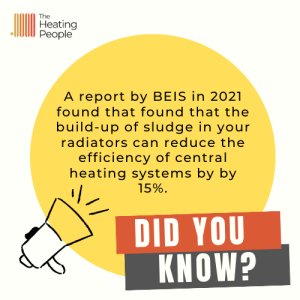 It might surprise you to learn that your heating system needs the occasional clean too!
 Not draught proofing is another big mistake that people make, because it’s one of the cheapest and easiest ways to cut your fuel bills.
 Where should I install my boiler?
 Your boiler can be installed in a variety of different locations; if you use a Gas Safe engineer who follows the Building Regulations.
 When deciding to move your boiler, you should think long and hard about where you want it moving to.
 We look at the
  Yes, you can install a boiler (usually a
  As with a bathroom, the kitchen can be a convenient place to install your boiler. As it’s a place where you use a lot of hot water, and you should have easy access to a drain.
 A slightly less popular but possible location for your boiler is in a bedroom. If you don’t have a utility room; or you have a very small kitchen or bathroom; it could be a suitable location for you.
 Remember that relocating a boiler isn’t as easy as just remounting your boiler somewhere else. The infrastructure to your boiler will need to be changed.
 When it comes to boiler installation; there isn’t one place that’s always best to locate your boiler – every home is different.
 Broken boiler? What to do next…
 But before we get into our ‘niggles’ checklist – we want to add a safety warning here…
 Before blaming your boiler, it’s a good idea to start with the basics, and check that your
  A logical place to start when your boiler stops working, is to check for a fault code. Most modern boilers will display a code when they run into a problem.
 If
If  If you notice a leak around your boiler, you should contact a Gas Safe engineer immediately.
 If it’s freezing out, it’s possible that your boiler’s
  If you suddenly notice your boiler making unfamiliar, loud or strange noises, they could indicate a problem, and are a cause for concern.
 If your boiler seems to be working, but there isn’t much heat coming from your radiators, it could be a sign that your radiators need bleeding.
 How to make your central heating more efficient…
 But there is a simple solution –
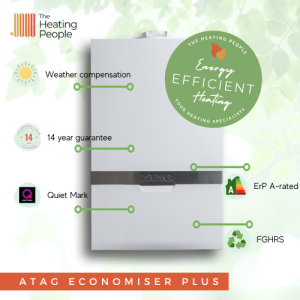 If your boiler is on-the-blink; or is coming to the
  It’s not just boilers that have become more efficient, radiators have come a long way too.
 When your central heating’s on, you want it to be warming you up, and not your garden!
 Can you feel a draft coming in through your windows? That means your heat is getting out, too – and you don’t want that!
 If your heating system is poorly programmed or has limited to no controls, you’ll be wasting lots of energy.
 Lots of people
  Showers are the greener option to taking a bath, right? Not necessarily.
 Weather compensation controls
 What to ask when getting boiler quotes…
 Have you noticed your boiler is struggling to do what it used to do; is breaking down regularly; or is not working at all?
 Before investing money in a new boiler, it’s worth checking whether the guarantee on your old boiler is still active.
 Only Gas Safe engineers can legally work on gas. You can read more about why this is so important, in our related blog
  It’s important that you choose
  Whole house heat loss calculations are the industry standard for
  The Heating People can work with all boiler manufacturers. But we have our favourites!
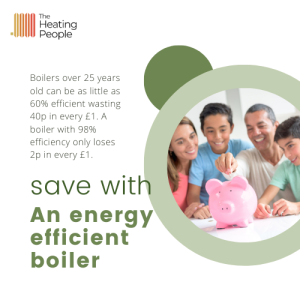 Make sure that you ask what the efficiency rating of the new boiler will be. A
 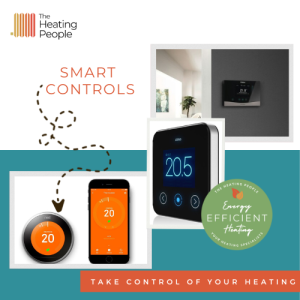 If your
  Ask about the guarantee that will come with your new boiler.
 The
The How to top up the water pressure in your boiler…
 What is boiler pressure and why does it matter?
 It’s important that your boiler pressure is just right.
 If you have a
  If the pressure in your heating system has fallen below 1 bar, it needs to be topped up.
 The whole process, including attaching the filling loop; opening and closing the valves; and removing the filling loop; should only take a couple of minutes.
 If your boiler pressure drops immediately after you’ve followed the steps above; this could indicate a leak somewhere in the system; or a damaged pressure relief valve.
 If you’re regularly having problems with pressure, now might be the time to
  How to extend your boiler’s lifespan…
 The average lifespan for a boiler is about 10-15 years.
 Not all boilers are created equal, and as the adage goes: Buy cheap, buy twice. It’s important to invest in a good quality boiler, rather than the cheapest option.
 In addition to choosing a quality boiler, it’s important to install the
  To keep your boiler running safely, smoothly, and efficiently for as long as possible, you need an expert to maintain it.
 Although we only tend to think about our boilers in the winter months, we need our boilers all year round.
 A second way to protect your boiler from problematic sludge, is to ask your heating engineer about adding a central heating inhibitor to your heating system.
 Whilst all the tips in this article will help to extend the lifespan of your boiler, unfortunately it won’t last forever! There will come a time when you’ll need a boiler replacement.
 Boilers are often overlooked until they’re causing a problem. But if you proactively look after your boiler, you can drastically reduce your chances of a breakdown and extend your boiler’s life.
 What happens during a boiler service?
 Before we walk you through what happens during a boiler service, we want to stress that you should only ever use a Gas Safe registered engineer to work on your boiler.
  Your engineer will conduct a gas pressure check to ensure that your boiler is operating at the right gas pressure. The gas valve will be adjusted to check the burner is combusing efficiently and correctly (using a flue gas analyser). A gas tightness test will be conducted to ensure there are no leaks.
 If your engineer discovers any safety defect(s) with your boiler, they will explain this to you, and will either fix them, or act in accordance with the Gas Industry Unsafe Situations Procedure (GIUSP).
 One of the most important reasons to have your boiler serviced regularly, is to keep you and your family safe.
 We all know that prevention is better than cure – and servicing your boiler is important for this reason.
 Related to our point above, regular servicing allows your engineer to catch small problems before they turn into serious faults.
 Another important reason to have your boiler serviced every year is to maintain its guarantee.
 If you’re a landlord, a qualified Gas Safe registered engineer must, by law, check your gas appliances and flues annually to ensure that your property is safe for tenants to live in.
 We hope that you’ve found this article useful in understanding what’s involved in a boiler service, and why regular servicing is so important.
 What is a thermostat…
 A thermostat is a control unit for your boiler.
 There are a huge variety of different types of thermostat available. But don’t be overwhelmed, The Heating People are experts in helping you to choose what’s right for you.
 Programmable room thermostats have a built-in timer which lets you schedule your heating to come on and go off automatically at different times of day.
 Although many people
  Your heating system can be split into zones; to allow different areas to be heated to different temperatures and/or at different times. This is known as zoning or micro-climating and is particularly useful in larger homes.
 Manufacturers of smart controls make bold claims about how much money you could potentially save after installing their products:
 There is no ‘one-size fits all’ setting when it comes to what temperature to set your thermostat to, because we all feel comfortable at a different temperature.
 No! Whilst a survey by the EST revealed that 52% of people crank up their heating when it gets chilly out,
  Since your thermostat is monitoring the temperature of the air in your room to instruct your boiler; it’s important to position it in a place where it can get an accurate reading, which reflects the overall average temperature of your home.

